ADVERTISEMENT

US brings culinary envoy to Manila

Published Aug 15, 2026 04:32 pm
The US Embassy promotes American food exports through its culinary envoys, who create dishes tailored to the Filipino palate using ingredients from the United States. (Photo: Mika Barrios/US Embassy)
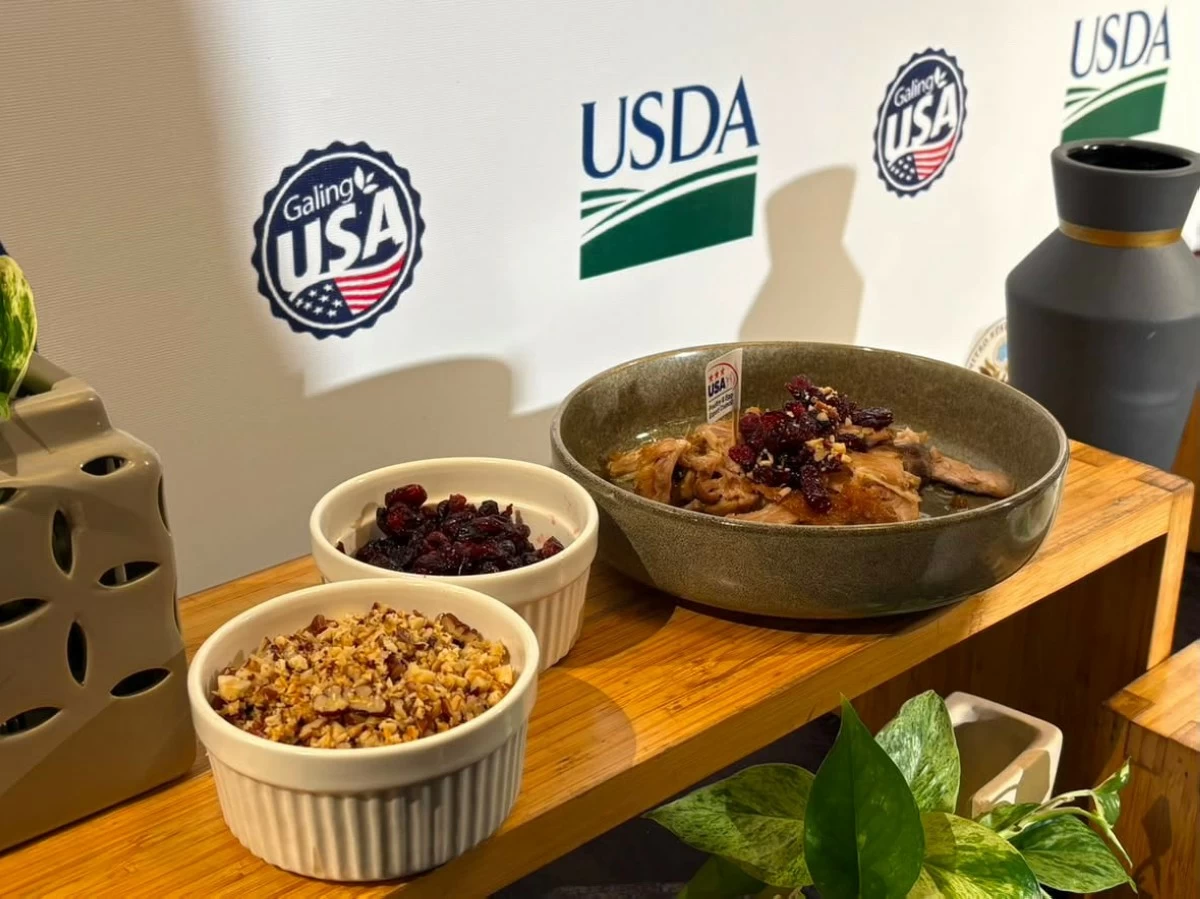
Ask someone to picture American food and chances are the first things that come to mind will be burgers, hotdogs, barbecue or perhaps a very large steak. At a recent cooking demonstration hosted by the US Embassy in Manila, however, what appeared on the table was rather different: ginger miso black cod, chickpea salad dressed with calamansi vinaigrette, and confit turkey served with cranberry-pomegranate sauce.
The demonstration was part of “Flavors of Freedom 250”, a US Embassy program bringing American ingredients and culinary expertise to Filipino audiences as the US celebrates the 250 years of its independence.
Leading the kitchen was US Culinary Envoy Chef Edith Johnson, who had come to Manila from Sitka, a small coastal town in Alaska. Johnson’s cooking offers a rather different introduction to American cuisine. A native Alaskan chef, she specializes in locally foraged ingredients while drawing from her ancestors’ culinary traditions. Her career has taken her from feeding professional sports teams during events including Major League Baseball’s World Series and the National Football League’s Super Bowl to building seasonal Alaskan menus back home in Sitka.
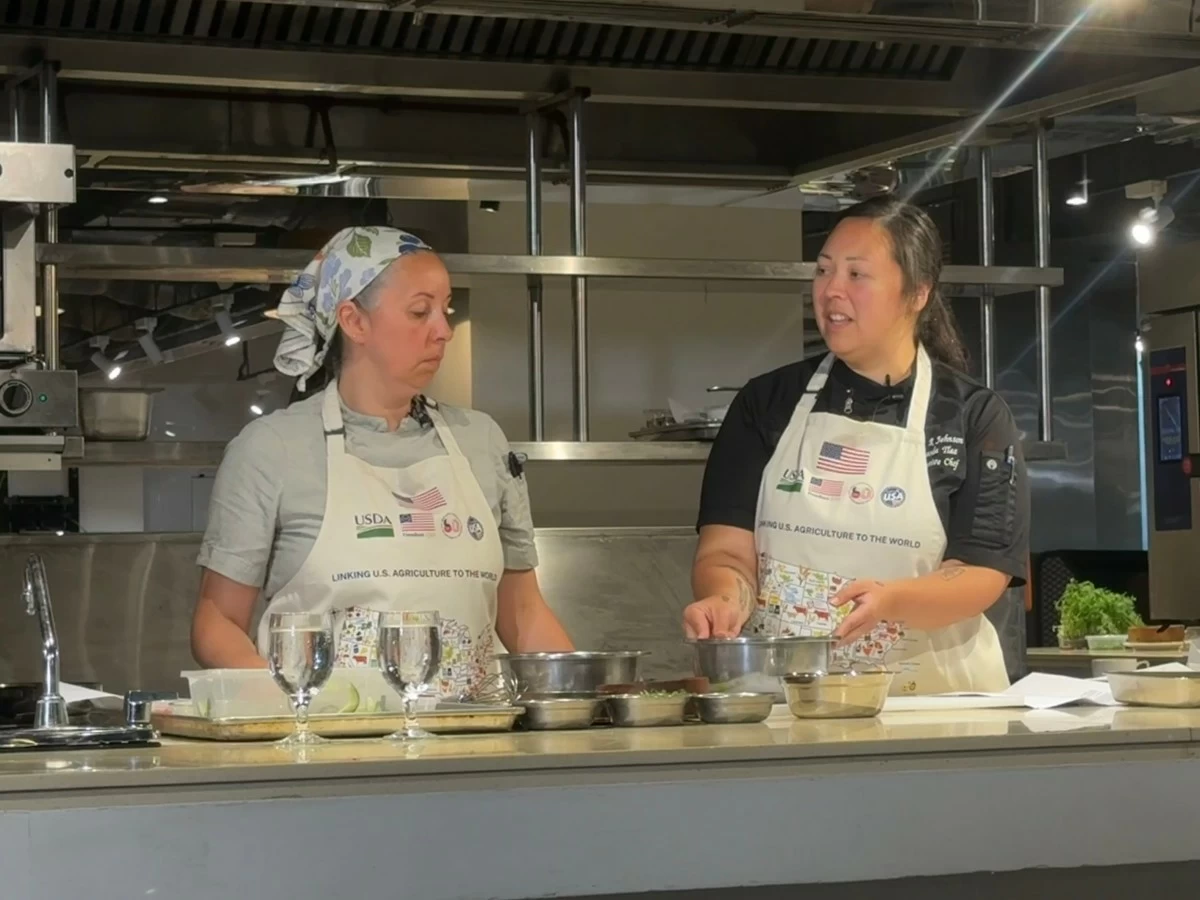
Jeren Schmidt and US Culinary envoy Edith Johnson showing CCA students how to make the best use of American ingredients available in the Philippines (Photo: Carolyn Ramoran Hamilton/Manila Bulletin)
In 2017, she founded Our Town Catering and later acquired Ludvig’s Bistro. She had also previously served as a US Department of State Culinary Envoy in Brazil in 2024.
Joining her in Manila was sous chef Jeren Schmidt, an Iñupiaq entrepreneur and culinary professional who co-owns ABC Coastal Excursions, a small-group expedition yacht company based in Sitka. Schmidt’s work combines food with Alaska’s coastal environment and communities, bringing an ocean-to-table approach to the dining experiences she creates.
Together, the two offered students from the Center for Culinary Arts (CCA) Manila a glimpse of an America that is considerably more geographically—and gastronomically—diverse than popular culture sometimes suggests. The ginger miso black cod immediately crossed culinary borders, pairing an American seafood product with flavors more readily associated with Japan and East Asia. The chickpea salad went in another direction entirely, combining US pulses with cucumber, tomatoes and the unmistakably Filipino acidity of calamansi.
Then there was the confit turkey. Instead of the Thanksgiving bird most of us immediately associate with the ingredient, the turkey was served pulled apart and topped with cranberry-pomegranate sauce and nuts. Familiar ingredients, but removed from their expected setting.
This was American produce speaking several culinary languages. For the US Embassy, there is naturally an economic diplomacy component to all of this. The demonstration was designed in part to highlight the quality and versatility of American agricultural products already available in the Philippine market.
That is why the ingredients matter as much as the recipes. The display carried familiar names from US agricultural promotion in the Philippines, including USDA, USA Pulses and the USA Poultry & Egg Export Council. Rather than simply presenting those products to potential consumers, however, the chefs showed culinary students what could actually be done with them.
For young chefs, that sort of demonstration is also a practical lesson in how cuisines actually evolve. Ingredients move. Techniques travel. Cooks borrow, adapt and reinterpret according to what is available and what the people they are feeding want to eat.
Johnson herself represents that complexity. Her culinary identity is deeply rooted in Alaska, but Alaska’s food culture is itself shaped by geography, Indigenous traditions, the sea and generations of cultural encounters. Schmidt similarly approaches food through a strong connection to place, particularly the coastal environments and communities of her home state.
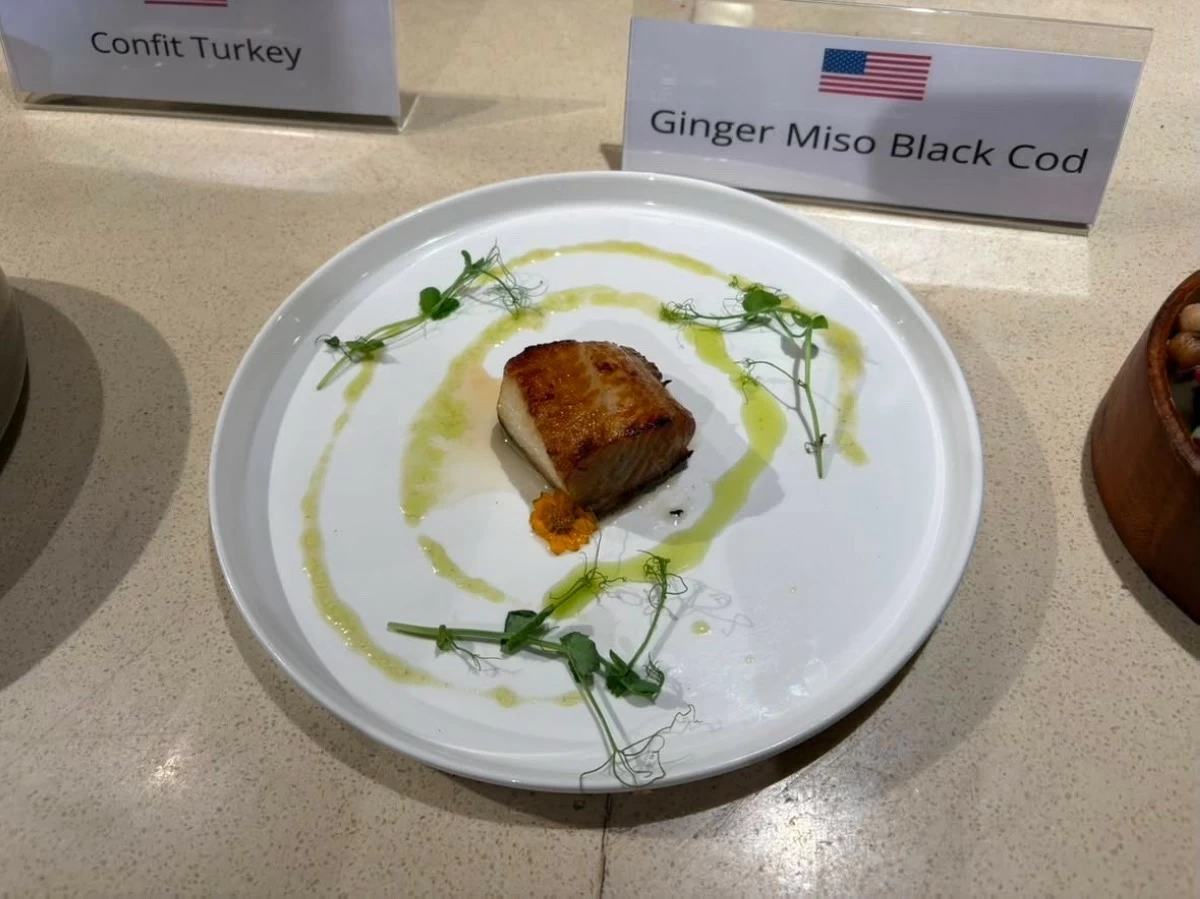
The ginger miso black cod was a hit and is surprisingly easy to prepare. (Photo: Mika Barrios/US Embassy)
There is something useful about encountering America through that lens. The US is so culturally familiar to Filipinos that we sometimes assume we already know what “American” looks and tastes like. Yet the country stretches from Alaska to Florida, Hawaii to Maine, with Indigenous, immigrant and regional food traditions that make any single definition of American cuisine nearly impossible.
Perhaps that is what made watching Johnson and Schmidt cook in Manila interesting. They were there to showcase American products, certainly. But those ingredients did not remain stubbornly American once they reached the plate. They met miso. They met calamansi. They were interpreted for another audience.
That may just be the more interesting lesson behind “Flavors of Freedom 250”. Selling an ingredient abroad requires convincing people of its quality. Making it part of another country’s food culture requires something more: showing them how they can make it their own.

Related Tags

US Embassy US Embassy in Manila
ADVERTISEMENT
.most-popular .layout-ratio{ padding-bottom: 79.13%; } @media (min-width: 768px) and (max-width: 1024px) { .widget-title { font-size: 15px !important; } }

{{ articles_filter_1561_widget.title }}

.most-popular .layout-ratio{ padding-bottom: 79.13%; } @media (min-width: 768px) and (max-width: 1024px) { .widget-title { font-size: 15px !important; } }

{{ static_articles_1562_widget.title }}

.most-popular .layout-ratio{ padding-bottom: 79.13%; } @media (min-width: 768px) and (max-width: 1024px) { .widget-title { font-size: 15px !important; } }

{{ articles_filter_1563_widget.title }}

{{ articles_filter_1564_widget.title }}

.mb-article-details { position: relative; } .mb-article-details .article-body-preview, .mb-article-details .article-body-summary{ font-size: 17px; line-height: 30px; font-family: "Libre Caslon Text", serif; color: #000; } .mb-article-details .article-body-preview iframe , .mb-article-details .article-body-summary iframe{ width: 100%; margin: auto; } .read-more-background { background: linear-gradient(180deg, color(display-p3 1.000 1.000 1.000 / 0) 13.75%, color(display-p3 1.000 1.000 1.000 / 0.8) 30.79%, color(display-p3 1.000 1.000 1.000) 72.5%); position: absolute; height: 200px; width: 100%; bottom: 0; display: flex; justify-content: center; align-items: center; padding: 0; } .read-more-background a{ color: #000; } .read-more-btn { padding: 17px 45px; font-family: Inter; font-weight: 700; font-size: 18px; line-height: 16px; text-align: center; vertical-align: middle; border: 1px solid black; background-color: white; } .hidden { display: none; }
function initializeAllSwipers() { // Get all hidden inputs with cms_article_id document.querySelectorAll('[id^="cms_article_id_"]').forEach(function (input) { const cmsArticleId = input.value; const articleSelector = '#article-' + cmsArticleId + ' .body_images'; const swiperElement = document.querySelector(articleSelector); if (swiperElement && !swiperElement.classList.contains('swiper-initialized')) { new Swiper(articleSelector, { loop: true, pagination: false, navigation: { nextEl: '#article-' + cmsArticleId + ' .swiper-button-next', prevEl: '#article-' + cmsArticleId + ' .swiper-button-prev', }, }); } }); } setTimeout(initializeAllSwipers, 3000); const intersectionObserver = new IntersectionObserver( (entries) => { entries.forEach((entry) => { if (entry.isIntersecting) { const newUrl = entry.target.getAttribute("data-url"); if (newUrl) { history.pushState(null, null, newUrl); let article = entry.target; // Extract metadata const author = article.querySelector('.author-section').textContent.replace('By', '').trim(); const section = article.querySelector('.section-info ').textContent.replace(' ', ' '); const title = article.querySelector('.article-title h1').textContent; // Parse URL for Chartbeat path format const parsedUrl = new URL(newUrl, window.location.origin); const cleanUrl = parsedUrl.host + parsedUrl.pathname; // Update Chartbeat configuration if (typeof window._sf_async_config !== 'undefined') { window._sf_async_config.path = cleanUrl; window._sf_async_config.sections = section; window._sf_async_config.authors = author; } // Track virtual page view with Chartbeat if (typeof pSUPERFLY !== 'undefined' && typeof pSUPERFLY.virtualPage === 'function') { try { pSUPERFLY.virtualPage({ path: cleanUrl, title: title, sections: section, authors: author }); } catch (error) { console.error('ping error', error); } } // Optional: Update document title if (title && title !== document.title) { document.title = title; } } } }); }, { threshold: 0.1 } ); function showArticleBody(button) { const article = button.closest("article"); const summary = article.querySelector(".article-body-summary"); const body = article.querySelector(".article-body-preview"); const readMoreSection = article.querySelector(".read-more-background"); // Hide summary and read-more section summary.style.display = "none"; readMoreSection.style.display = "none"; // Show the full article body body.classList.remove("hidden"); } document.addEventListener("DOMContentLoaded", () => { let loadCount = 0; // Track how many times articles are loaded const offset = [1, 2, 3, 4, 5, 6, 7, 8, 9, 10]; // Offset values const currentUrl = window.location.pathname.substring(1); let isLoading = false; // Prevent multiple calls if (!currentUrl) { console.log("Current URL is invalid."); return; } const sentinel = document.getElementById("load-more-sentinel"); if (!sentinel) { console.log("Sentinel element not found."); return; } function isSentinelVisible() { const rect = sentinel.getBoundingClientRect(); return ( rect.top < window.innerHeight && rect.bottom >= 0 ); } function onScroll() { if (isLoading) return; if (isSentinelVisible()) { if (loadCount >= offset.length) { console.log("Maximum load attempts reached."); window.removeEventListener("scroll", onScroll); return; } isLoading = true; const currentOffset = offset[loadCount]; window.loadMoreItems().then(() => { let article = document.querySelector('#widget_1690 > div:nth-last-of-type(2) article'); intersectionObserver.observe(article) loadCount++; }).catch(error => { console.error("Error loading more items:", error); }).finally(() => { isLoading = false; }); } } window.addEventListener("scroll", onScroll); });

Sign up by email to receive news.