






Manila Bulletin
 Philippines
National
Lacson flags 'questionable' infra lump sums in proposed 2027 budget
Philippines
National
Lacson flags 'questionable' infra lump sums in proposed 2027 budget
Philippines
National
Lacson flags 'questionable' infra lump sums in proposed 2027 budget
Lacson flags 'questionable' infra lump sums in proposed 2027 budget
By Dhel Nazario
Published Aug 15, 2026 01:13 pm


At A Glance
- Senator Panfilo Lacson flags questionable lump-sum infrastructure funds in the proposed P7.2-trillion 2027 national budget and plans to seek details during the upcoming DBCC briefing.
- Lacson backs tighter controls on the budget process, including barring bicameral conference committee insertions that are not in either the Senate or House versions of the spending bill.
- Lacson renews call for stronger local government participation in budget planning, saying the exclusion of local priorities from the NEP creates a disconnect between community needs and funded projects.
Senator Panfilo “Ping” Lacson on Saturday raised concerns over what he described as “questionable” lump-sum appropriations for infrastructure projects included in the proposed P7.2-trillion national budget for 2027.
Lacson said he would seek clarification from the government agencies involved.
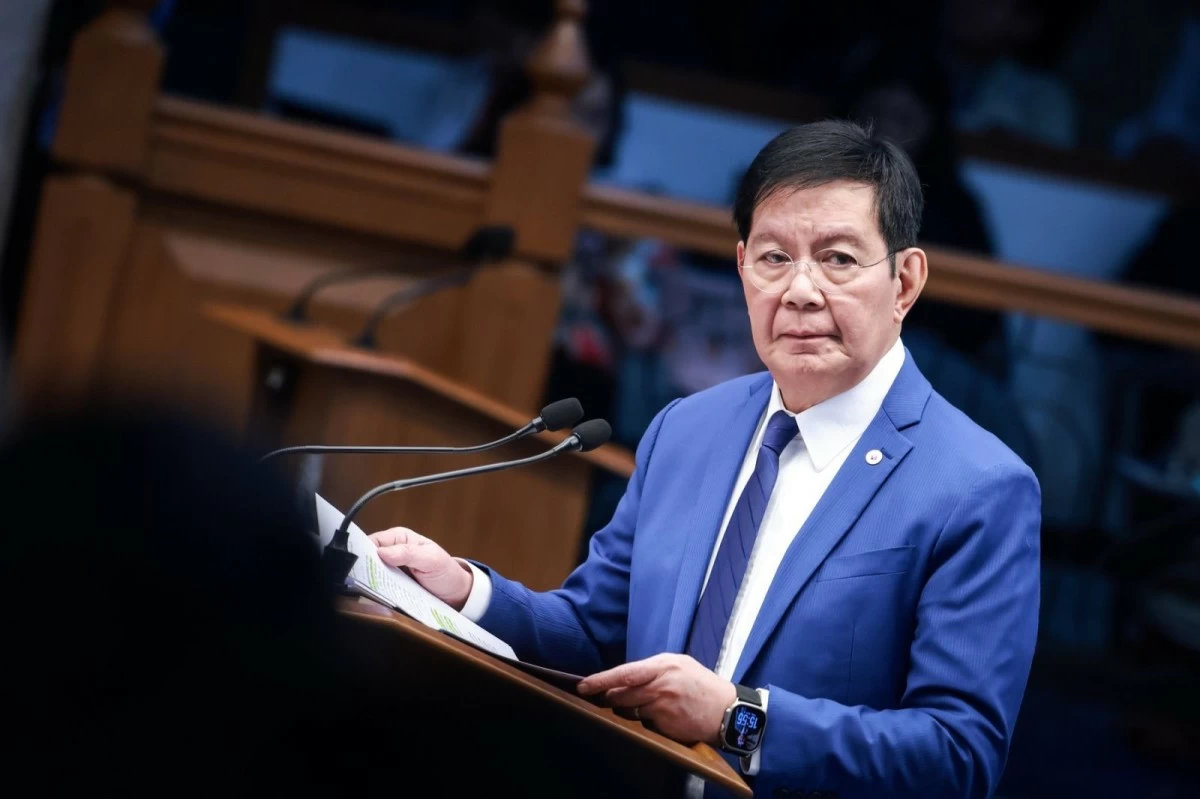
Senator Panfilo Lacson (OS Lacson photo)
Lacson says he may formally bring up the matter during the Development Budget Coordination Committee (DBCC) briefing, which is tentatively scheduled for Aug. 27.
“We spotted lump sum appropriations that we don't think should be lump sum. When we say lump sum appropriations, an aggregate amount is appropriated for a project, activity or program (PAP), or group of projects without detailing the breakdown of the cost of each PAP,” he said in English and Filipino during an interview on DZMM radio.
“We will seek clarification on the details of these lump sum appropriations. Lump sum appropriations are allowed for calamity funds because we cannot predict when calamities occur. But it becomes questionable if it's for infrastructure projects. That is what we saw and we will ask for details on the matter,” he added.
Lacson and his staff have begun reviewing the National Expenditure Program (NEP), which was transmitted to Congress earlier this week.
Aside from the lump-sum allocations, Lacson said they would examine the NEP for special provisions that could potentially be used to circumvent restrictions on unprogrammed appropriations.
He recalled a previous General Appropriations Act (GAA) in which the bicameral conference committee inserted two provisions he described as “highly questionable, even unconstitutional".
One provision allowed the executive branch to transfer funds from government-owned and controlled corporations (GOCCs), including the Philippine Health Insurance Corp. (PhilHealth), to the national treasury.
Another involved Foreign Assisted Projects, which Lacson said could have allowed funds to be used for purposes other than those for which they were intended. Both provisions were later removed from succeeding national budgets.
Lacson also said he intends to preserve budget reforms introduced by the Senate and carried through the bicameral conference committee under then-Senate finance committee chairman and now Senate President Sherwin Gatchalian. These include livestreaming bicameral proceedings and making budget-related documents publicly available online.
He said current finance committee chairman Sen. Jose Victor “JV” Ejercito had assured him that he would not permit insertions during the bicameral conference committee if they were not included in either the Senate or House versions of the General Appropriations Bill.
“I hope this year that under Sen. JV's chairmanship, he will fulfill his promise not to allow insertions at the bicam level,” Lacson said.
Lacson said enforcing the policy would help address the long-standing practice of adding provisions during the final stages of the budget process that were absent from both the Senate and House versions of the spending bill.
He also renewed his call for local government units and local development councils to have a larger role in determining budget priorities. He said the Department of Budget and Management (DBM) should adjust the timing of its budget call so that proposals from local development councils, coursed through Regional Development Councils, can be considered for inclusion in the NEP.
According to Lacson, greater participation by local officials could help bridge the gap between the needs of communities and projects inserted by lawmakers without consulting the officials concerned.
He recalled a case involving a fishing community in Bicol, where fishermen had asked for his assistance because they had to use an improvised “skateboard” or flatbed trolley along railroad tracks before taking a tricycle and jeepney to transport their catch to market. The lack of a bridge meant the journey took nearly an entire day. After funding was secured for the bridge, travel time was cut by around 45 minutes.
Lacson also pointed to President Marcos' Executive Order (EO) No.82, issued in January 2025, which sought to strengthen the participation of regional development councils in the budget process.
Despite the order, however, Lacson said local officials continue to go to the Senate to seek funding for projects that were not included in the NEP.
“I was hoping EO 82 would be implemented properly but it seems the situation has not quite been corrected. This early we see many mayors visiting the Senate, telling us that their projects did not make it to the NEP. There is a disconnect. This is what I have been advocating since I entered the Senate 20-plus years ago. Local development councils must be given attention because they know their constituents' needs,” he said.