






Manila Bulletin
 Technews
ManilaMed unveils robotic surgery suite, along with other new facilities to enhance patient care
Technews
ManilaMed unveils robotic surgery suite, along with other new facilities to enhance patient care
Technews
ManilaMed unveils robotic surgery suite, along with other new facilities to enhance patient care
ManilaMed unveils robotic surgery suite, along with other new facilities to enhance patient care
Published Aug 14, 2026 02:03 pm


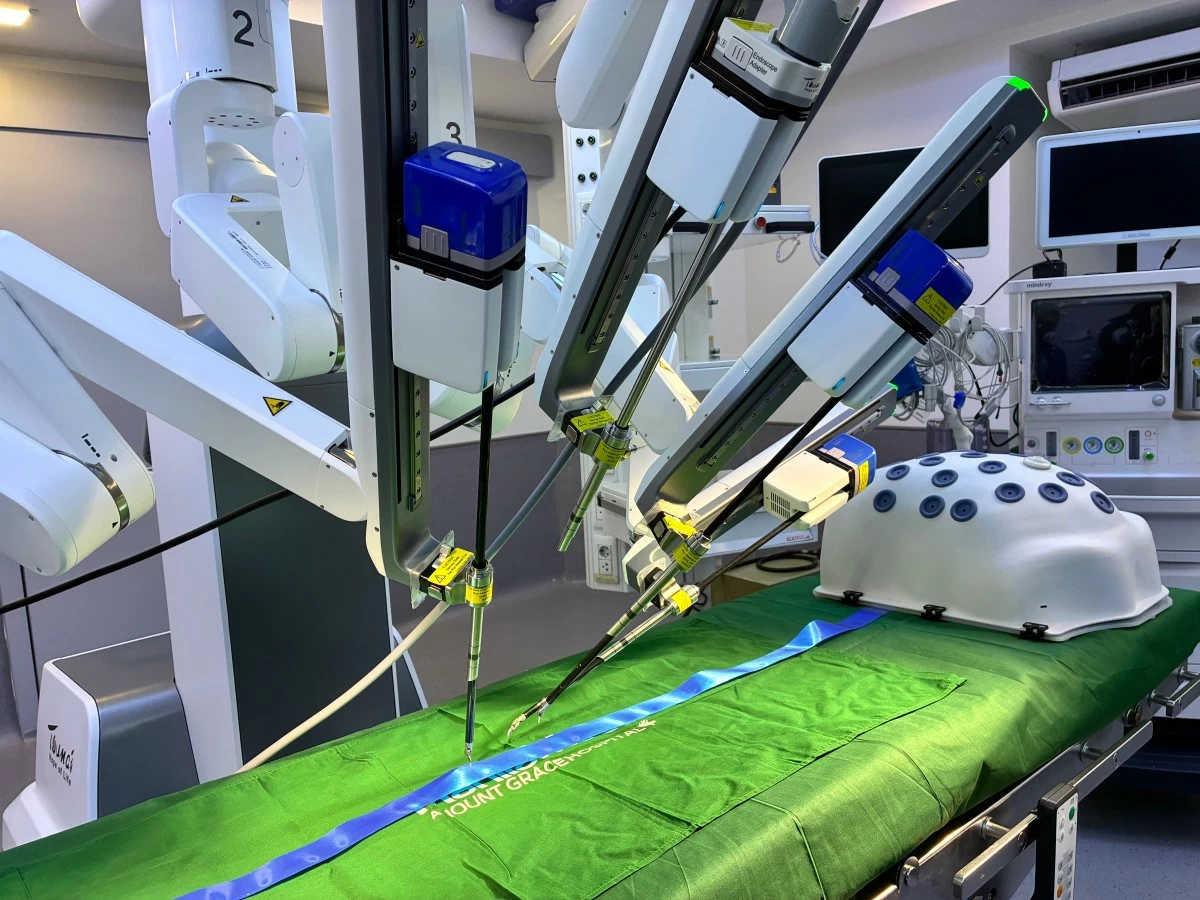
Just in time to celebrate their anniversary on Aug. 15, ManilaMed has launched the Precision & Advanced Robotics Surgery Suite, introducing a robotic system named EDDIE–short for “Efficiency” and “Dexterity.” This surgical tool is designed to assist surgeries in the thoracic (chest) region.
In a time where AI and automation is fast entering multiple industries, ManilaMed has stressed that the robot is not a replacement for a surgeon’s judgement. It serves as a precision-enhancing tool that helps patients recover faster, reduce complications, and provides minimal invasiveness.
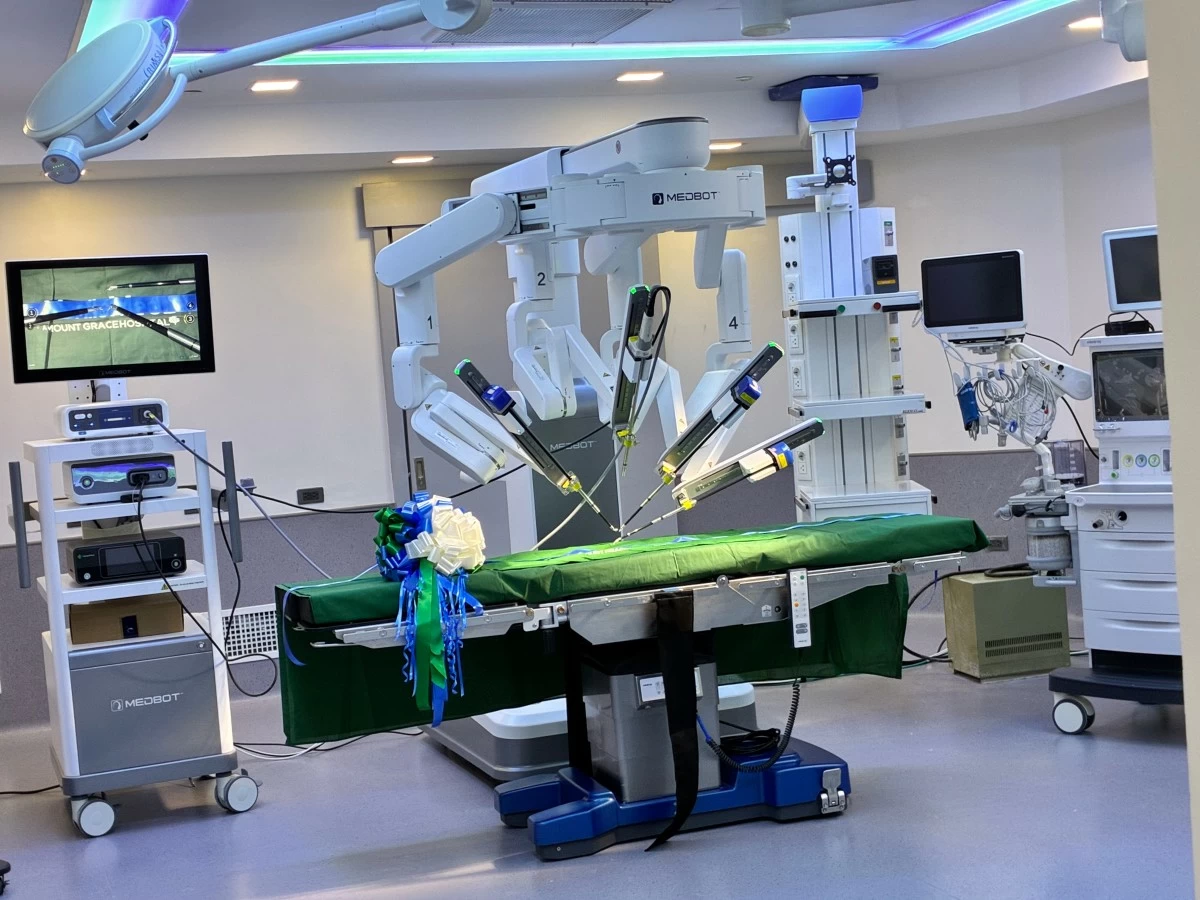
EDDIE, the robotic system for thoracic surgery
The robot is operated entirely by medically trained professionals, not by AI or automation. Licensed surgeons undergo specialized training to use the robot. They control the robotic arms from a console in real time.

Dr. Rouel Mateo M. Azores, chief of Department of Surgery.
“It all started with a dream, a vision, of our president, and now it’s here as a reality,” said Dr. Rouel Mateo M. Azores, chairman of the Department of Surgery. “This is not to steal the spotlight from our surgeons. This is an added, major tool that will help us operate with precision in every surgery we do.”
The robotic suite includes two dedicated rooms:
Operating Room: For patient procedures, equipped with the EDDIE robotic system.
Training and simulation room: For surgical staff to practice and refine their skills using simulation and hands-on modules.
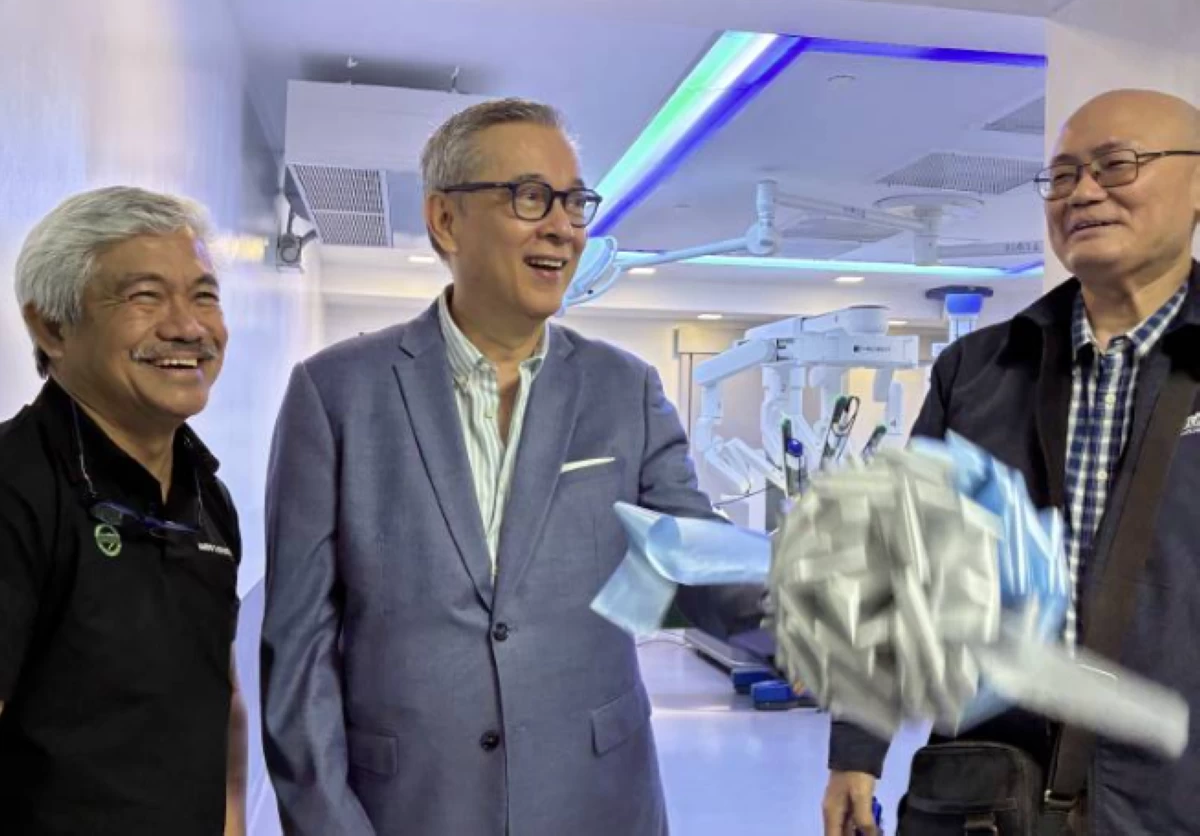
Dr. Eduardo S. Eseque, president of ManilaMed (left) with executives of the medical center.
ManilaMed has also confirmed that pricing for robotic-assisted procedures will remain competitive, aligning with market rates while offering advanced surgical capabilities.
The advantages of robotic-assisted thoracic surgery includes:
Enhanced precision: Robotic arms provide freedom for movement, allowing for tight maneuvers with ease.
Improved visualization: Closer view with magnification would allow surgeons to identify anatomy with greater accuracy.
Minimal invasiveness: Smaller cuts to reduce trauma, less postoperative pain, and less scarring. This would lead to faster recovery, allowing shorter hospital stays and patients could return to daily activities sooner.
Less complications: Lower bleeding and infection rates.
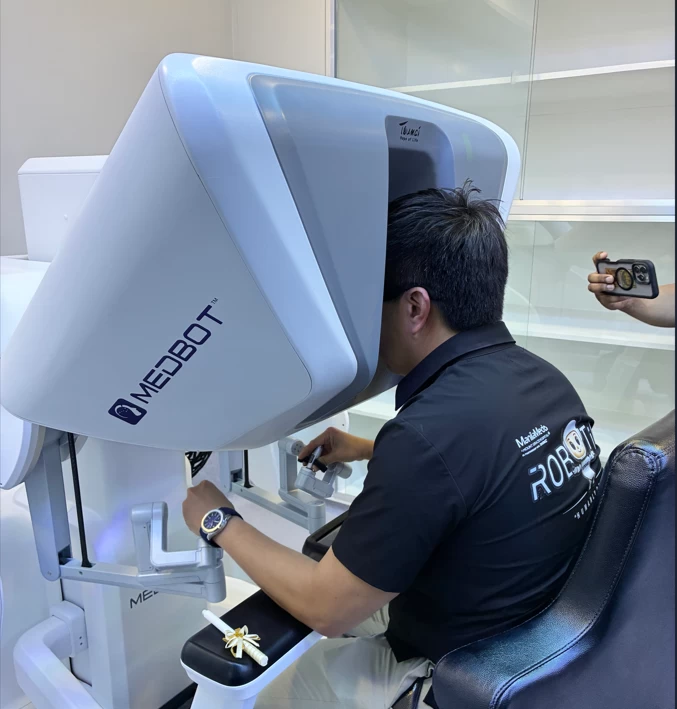
EDDIE can be controlled by the surgeon through a console.
Surgeon comfort: Surgeons would be operating seated in front of a console. It may sound a small thing, but the added comfort for the surgeon’s part would reduce their fatigue during lengthy procedures. Personally, if I were lying down on that operating table, I’d want my surgeon to be as comfortable as possible.
The launch of the EDDIE robotics suite coincides with ManilaMed's anniversary celebrations and is part of a broader expansion of services. Two additional facilities have also been inaugurated:
Center for Sleep Disorders: A dedicated clinic offering comprehensive diagnostics and treatment for conditions such as sleep apnea, insomnia, and narcolepsy.
New Emergency Room (ER): Designed to accommodate patients more efficiently, with expanded capacity, advanced triage systems, and streamlined workflows to reduce wait times.
These additions underscore ManilaMed's commitment to integrating cutting-edge technology with patient-centered care, positioning the hospital as a leader in both surgical innovation and holistic health services.