ADVERTISEMENT

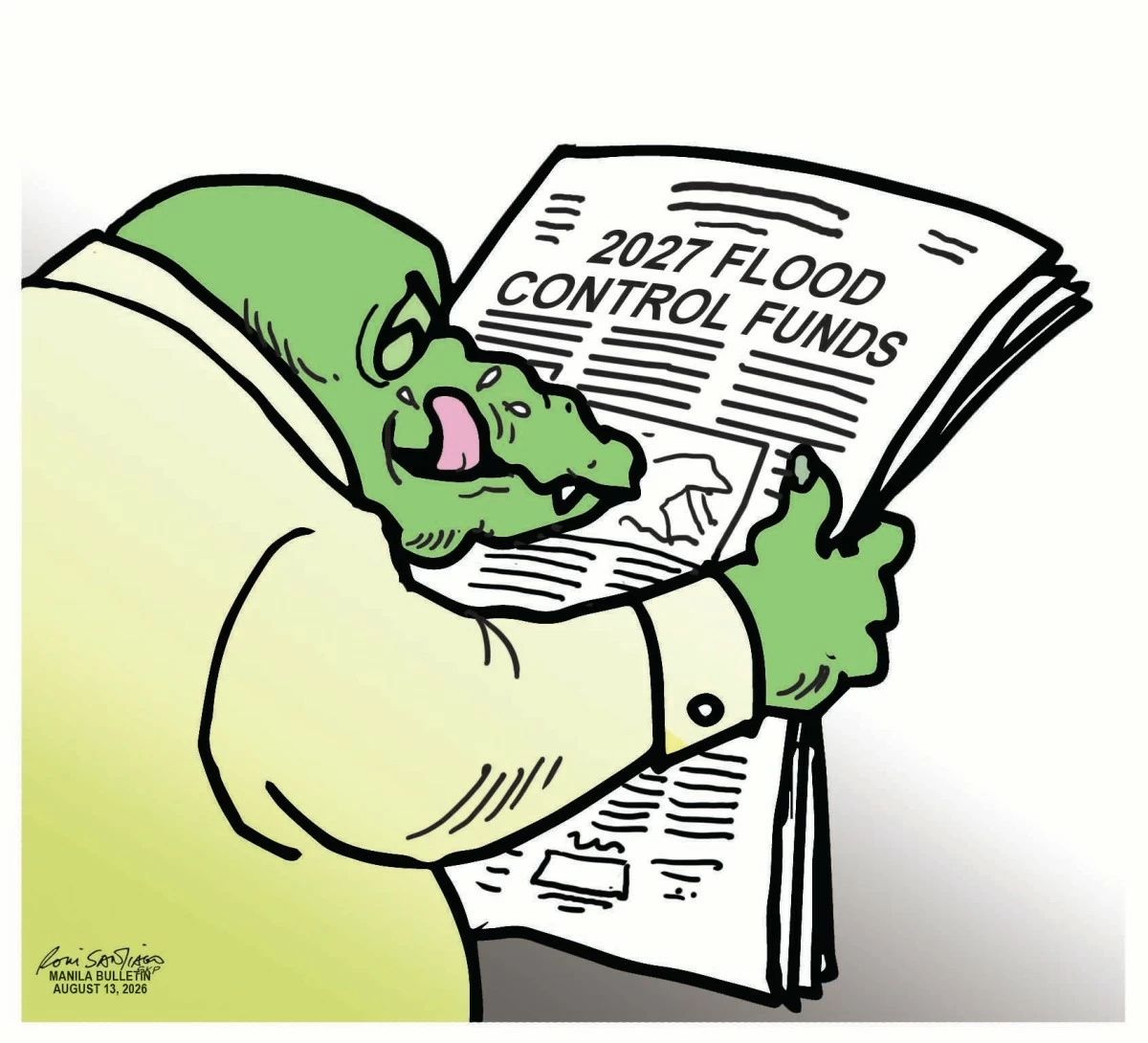
Flood control funds must not turn into floodgate for corruption

Published Aug 13, 2026 12:08 am  |  Updated Aug 12, 2026 04:12 pm
Flood control funding is back.
But its return to the proposed 2027 national budget should not be treated as a routine restoration of government spending. It should serve as a test of whether the state has learned anything from the scandal that badly damaged public trust in infrastructure projects.
The Department of Budget and Management (DBM) said ₱107.4 billion has been proposed for flood control in the 2027 National Expenditure Program, covering maintenance, repair, rehabilitation and improvement of existing infrastructure. Of this, ₱19.6 billion is intended for ongoing foreign-assisted projects, while another ₱3.41 billion is proposed for the Metropolitan Manila Development Authority's flood control program, including operations and maintenance.
There is a compelling reason to fund legitimate flood-control projects. The government cannot simply abandon structures already under construction, particularly facilities that protect lives, property and livelihoods. Nor can it ignore pumping stations and other infrastructure requiring continuing maintenance.
But neither can the government expect Filipinos to accept billions more on faith, without physical evidence.
Now, the central question is no longer whether the country needs flood control. It does. The question is whether the government can guarantee that flood-control funds will not become another floodgate for corruption.
This is where Congress must be uncompromising.
During House deliberations and the crafting of the proposed General Appropriations Act, lawmakers must scrutinize every proposed project, not merely the aggregate amount. Every peso must have a clearly identified project, location, purpose, implementing agency, contractor, timetable and measurable output. Projects without sufficient technical justification should not survive simply because they have political backers.
Congress must also demand that releases and payments correspond to verified accomplishments. Completion on paper must never substitute for concrete results. A project billed as finished must actually exist, function and serve the communities for which it was funded.
The New Government Procurement Act, or Republic Act No. 12009, gives the government additional tools. It promotes open contracting and public monitoring, requires disclosure of beneficial ownership and expands the role of civil society and other observers in procurement. The law is only as effective as those willing to enforce it.
The executive branch must therefore make transparency the default. A publicly accessible digital dashboard should allow citizens to trace every major flood-control project from appropriation and bidding to contract award, construction, payment and completion. Technical documents, project locations, contractors, beneficial owners, disbursements and physical progress should be available in formats ordinary citizens can understand.
The private sector has an equally important obligation. Contractors, consultants, engineers and suppliers must stop treating corruption as the cost of doing business. Companies must compete honestly, disclose their real owners, reject kickbacks and report illicit demands. Industry groups and professional organizations should help monitor projects and expose irregularities rather than remain silent when wrongdoing benefits their members.
And citizens cannot outsource accountability to the government.
Every Filipino who pays taxes has a stake in every flood-control project. Communities can document construction, compare actual work with approved plans, question suspicious projects and report irregularities. Journalists, universities, civil-society organizations and watchdog groups can turn public data into sustained scrutiny.
The government has vowed the flood-control scandal must not be repeated. That promise deserves more than rhetoric. It requires a system in which corruption is difficult to hide, public money is easy to trace, and failure has consequences.
The country needs flood control. But before the next peso is spent, it needs something equally urgent: corruption control.
Every peso must count. Every project must be delivered. And every official entrusted with public money must be accountable till the last centavo.

Related Tags

2027 National Budget FLOOD CONTROL DBM National Expenditure Program
ADVERTISEMENT
.most-popular .layout-ratio{ padding-bottom: 79.13%; } @media (min-width: 768px) and (max-width: 1024px) { .widget-title { font-size: 15px !important; } }

{{ articles_filter_1561_widget.title }}

.most-popular .layout-ratio{ padding-bottom: 79.13%; } @media (min-width: 768px) and (max-width: 1024px) { .widget-title { font-size: 15px !important; } }

{{ static_articles_1562_widget.title }}

.most-popular .layout-ratio{ padding-bottom: 79.13%; } @media (min-width: 768px) and (max-width: 1024px) { .widget-title { font-size: 15px !important; } }

{{ articles_filter_1563_widget.title }}

{{ articles_filter_1564_widget.title }}

.mb-article-details { position: relative; } .mb-article-details .article-body-preview, .mb-article-details .article-body-summary{ font-size: 17px; line-height: 30px; font-family: "Libre Caslon Text", serif; color: #000; } .mb-article-details .article-body-preview iframe , .mb-article-details .article-body-summary iframe{ width: 100%; margin: auto; } .read-more-background { background: linear-gradient(180deg, color(display-p3 1.000 1.000 1.000 / 0) 13.75%, color(display-p3 1.000 1.000 1.000 / 0.8) 30.79%, color(display-p3 1.000 1.000 1.000) 72.5%); position: absolute; height: 200px; width: 100%; bottom: 0; display: flex; justify-content: center; align-items: center; padding: 0; } .read-more-background a{ color: #000; } .read-more-btn { padding: 17px 45px; font-family: Inter; font-weight: 700; font-size: 18px; line-height: 16px; text-align: center; vertical-align: middle; border: 1px solid black; background-color: white; } .hidden { display: none; }
function initializeAllSwipers() { // Get all hidden inputs with cms_article_id document.querySelectorAll('[id^="cms_article_id_"]').forEach(function (input) { const cmsArticleId = input.value; const articleSelector = '#article-' + cmsArticleId + ' .body_images'; const swiperElement = document.querySelector(articleSelector); if (swiperElement && !swiperElement.classList.contains('swiper-initialized')) { new Swiper(articleSelector, { loop: true, pagination: false, navigation: { nextEl: '#article-' + cmsArticleId + ' .swiper-button-next', prevEl: '#article-' + cmsArticleId + ' .swiper-button-prev', }, }); } }); } setTimeout(initializeAllSwipers, 3000); const intersectionObserver = new IntersectionObserver( (entries) => { entries.forEach((entry) => { if (entry.isIntersecting) { const newUrl = entry.target.getAttribute("data-url"); if (newUrl) { history.pushState(null, null, newUrl); let article = entry.target; // Extract metadata const author = article.querySelector('.author-section').textContent.replace('By', '').trim(); const section = article.querySelector('.section-info ').textContent.replace(' ', ' '); const title = article.querySelector('.article-title h1').textContent; // Parse URL for Chartbeat path format const parsedUrl = new URL(newUrl, window.location.origin); const cleanUrl = parsedUrl.host + parsedUrl.pathname; // Update Chartbeat configuration if (typeof window._sf_async_config !== 'undefined') { window._sf_async_config.path = cleanUrl; window._sf_async_config.sections = section; window._sf_async_config.authors = author; } // Track virtual page view with Chartbeat if (typeof pSUPERFLY !== 'undefined' && typeof pSUPERFLY.virtualPage === 'function') { try { pSUPERFLY.virtualPage({ path: cleanUrl, title: title, sections: section, authors: author }); } catch (error) { console.error('ping error', error); } } // Optional: Update document title if (title && title !== document.title) { document.title = title; } } } }); }, { threshold: 0.1 } ); function showArticleBody(button) { const article = button.closest("article"); const summary = article.querySelector(".article-body-summary"); const body = article.querySelector(".article-body-preview"); const readMoreSection = article.querySelector(".read-more-background"); // Hide summary and read-more section summary.style.display = "none"; readMoreSection.style.display = "none"; // Show the full article body body.classList.remove("hidden"); } document.addEventListener("DOMContentLoaded", () => { let loadCount = 0; // Track how many times articles are loaded const offset = [1, 2, 3, 4, 5, 6, 7, 8, 9, 10]; // Offset values const currentUrl = window.location.pathname.substring(1); let isLoading = false; // Prevent multiple calls if (!currentUrl) { console.log("Current URL is invalid."); return; } const sentinel = document.getElementById("load-more-sentinel"); if (!sentinel) { console.log("Sentinel element not found."); return; } function isSentinelVisible() { const rect = sentinel.getBoundingClientRect(); return ( rect.top < window.innerHeight && rect.bottom >= 0 ); } function onScroll() { if (isLoading) return; if (isSentinelVisible()) { if (loadCount >= offset.length) { console.log("Maximum load attempts reached."); window.removeEventListener("scroll", onScroll); return; } isLoading = true; const currentOffset = offset[loadCount]; window.loadMoreItems().then(() => { let article = document.querySelector('#widget_1690 > div:nth-last-of-type(2) article'); intersectionObserver.observe(article) loadCount++; }).catch(error => { console.error("Error loading more items:", error); }).finally(() => { isLoading = false; }); } } window.addEventListener("scroll", onScroll); });

Sign up by email to receive news.