ADVERTISEMENT

Beyond flood control, why sustainable cities must rethink urban water runoff

Published Aug 13, 2026 10:13 am
Each rainy season, submerged roads, stranded commuters, and flooded communities become a familiar scene across the Philippines. As stronger typhoons and more intense rainfall intersect with rapid urban development, experts say addressing flooding requires more than expanding drainage systems. It also calls for changes in how cities manage stormwater.
The issue was discussed at the Stormwater Summit 2026 held July 21 at the Makati Shangri-La Hotel, where engineers, government officials, urban planners, water professionals, developers, and infrastructure stakeholders examined stormwater management and flood resilience.
Rather than focusing solely on flood response, the discussions considered stormwater management as part of climate adaptation and urban development. Speakers noted that paved roads, buildings, and other impervious surfaces prevent rainwater from naturally infiltrating the ground, increasing surface runoff and putting additional pressure on existing drainage infrastructure.
Secretary Christina Garcia Frasco, who serves as presidential adviser for Sustainable and Resilient Communities, delivered the opening remarks.
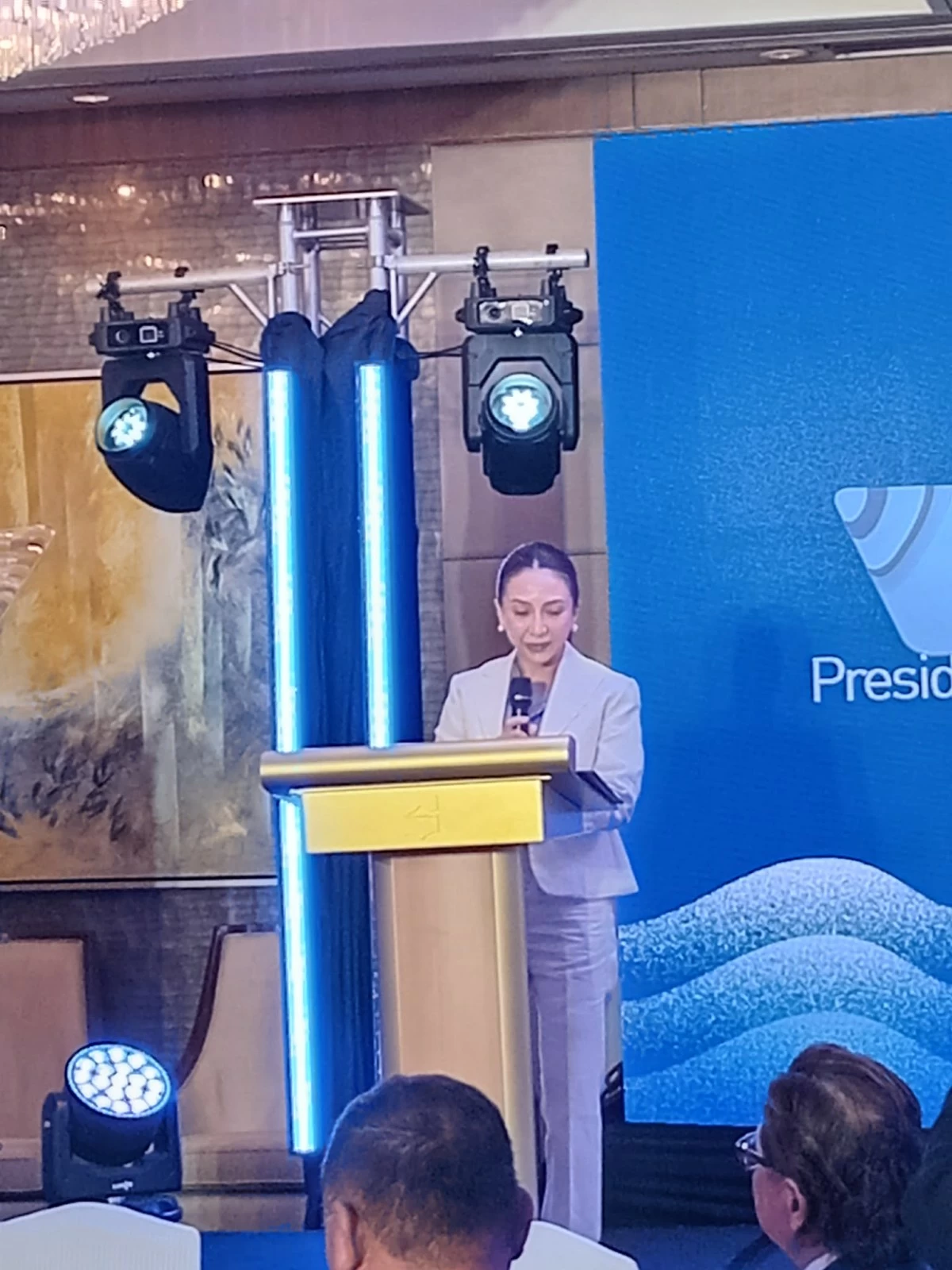
Secretary Christina Garcia Frasco, who also serves as presidential adviser for Sustainable and Resilient Communities, delivered the opening remarks. (Photo by Sean Fernando)
She stressed that "protecting communities is not only about responding after disruption; it is about reducing risk before it becomes a crisis," emphasizing preparedness, risk-informed planning, and sustainable development.
Frasco also described stormwater management as an example of the need for integrated planning, saying it requires engineering, technology, governance, environmental stewardship, financing, and community participation.
Citing recent discussions with the Organisation for Economic Co-operation and Development (OECD) and the European Union, she said resilience depends on "evidence-based decision-making, stronger institutional coordination, participatory governance, and public finance that enables investments before disasters occur, not just after them."
She also said that "people do not judge government by plans on paper" but by whether livelihoods, essential services, and communities are protected.
For the keynote address, Department of Public Works and Highways (DPWH) Undersecretary Charles Calima called for a shift from conventional flood control toward integrated stormwater management.
He discussed the Oplan Kontra Baha program, which has removed 1.7 million cubic meters of waste from waterways nationwide, as well as upgrades to drainage systems, High-Density Polyethylene (HDPE) pipes, pumping stations and mobile pumps.
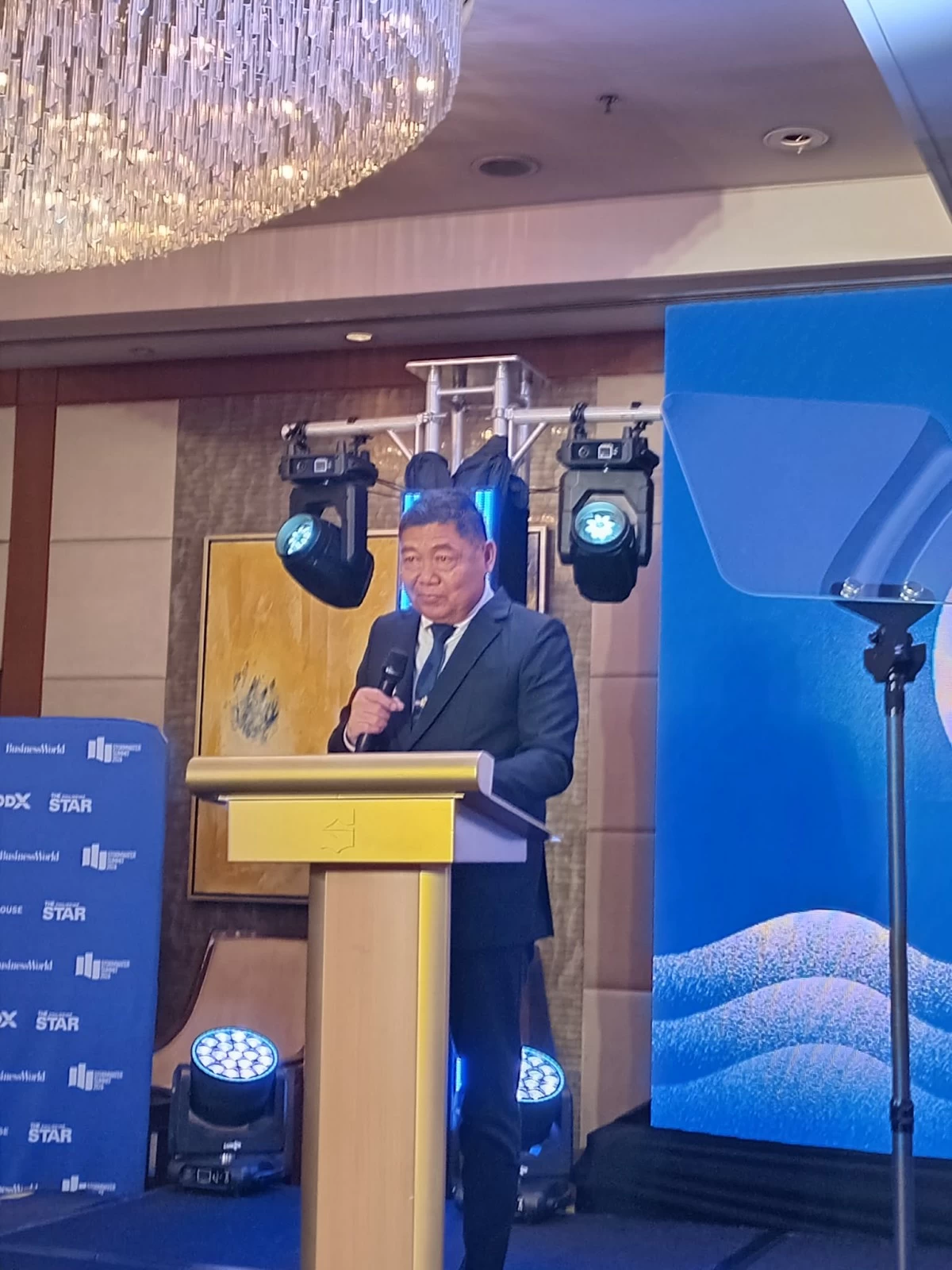
DPWH Undersecretary Charles Calima delivers his keynote address titled “Innovation Against the Flood”. (Photo by Sean Fernando)
"Every flood season teaches us the same important lesson—flooding is a nationwide problem, and we cannot solve it by relying on pumps and drainage systems alone," Calima said.
He said the DPWH is expanding the use of retention and detention basins that temporarily store stormwater, which can later be used for water supply and irrigation.
Technical sessions also covered sustainable drainage systems, detention and retention facilities, permeable pavements, and nature-based solutions that slow, store, or absorb stormwater before it overwhelms waterways. Digital monitoring and predictive technologies were also discussed as tools for operating and maintaining drainage infrastructure.
During a panel discussion, Calima said worsening floods are driven by climate change and rapid urbanization. He cited waterway clearing under Oplan Kontra Baha and called for integrated water management and stronger interagency coordination, urging stakeholders to "unify with a common goal."
Ryan Yuen, managing director of PUB Consultants Pte. Ltd., discussed Singapore’s approach to water management, saying the principle that "our taps can never run dry" has led the country to treat rainwater as a resource rather than simply drain it away. He also cited centralized water management as a factor in Singapore’s approach.
April Yang, CEO of Flexi Systems and FloodX, discussed flood barriers, sensors, and monitoring systems as technologies that can be deployed by communities. She said flood resilience involves more than financial considerations.
"It's not all about just dollars and cents. It's also about time loss, community health, and public safety," Yang said.
The discussions pointed to an approach that goes beyond larger drainage channels. Instead, cities can combine drainage infrastructure with measures that retain, absorb, or reuse stormwater, reducing pressure on existing flood control systems.

Related Tags

Sustainability Stormwater Summit 2026 water management
ADVERTISEMENT
.most-popular .layout-ratio{ padding-bottom: 79.13%; } @media (min-width: 768px) and (max-width: 1024px) { .widget-title { font-size: 15px !important; } }

{{ articles_filter_1561_widget.title }}

.most-popular .layout-ratio{ padding-bottom: 79.13%; } @media (min-width: 768px) and (max-width: 1024px) { .widget-title { font-size: 15px !important; } }

{{ static_articles_1562_widget.title }}

.most-popular .layout-ratio{ padding-bottom: 79.13%; } @media (min-width: 768px) and (max-width: 1024px) { .widget-title { font-size: 15px !important; } }

{{ articles_filter_1563_widget.title }}

{{ articles_filter_1564_widget.title }}

.mb-article-details { position: relative; } .mb-article-details .article-body-preview, .mb-article-details .article-body-summary{ font-size: 17px; line-height: 30px; font-family: "Libre Caslon Text", serif; color: #000; } .mb-article-details .article-body-preview iframe , .mb-article-details .article-body-summary iframe{ width: 100%; margin: auto; } .read-more-background { background: linear-gradient(180deg, color(display-p3 1.000 1.000 1.000 / 0) 13.75%, color(display-p3 1.000 1.000 1.000 / 0.8) 30.79%, color(display-p3 1.000 1.000 1.000) 72.5%); position: absolute; height: 200px; width: 100%; bottom: 0; display: flex; justify-content: center; align-items: center; padding: 0; } .read-more-background a{ color: #000; } .read-more-btn { padding: 17px 45px; font-family: Inter; font-weight: 700; font-size: 18px; line-height: 16px; text-align: center; vertical-align: middle; border: 1px solid black; background-color: white; } .hidden { display: none; }
function initializeAllSwipers() { // Get all hidden inputs with cms_article_id document.querySelectorAll('[id^="cms_article_id_"]').forEach(function (input) { const cmsArticleId = input.value; const articleSelector = '#article-' + cmsArticleId + ' .body_images'; const swiperElement = document.querySelector(articleSelector); if (swiperElement && !swiperElement.classList.contains('swiper-initialized')) { new Swiper(articleSelector, { loop: true, pagination: false, navigation: { nextEl: '#article-' + cmsArticleId + ' .swiper-button-next', prevEl: '#article-' + cmsArticleId + ' .swiper-button-prev', }, }); } }); } setTimeout(initializeAllSwipers, 3000); const intersectionObserver = new IntersectionObserver( (entries) => { entries.forEach((entry) => { if (entry.isIntersecting) { const newUrl = entry.target.getAttribute("data-url"); if (newUrl) { history.pushState(null, null, newUrl); let article = entry.target; // Extract metadata const author = article.querySelector('.author-section').textContent.replace('By', '').trim(); const section = article.querySelector('.section-info ').textContent.replace(' ', ' '); const title = article.querySelector('.article-title h1').textContent; // Parse URL for Chartbeat path format const parsedUrl = new URL(newUrl, window.location.origin); const cleanUrl = parsedUrl.host + parsedUrl.pathname; // Update Chartbeat configuration if (typeof window._sf_async_config !== 'undefined') { window._sf_async_config.path = cleanUrl; window._sf_async_config.sections = section; window._sf_async_config.authors = author; } // Track virtual page view with Chartbeat if (typeof pSUPERFLY !== 'undefined' && typeof pSUPERFLY.virtualPage === 'function') { try { pSUPERFLY.virtualPage({ path: cleanUrl, title: title, sections: section, authors: author }); } catch (error) { console.error('ping error', error); } } // Optional: Update document title if (title && title !== document.title) { document.title = title; } } } }); }, { threshold: 0.1 } ); function showArticleBody(button) { const article = button.closest("article"); const summary = article.querySelector(".article-body-summary"); const body = article.querySelector(".article-body-preview"); const readMoreSection = article.querySelector(".read-more-background"); // Hide summary and read-more section summary.style.display = "none"; readMoreSection.style.display = "none"; // Show the full article body body.classList.remove("hidden"); } document.addEventListener("DOMContentLoaded", () => { let loadCount = 0; // Track how many times articles are loaded const offset = [1, 2, 3, 4, 5, 6, 7, 8, 9, 10]; // Offset values const currentUrl = window.location.pathname.substring(1); let isLoading = false; // Prevent multiple calls if (!currentUrl) { console.log("Current URL is invalid."); return; } const sentinel = document.getElementById("load-more-sentinel"); if (!sentinel) { console.log("Sentinel element not found."); return; } function isSentinelVisible() { const rect = sentinel.getBoundingClientRect(); return ( rect.top < window.innerHeight && rect.bottom >= 0 ); } function onScroll() { if (isLoading) return; if (isSentinelVisible()) { if (loadCount >= offset.length) { console.log("Maximum load attempts reached."); window.removeEventListener("scroll", onScroll); return; } isLoading = true; const currentOffset = offset[loadCount]; window.loadMoreItems().then(() => { let article = document.querySelector('#widget_1690 > div:nth-last-of-type(2) article'); intersectionObserver.observe(article) loadCount++; }).catch(error => { console.error("Error loading more items:", error); }).finally(() => { isLoading = false; }); } } window.addEventListener("scroll", onScroll); });

Sign up by email to receive news.