ADVERTISEMENT

Zip code Jurassic: A review of 'The End of Oak Street'

Published Aug 12, 2026 08:42 am
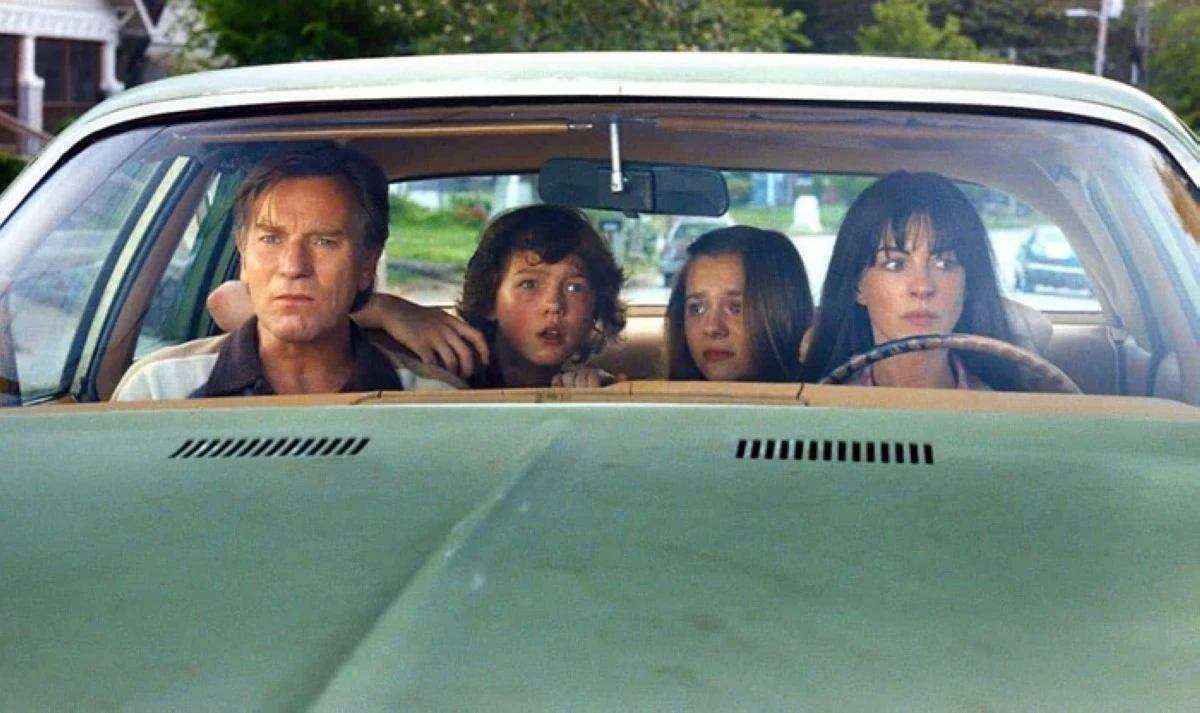
A scene from the film
A scene from the film "The End of Oak Street"
David Robert Mitchell writes and directs the SciFi adventure "The End of Oak Street." He also directed "It Follows" and "Under the Silver Lake," and both films were much loved by film critics for having original and expansive premises, and strong storylines. While audiences may have been confused by "Silver Lake," which could be best described as a homage of sorts to David Lynch; Mitchell obviously still had enough Hollywood clout to be given the green light for this late summer, potential blockbuster. It’s a Warner Bros. Pictures film, with JJ Abrams on board as co-producer via Bad Robot.
The film stars Anne Hathaway (Denise) & Ewan McGregor (Greg) as the heads of the Platt family, with Maisy Stella (Audrey) and Christian Convery (Brian) playing their children. Jordana Alexa Davis is in the cast as a neighbor; as is P. J. Bryne. The idyllic opening of the film is 1980’s suburbia, in any town of the era in the United States. And I’m reminded of films like "Jurassic Park" and "Poltergeist;" blended with TV series such as "Gravity Falls" and "La Brea."
Mitchell has been quoted in interviews as saying that the premise of this film began with an image he saw of a dinosaur digging through suburban rubbish. The juxtapostion of those two elements, a dinosaur, and today’s garbage; struck him as having poignant potential, and from there the screenplay was born. So all one needs to know is that a mysterious cosmic event literally rips Oak Street from suburbia, and it’s now conjoined to a prehistoric ‘Jurassic Park’ world.
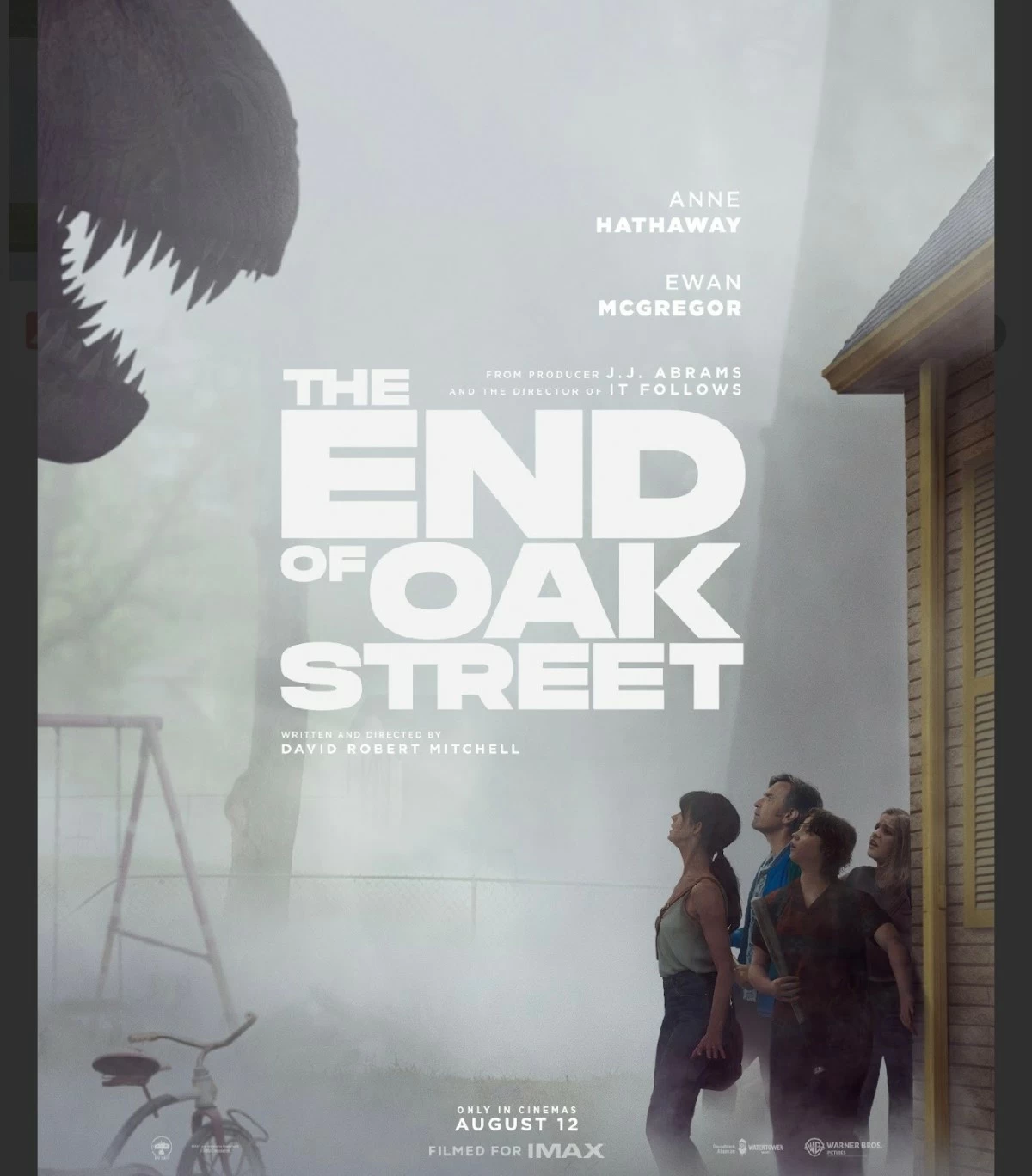
Screenshot
Screenshot
There’s evident box office potential in the film’s premise; and during the advanced screening I caught, there was light applause when the film ended. But me, I felt that suspension of disbelief did not make up for the film’s dearth of internal logic, and for the poor decision-making of the main set of characters. Too often, they acted with no real rhyme or reason, and would, at a drop of a pin, suddenly play cute to endear themselves to the audience, or fly in the face of plausability, just to produce an awww-moment - or like magic, bring about a happy ending.
And this was frustrating, as the first twenty minutes or so, did set us up beautifully. The internal confusion, tension, and suspense were all being conducted with real skill; and I was enjoying how it was all being set up. But when hell should have broken loose, we were given too much of the same, too little of new plot twists and turns; and when we finally got things going with a surprise casualty, the film’s deus ex machina reappeared and just beggared belief. I know we have to find a resolution, engineer an ending to the film; but its also has to be logical from within the film’s world-building, and not just be a tacked on as a feelgood sequence.
Acting of the children also left much to be desired, and I remembered how Jurassic Park raised its stakes because we cared for the kids, as Speilberg had pushed the two kids to strong performances. Here, it seemed like they were merely going through the motions, acting as the receptors for what parental instincts would kick in from the two main stars. Even the child actor portraying the neighbor’s daughter seemed to be just mouthing her lines; in a bored daze.
So yes, this was filmed in IMAX; and has all the elements to be a late summer blockbuster. But I’m predicting it’ll have its share of savage, negative reviews. But then, you pit the people of today against dinosaurs, and perhaps all the the things I mention above don’t matter. As long as there’s Amblin-type spectacle, and the film is providing cheap thrills and jump scares, those could be more than enough to gather those hoped-for box office returns. Dare we wish for a sequel? The End of the End of Oak Street? Or The End of Oak Street Extension?

Related Tags

Anne Hathaway The End of Oak Street Ewan McGregor
ADVERTISEMENT
.most-popular .layout-ratio{ padding-bottom: 79.13%; } @media (min-width: 768px) and (max-width: 1024px) { .widget-title { font-size: 15px !important; } }

{{ articles_filter_1561_widget.title }}

.most-popular .layout-ratio{ padding-bottom: 79.13%; } @media (min-width: 768px) and (max-width: 1024px) { .widget-title { font-size: 15px !important; } }

{{ static_articles_1562_widget.title }}

.most-popular .layout-ratio{ padding-bottom: 79.13%; } @media (min-width: 768px) and (max-width: 1024px) { .widget-title { font-size: 15px !important; } }

{{ articles_filter_1563_widget.title }}

{{ articles_filter_1564_widget.title }}

.mb-article-details { position: relative; } .mb-article-details .article-body-preview, .mb-article-details .article-body-summary{ font-size: 17px; line-height: 30px; font-family: "Libre Caslon Text", serif; color: #000; } .mb-article-details .article-body-preview iframe , .mb-article-details .article-body-summary iframe{ width: 100%; margin: auto; } .read-more-background { background: linear-gradient(180deg, color(display-p3 1.000 1.000 1.000 / 0) 13.75%, color(display-p3 1.000 1.000 1.000 / 0.8) 30.79%, color(display-p3 1.000 1.000 1.000) 72.5%); position: absolute; height: 200px; width: 100%; bottom: 0; display: flex; justify-content: center; align-items: center; padding: 0; } .read-more-background a{ color: #000; } .read-more-btn { padding: 17px 45px; font-family: Inter; font-weight: 700; font-size: 18px; line-height: 16px; text-align: center; vertical-align: middle; border: 1px solid black; background-color: white; } .hidden { display: none; }
function initializeAllSwipers() { // Get all hidden inputs with cms_article_id document.querySelectorAll('[id^="cms_article_id_"]').forEach(function (input) { const cmsArticleId = input.value; const articleSelector = '#article-' + cmsArticleId + ' .body_images'; const swiperElement = document.querySelector(articleSelector); if (swiperElement && !swiperElement.classList.contains('swiper-initialized')) { new Swiper(articleSelector, { loop: true, pagination: false, navigation: { nextEl: '#article-' + cmsArticleId + ' .swiper-button-next', prevEl: '#article-' + cmsArticleId + ' .swiper-button-prev', }, }); } }); } setTimeout(initializeAllSwipers, 3000); const intersectionObserver = new IntersectionObserver( (entries) => { entries.forEach((entry) => { if (entry.isIntersecting) { const newUrl = entry.target.getAttribute("data-url"); if (newUrl) { history.pushState(null, null, newUrl); let article = entry.target; // Extract metadata const author = article.querySelector('.author-section').textContent.replace('By', '').trim(); const section = article.querySelector('.section-info ').textContent.replace(' ', ' '); const title = article.querySelector('.article-title h1').textContent; // Parse URL for Chartbeat path format const parsedUrl = new URL(newUrl, window.location.origin); const cleanUrl = parsedUrl.host + parsedUrl.pathname; // Update Chartbeat configuration if (typeof window._sf_async_config !== 'undefined') { window._sf_async_config.path = cleanUrl; window._sf_async_config.sections = section; window._sf_async_config.authors = author; } // Track virtual page view with Chartbeat if (typeof pSUPERFLY !== 'undefined' && typeof pSUPERFLY.virtualPage === 'function') { try { pSUPERFLY.virtualPage({ path: cleanUrl, title: title, sections: section, authors: author }); } catch (error) { console.error('ping error', error); } } // Optional: Update document title if (title && title !== document.title) { document.title = title; } } } }); }, { threshold: 0.1 } ); function showArticleBody(button) { const article = button.closest("article"); const summary = article.querySelector(".article-body-summary"); const body = article.querySelector(".article-body-preview"); const readMoreSection = article.querySelector(".read-more-background"); // Hide summary and read-more section summary.style.display = "none"; readMoreSection.style.display = "none"; // Show the full article body body.classList.remove("hidden"); } document.addEventListener("DOMContentLoaded", () => { let loadCount = 0; // Track how many times articles are loaded const offset = [1, 2, 3, 4, 5, 6, 7, 8, 9, 10]; // Offset values const currentUrl = window.location.pathname.substring(1); let isLoading = false; // Prevent multiple calls if (!currentUrl) { console.log("Current URL is invalid."); return; } const sentinel = document.getElementById("load-more-sentinel"); if (!sentinel) { console.log("Sentinel element not found."); return; } function isSentinelVisible() { const rect = sentinel.getBoundingClientRect(); return ( rect.top < window.innerHeight && rect.bottom >= 0 ); } function onScroll() { if (isLoading) return; if (isSentinelVisible()) { if (loadCount >= offset.length) { console.log("Maximum load attempts reached."); window.removeEventListener("scroll", onScroll); return; } isLoading = true; const currentOffset = offset[loadCount]; window.loadMoreItems().then(() => { let article = document.querySelector('#widget_1690 > div:nth-last-of-type(2) article'); intersectionObserver.observe(article) loadCount++; }).catch(error => { console.error("Error loading more items:", error); }).finally(() => { isLoading = false; }); } } window.addEventListener("scroll", onScroll); });

Sign up by email to receive news.