






Manila Bulletin
 Business
Trade & Industry
Philippines airfares to ease as fuel surcharge trimmed for late August
Business
Trade & Industry
Philippines airfares to ease as fuel surcharge trimmed for late August
Business
Trade & Industry
Philippines airfares to ease as fuel surcharge trimmed for late August
Philippines airfares to ease as fuel surcharge trimmed for late August
Published Aug 12, 2026 06:22 pm


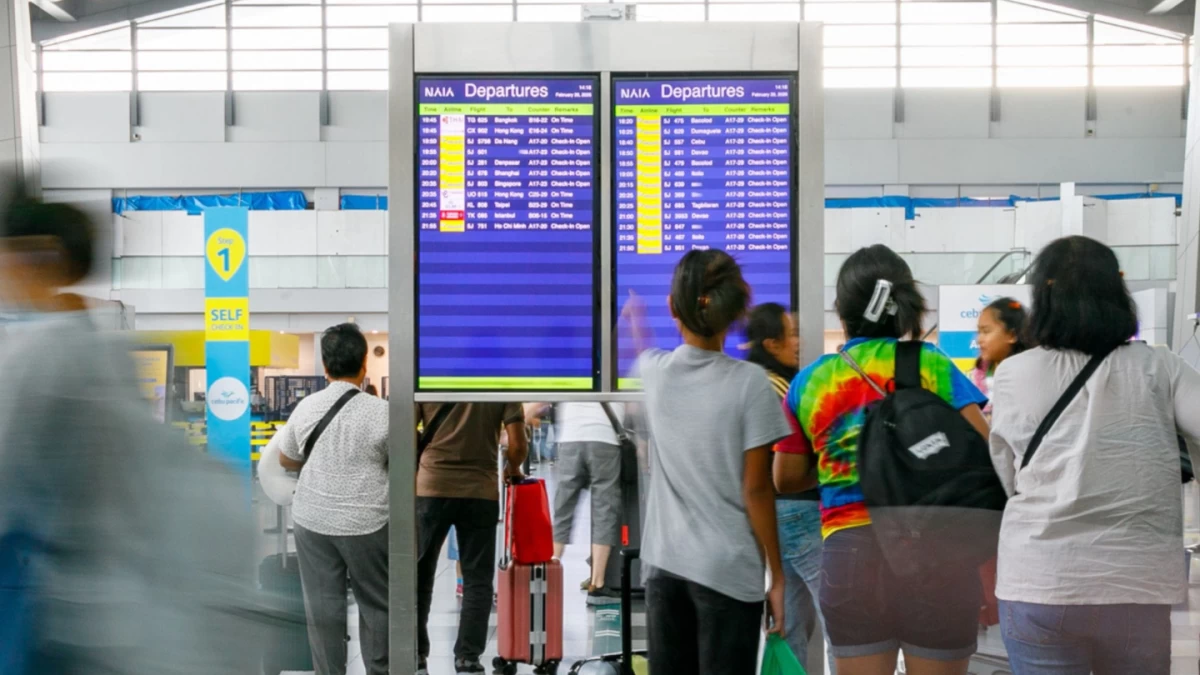
Filipinos looking for cheap flights may find that opportunity until the end of the month, as the government revised the passenger fuel surcharge down a notch following a slight easing in jet fuel prices.
In an advisory on Wednesday, Aug. 12, the Civil Aeronautics Board (CAB) set the fuel surcharge for Aug. 16 to 31 at Level 12, from the current Level 13 for the first half of August.
Under Level 12, airlines may impose an additional ₱389 to ₱1,137 for domestic flights, while the surcharge ranges from ₱1,284.40 to ₱9,550.13 for international destinations.
The CAB has set the conversion rate at ₱61.30 per United States dollar for airlines collecting the surcharge in foreign currencies.
The imposition of fuel surcharges allows carriers to recover fuel costs and offset financial losses caused by increases in jet fuel costs.
At present, the applicable surcharge level is determined every 15 days, from the usual one-month coverage, to provide more flexibility in setting rates based on prevailing jet fuel prices.
Since the Middle East conflict erupted in late February, jet fuel prices have far exceeded the previous average of below $100 per barrel.
Monitoring by the International Air Transport Association (IATA) showed that the average price of jet fuel in the global market increased by one percent to $146.93 per barrel as of Aug. 7.
While also higher than last year’s level by more than half, the current price is lower than the recent spike in jet fuel prices to more than $200 per barrel in April, which prompted the CAB to increase the surcharge level to a record Level 19.
Low-cost carrier Cebu Pacific earlier blamed the impact of higher jet fuel prices for the surge in operating costs in the first six months, which directly resulted in a net loss of ₱5.87 billion for the company.
IATA director for flight and operations Stuart Fox said jet fuel costs are expected to account for nearly a third of operating costs for airlines this year, which are estimated at around $350 billion for the entire aviation industry.
As such, Fox said profit margins for airlines would likely shrink from 4.2 percent in 2025 to just around two percent this year.
“In these circumstances, airlines have no choice but to try to pass higher fuel costs on to their customers. But that is never a permanent remedy. While demand remains solid, tolerance for higher travel costs is also likely to have its limits,” he said in a blog.
To help airlines reduce fuel burn, Fox said airlines can consider offering more direct routings during arrivals to save on fuel, as well as addressing other inefficiencies in the air traffic management system.