






Manila Bulletin
 Philippines
Mindanao
PH Eagle Foundation: Sawaga-Dalwangan died due to serious bacterial infection, multiple-organ failure
Philippines
Mindanao
PH Eagle Foundation: Sawaga-Dalwangan died due to serious bacterial infection, multiple-organ failure
Philippines
Mindanao
PH Eagle Foundation: Sawaga-Dalwangan died due to serious bacterial infection, multiple-organ failure
PH Eagle Foundation: Sawaga-Dalwangan died due to serious bacterial infection, multiple-organ failure
Published Aug 12, 2026 07:14 pm


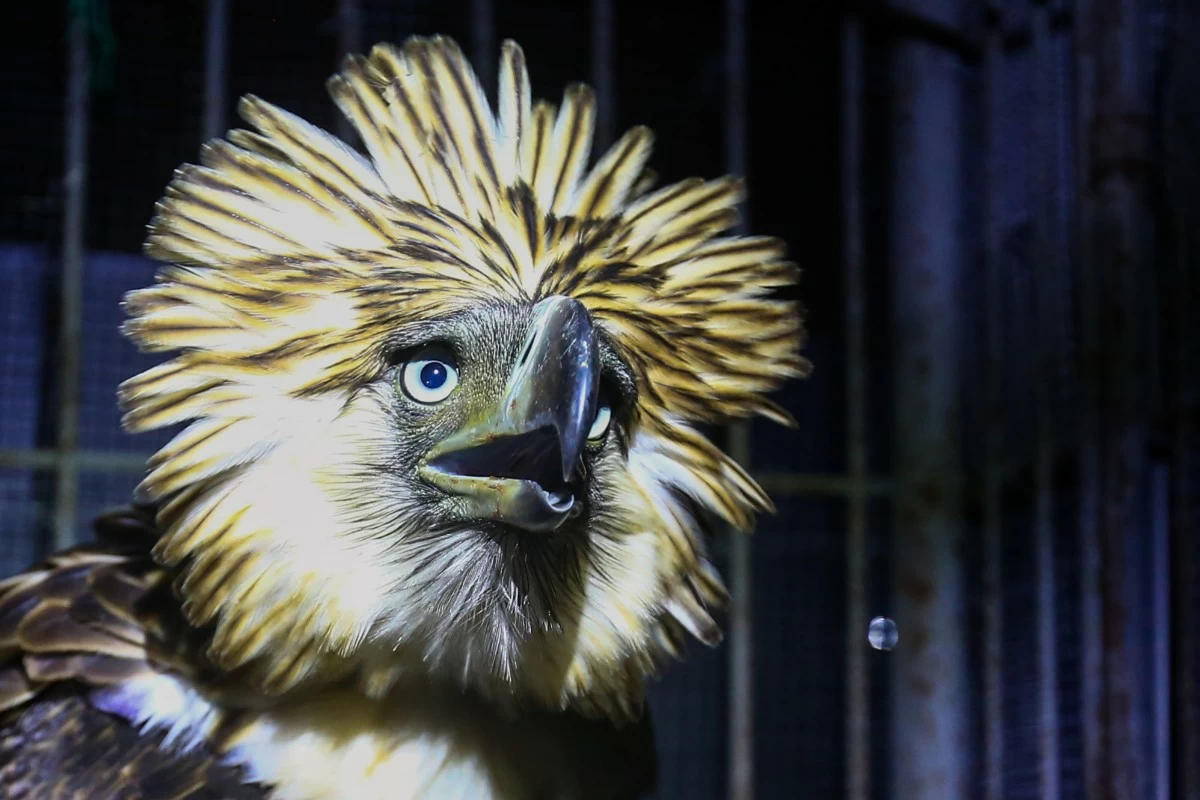
Sawaga-Dalwangan (Keith Bacongco)
DAVAO CITY – Almost a month since the rescued Philippine Eagle “Sawaga-Dalwangan” passed away, the Philippine Eagle Foundation (PEF) announced on Wednesday, August 12, that the eagle died due to serious bacterial and multiple-organ failure.
In a statement, the PEF said that the signs of serious bacterial infection had spread throughout the eagle’s body. “Bacteria were seen in her liver, and there was inflammation and damage in several organs, including her liver and heart."
A veterinary report obtained by Manila Bulletin also showed that the infection had been developing two to six weeks prior to her death.
“The associated inflammatory and degenerative changes are more consistent with an infection that had been developing over a subacute to chronic period, potentially spanning approximately 2-6 weeks prior to death,” the report further stated
The report was signed by PEF veterinarians Danielle Kirsten Pasion and veterinary consultant Bayani Vandenbroeck.
With the histopathology findings, Vandenbroeck said that it points that the eagle was infected for weeks prior to her turnover to the PEF and Department of Environment and Natural Resources (DENR) on July 3.
The histopathological examination was conducted by Dr. Vingelle Bautista-Jimenez of the Central Mindanao University College of Veterinary Medicine in Bukidnon.
Earlier, the PEF theorized that the eagle may have been on the ground for an extended period due to heavy soiling and maggot infestation.
“The eagle’s presentation upon first arrival at the clinic – heavily soiled lower and ventral parts of the body and wings that were infested with maggots, extensive abrasions on the underside of the wings, and rope burns on the legs – all point towards evidence that the eagle was somehow tied by a rope and grounded for a significant time already,” Vandenbroeck recalled.
Despite signs of clinical improvement while undergoing treatment and rehabilitation, the eagle developed sudden generalized seizures and died on July 18.
The PEF added that further examination showed that a serious infection was still present in her body.
“The eagle's compromised condition at rescue, including dehydration, traumatic wounds, extensive soiling, and maggot infestation, may have increased susceptibility to secondary bacterial infection,” the veterinarians’ report added.
As a result, the veterinarians noted that the changes seen in her tissues, suggesting the infection may have been developing over a subacute to chronic period, potentially beginning weeks before her death.
Following her death, necropsy results showed an enlarged liver with blunted edges, and a thickened and abnormally firm heart.
“External wounds consistent with previous injuries were noted on the wings and tail, together with an airgun pellet entry wound on the medial aspect of the left limb. No fresh traumatic wounds, significant external hemorrhage, or other gross evidence of a recent acute traumatic event were identified during necropsy,” the PEF said.
Unlikely narrative
Sawaga-Dalwangan’s rescue went viral a few days following her rescue due to claims that she was believed to be mobbed by 30 monkeys and was later rescued by an indigenous farmer from the forests of Barangay Dalwangan in Malaybalay City, Bukidnon.
The story caught the attention of many netizens, government officials and many other private individuals, hailing the farmer as a hero for rescuing the eagle from the troop of monkeys.
But zoologist Lief Erikson Gamalo, a faculty member of the University of the Philippines (UP)-Mindanao in this city, said the narrative was very unlikely.
Gamalo, who has been studying monkeys in different parts of the country for about 10 years already, said that he has never seen a monkey attacking its predator.
“If there were monkeys in the vicinity of the Philippine Eagle, it’s very unlikely that they would attack or get closer even if it's restrained. The most that they can do is sound an alarm call to alert the troop,” he said in an interview.
In his years of studying a monkey, Gamalo recalled that he had only seen about less than 10 monkeys tailing a snake once for about two minutes.
“But that’s a very rare situation,” he said.
The zoologist also cited that in one of his fieldwork, he was able to observe the monkeys in Barangay New Israel in Makilala, Cotabato Province were also making noise to alert the troop whenever there were dogs in the vicinity.
With the size of the critically-endangered Philippine Eagles, Gamalo pointed out, the natural response of the monkeys would be to run away.
If Sawaga-Dalwangan was indeed mobbed by monkeys, he added, she should have sustained bite marks or fractures.
Vandenbroeck attested that the results of the x-ray scans did not show any bone fractures except for airgun pellets on her right wing and left thigh.
He added that there were no other wounds in the head or other parts of the body. Salwaga-Dalwangan was the 24th eagle that was rescued from the wild since 2019 and majority of them, eight and nine, were trapped and sustained bullet wounds.. (Keith Bacongco)