






Manila Bulletin
 Philippines
National
Death toll from 'habagat,' cyclones hits 21 while 3.1M Filipinos affected nationwide – OCD
Philippines
National
Death toll from 'habagat,' cyclones hits 21 while 3.1M Filipinos affected nationwide – OCD
Philippines
National
Death toll from 'habagat,' cyclones hits 21 while 3.1M Filipinos affected nationwide – OCD
Death toll from 'habagat,' cyclones hits 21 while 3.1M Filipinos affected nationwide – OCD
Published Aug 12, 2026 03:03 pm


At A Glance
- The combined effects of "habagat" and tropical cyclones "Luis" and "Maymay" have left 21 people dead, 14 injured, and one missing, with the fatalities recorded in the Cordillera Administrative Region (CAR) and Calabarzon (Region 4A).
- A total of 3,148,255 individuals or 909,133 families across 10 regions have been affected, with Central Luzon, particularly Bulacan and Pampanga, reporting the most flooded areas.
- The disasters have damaged 972 houses and caused P2.109 billion in infrastructure losses and P196.85 million in agricultural damage. The government has provided P342.10 million in assistance to affected communities.
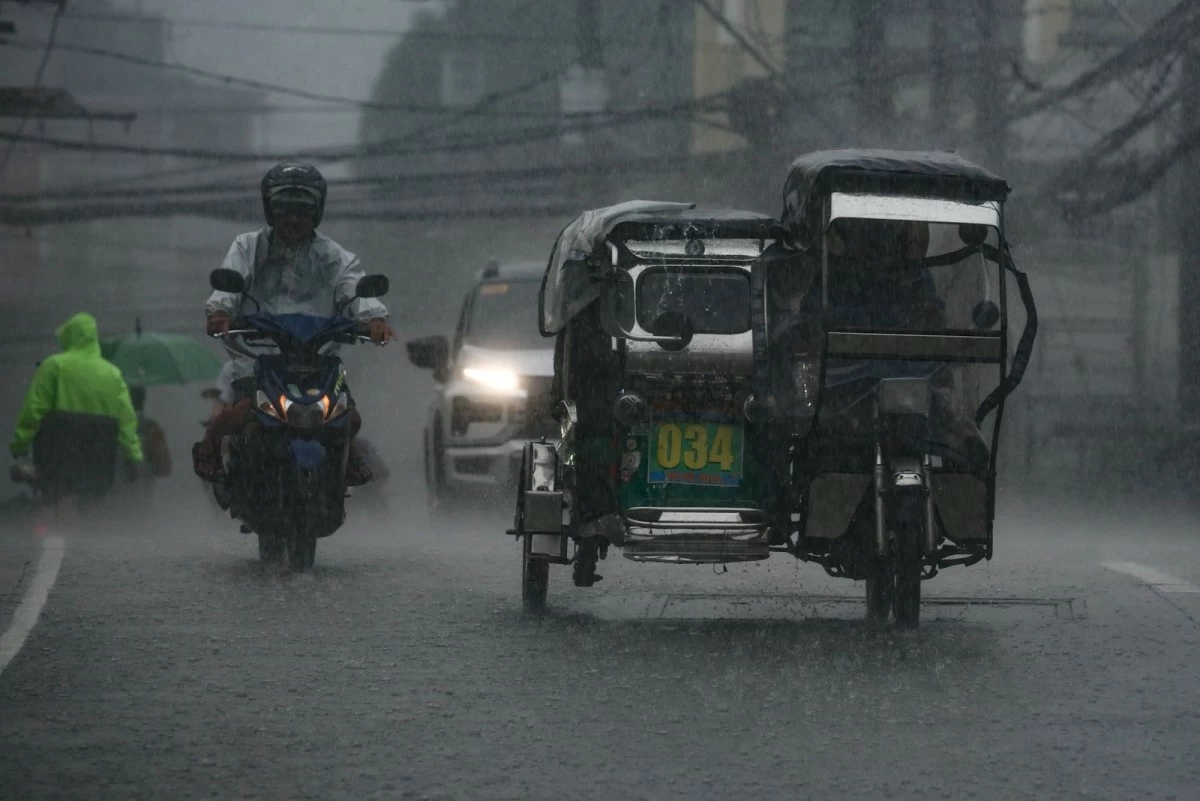
Motorists and pedestrians experience near-zero visibility amid heavy rain and strong winds in Taytay, Rizal, on August 9, 2026 due to the effect of the southwest monsoon (habagat). (John Louie Abrina / MANILA BULLETIN)
The number of people killed by the combined effects of the southwest monsoon (habagat) and tropical cyclones “Luis” and “Maymay” has further risen to 21 while more than 3.1 million Filipinos have been affected across 10 regions, the Office of Civil Defense (OCD) said Wednesday, Aug. 12.
OCD spokesperson Junie Castillo said 15 of the fatalities were recorded in the Cordillera Administrative Region (CAR) while six were reported in Calabarzon (Region 4A).
Fifteen deaths were recorded due to landslides in La Trinidad, Baguio City, and Atok – all in Benguet.
Meanwhile, three fatalities were reported in Rizal, including two in Rodriguez due to a landslide and one in Antipolo due to a fallen tree.
Batangas also recorded three deaths, including one each in Batangas City due to drowning, Lipa City due to electrocution, and Santa Teresita due to a landslide.
“There are 21 fatalities. These are coming from Calabarzon, that’s six, and for CAR, that’s 15. That’s the total 21,” Castillo said.
Fourteen people were also injured while one person remained missing.
The disasters have affected 3,148,255 individuals composed of 909,133 families 3,400 barangays spread across Cordillera Administrative Region (CAR), National Capital Region (NCR), Ilocos (Region 1), Cagayan Valley (Region 2), Central Luzon (Region 3), Calabarzon (Region 4A), Mimaropa (Region 4B), Bicol (Region 5), Western Visayas (Region 6), and Zamboanga Peninsula (Region 9).
“The region that accounted for the most flooded areas is Region 3, Central Luzon, mostly in Bulacan and Pampanga,” Castillo said.
The OCD said 881 evacuation centers were established, housing 22,893 families or 80,442 people.
The disasters have also damaged 972 houses, of which, 904 were partially damaged while 68 were totally destroyed.
Infrastructure damage accounted for P2.109 billion while agricultural losses were placed at P196.85 million.
The government has so far provided P342.10 million worth of assistance to affected communities.
Castillo said government response operations remain in place, with national agencies and local government units maintaining personnel and resources in affected areas.
“As directed by the President [Ferdinand Marcos Jr.], all the response clusters, both from local government units and national government units, are on standby and ongoing with the response operations,” he said.
He added that the OCD has yet to see a shortage in funds, relief supplies, rescue assets or manpower.
“In terms of standby funds, we don’t see it lacking yet. We still have enough food and non-food items that have been prepositioned and on standby. Even with deployed assets for rescue and response operations, we still have enough standby equipment and manpower to do that,” Castillo said.