ADVERTISEMENT

Unemployment seen rising to over 5% as economy faces mounting headwinds

Published Aug 11, 2026 06:03 pm  |  Updated Aug 11, 2026 03:10 pm

The government expects a higher unemployment rate this year at levels unseen since the Covid-19 pandemic, as the country’s chief economist said external and domestic challenges could weigh on the economy and employment.

Documents on the proposed ₱7.2-trillion 2027 national budget submitted to Congress on Tuesday, Aug. 11, showed an adjusted unemployment rate projection of 5.3 to 5.8 percent for 2026, higher than the previous forecast of four to five percent.

The government projects the jobless rate to return to the four- to five-percent range annually from 2027 to 2029. The unemployment rate averaged 4.7 percent in 2025, according to the budget document.

Historical Philippine Statistics Authority (PSA) data showed that unemployment was last at the five-percent level on a full-year basis in 2022, when it averaged 5.4 percent toward the tail end of the pandemic.

The weaker employment outlook comes as the government expects inflation to average a high six to seven percent this year, while economic growth could slow to 3.5 to 4.5 percent in 2026.

Second-quarter gross domestic product (GDP) growth already slid to a new post-pandemic low of 2.3 percent year-on-year.

Department of Economy, Planning, and Development (DEPDev) Secretary Arsenio M. Balisacan told Manila Bulletin that economic growth is expected to slow further this year as the lingering Middle East conflict, constrained public investment, and elevated inflation dampen domestic activity, while El Niño is also expected to reduce employment in agriculture and fisheries.

“However, these pressures may be partly offset by a recovery in public construction and moderating inflation in the second half of the year, which should support a gradual improvement in overall employment conditions,” Balisacan said in a text message.

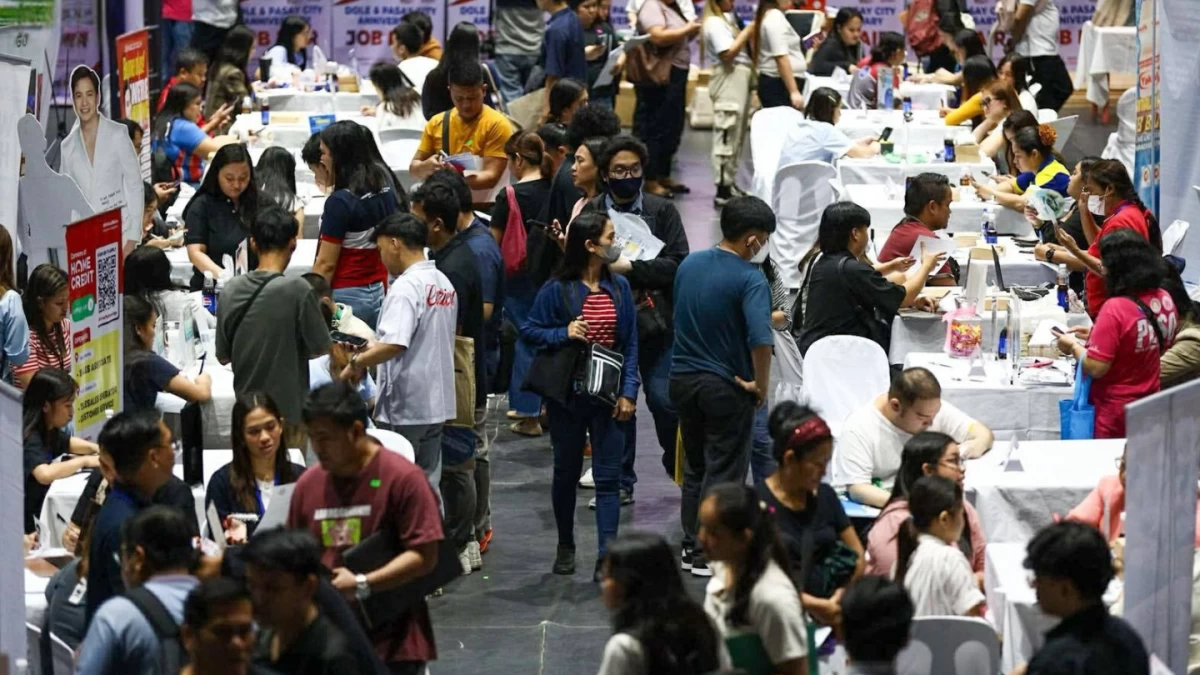
The higher unemployment projection also follows a deterioration in the labor market in June, when the jobless rate rose to 4.9 percent from 4.8 percent in May and 3.7 percent a year ago as many fresh graduates struggled to find jobs.

The number of unemployed Filipinos reached 2.59 million in June, the PSA’s latest labor force survey (LFS) showed.

Reyes Tacandong & Co. senior adviser Jonathan L. Ravelas said the higher unemployment forecast for 2026 reflects both cyclical and structural pressures on the labor market.

“Businesses remain cautious amid geopolitical risks, tariffs, and climate-related shocks, while artificial intelligence (AI) and digitalization are accelerating changes in job requirements. As a result, job creation may not be sufficient to absorb all new entrants to the workforce, keeping unemployment slightly higher in the near term,” Ravelas told Manila Bulletin.

Rizal Commercial Banking Corp. (RCBC) chief economist Michael L. Ricafort attributed the recent rise in unemployment, on top of new graduates entering the workforce, to the economic fallout from the Middle East conflict, government infrastructure underspending since late 2025, and the risk of a strong El Niño later this year through early 2027.

Ricafort said the Middle East conflict has pushed up world oil prices and inflation as well as interest rates and borrowing costs for businesses and consumers, weighing on local and global economic growth and employment.

He also said government infrastructure underspending since the latter part of 2025 amid the anomalous flood-control projects reduced job creation across the country.

Ricafort said catch-up government infrastructure spending based on better governance standards could create jobs directly and through supply chains while helping restore international investor confidence, potentially generating new investments and expansion projects.

He added that the risk of a strong El Niño drought from September or October this year through early 2027 could adversely affect agricultural and related employment as below-average rainfall reduces farm production. Danielle T. Bayani

ADVERTISEMENT
.most-popular .layout-ratio{ padding-bottom: 79.13%; } @media (min-width: 768px) and (max-width: 1024px) { .widget-title { font-size: 15px !important; } }

{{ articles_filter_1561_widget.title }}

.most-popular .layout-ratio{ padding-bottom: 79.13%; } @media (min-width: 768px) and (max-width: 1024px) { .widget-title { font-size: 15px !important; } }

{{ static_articles_1562_widget.title }}

.most-popular .layout-ratio{ padding-bottom: 79.13%; } @media (min-width: 768px) and (max-width: 1024px) { .widget-title { font-size: 15px !important; } }

{{ articles_filter_1563_widget.title }}

{{ articles_filter_1564_widget.title }}

.mb-article-details { position: relative; } .mb-article-details .article-body-preview, .mb-article-details .article-body-summary{ font-size: 17px; line-height: 30px; font-family: "Libre Caslon Text", serif; color: #000; } .mb-article-details .article-body-preview iframe , .mb-article-details .article-body-summary iframe{ width: 100%; margin: auto; } .read-more-background { background: linear-gradient(180deg, color(display-p3 1.000 1.000 1.000 / 0) 13.75%, color(display-p3 1.000 1.000 1.000 / 0.8) 30.79%, color(display-p3 1.000 1.000 1.000) 72.5%); position: absolute; height: 200px; width: 100%; bottom: 0; display: flex; justify-content: center; align-items: center; padding: 0; } .read-more-background a{ color: #000; } .read-more-btn { padding: 17px 45px; font-family: Inter; font-weight: 700; font-size: 18px; line-height: 16px; text-align: center; vertical-align: middle; border: 1px solid black; background-color: white; } .hidden { display: none; }
function initializeAllSwipers() { // Get all hidden inputs with cms_article_id document.querySelectorAll('[id^="cms_article_id_"]').forEach(function (input) { const cmsArticleId = input.value; const articleSelector = '#article-' + cmsArticleId + ' .body_images'; const swiperElement = document.querySelector(articleSelector); if (swiperElement && !swiperElement.classList.contains('swiper-initialized')) { new Swiper(articleSelector, { loop: true, pagination: false, navigation: { nextEl: '#article-' + cmsArticleId + ' .swiper-button-next', prevEl: '#article-' + cmsArticleId + ' .swiper-button-prev', }, }); } }); } setTimeout(initializeAllSwipers, 3000); const intersectionObserver = new IntersectionObserver( (entries) => { entries.forEach((entry) => { if (entry.isIntersecting) { const newUrl = entry.target.getAttribute("data-url"); if (newUrl) { history.pushState(null, null, newUrl); let article = entry.target; // Extract metadata const author = article.querySelector('.author-section').textContent.replace('By', '').trim(); const section = article.querySelector('.section-info ').textContent.replace(' ', ' '); const title = article.querySelector('.article-title h1').textContent; // Parse URL for Chartbeat path format const parsedUrl = new URL(newUrl, window.location.origin); const cleanUrl = parsedUrl.host + parsedUrl.pathname; // Update Chartbeat configuration if (typeof window._sf_async_config !== 'undefined') { window._sf_async_config.path = cleanUrl; window._sf_async_config.sections = section; window._sf_async_config.authors = author; } // Track virtual page view with Chartbeat if (typeof pSUPERFLY !== 'undefined' && typeof pSUPERFLY.virtualPage === 'function') { try { pSUPERFLY.virtualPage({ path: cleanUrl, title: title, sections: section, authors: author }); } catch (error) { console.error('ping error', error); } } // Optional: Update document title if (title && title !== document.title) { document.title = title; } } } }); }, { threshold: 0.1 } ); function showArticleBody(button) { const article = button.closest("article"); const summary = article.querySelector(".article-body-summary"); const body = article.querySelector(".article-body-preview"); const readMoreSection = article.querySelector(".read-more-background"); // Hide summary and read-more section summary.style.display = "none"; readMoreSection.style.display = "none"; // Show the full article body body.classList.remove("hidden"); } document.addEventListener("DOMContentLoaded", () => { let loadCount = 0; // Track how many times articles are loaded const offset = [1, 2, 3, 4, 5, 6, 7, 8, 9, 10]; // Offset values const currentUrl = window.location.pathname.substring(1); let isLoading = false; // Prevent multiple calls if (!currentUrl) { console.log("Current URL is invalid."); return; } const sentinel = document.getElementById("load-more-sentinel"); if (!sentinel) { console.log("Sentinel element not found."); return; } function isSentinelVisible() { const rect = sentinel.getBoundingClientRect(); return ( rect.top < window.innerHeight && rect.bottom >= 0 ); } function onScroll() { if (isLoading) return; if (isSentinelVisible()) { if (loadCount >= offset.length) { console.log("Maximum load attempts reached."); window.removeEventListener("scroll", onScroll); return; } isLoading = true; const currentOffset = offset[loadCount]; window.loadMoreItems().then(() => { let article = document.querySelector('#widget_1690 > div:nth-last-of-type(2) article'); intersectionObserver.observe(article) loadCount++; }).catch(error => { console.error("Error loading more items:", error); }).finally(() => { isLoading = false; }); } } window.addEventListener("scroll", onScroll); });

Sign up by email to receive news.