

ADVERTISEMENT

PCG: 463 passengers, cargo workers still stranded in ports amid 'habagat'

Published Aug 11, 2026 03:09 pm

At A Glance

  • The Philippine Coast Guard (PCG) said 463 passengers and cargo workers were stranded at 13 ports in Western Visayas, Bicol, Southern Tagalog and Central Visayas due to rough seas caused by "habagat."
  • Southern Tagalog had the most stranded passengers with 298, including 184 at the Port of Lucena. The PCG urged travelers to check with shipping lines before heading to terminals.
  • The PCG has aso evacuated about 8,000 people from flood-hit areas in Romblon, Batangas, Cavite, Laguna, Pampanga and Rizal. It also provided free rides, helped clear roads, and distributed food packs with LGUs and the DSWD.
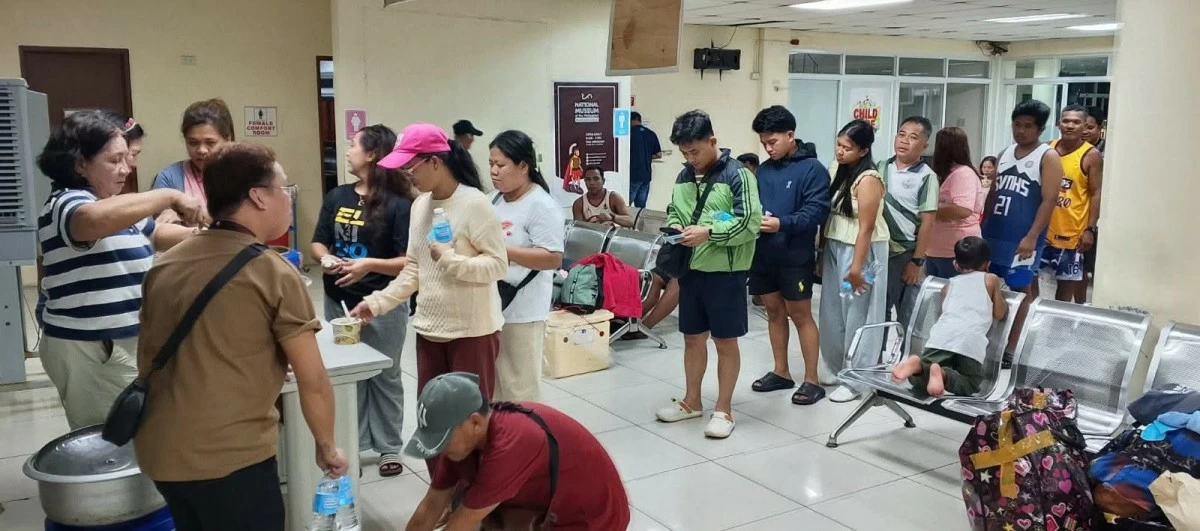
Port operators distribute ready-to-eat food packs to 155 passengers stranded at the Passenger Terminal Building of the Port of Lucena on Aug. 10, 2026 due to weather-related travel disruptions. (Photo: Philippine Ports Authority)
A total of 463 passengers and cargo workers remained stranded at 13 ports nationwide on Tuesday, Aug. 11, as operators suspended sea trips due to rough seas brought by the southwest monsoon or “habagat,” the Philippine Coast Guard (PCG) said.
PCG spokesperson Commodore Noemie Cayabyab said the affected ports were in Western Visayas, Bicol, Southern Tagalog and Central Visayas.
Sea operations had not yet fully returned to normal despite some improvement in weather conditions, she noted.
“There are still ports that we are monitoring, and there are still stranded passengers,” Cayabyab said.
The largest number of stranded passengers was recorded in the Southern Tagalog area with 298 passengers and 20 rolling cargoes, particularly around the Port of Lucena where 184 individuals could not yet travel by sea, as well as Ports of San Andres, Roxas, San Agustin, Looc, Batangas, and Pola.
In Western Visayas, 94 passengers, 46 rolling cargoes, and two vessels were stranded at Alegria Port and Nabas Port. In Bicol, 16 passengers were stranded at Pasacao Port.
Another 55 passengers, 14 rolling cargoes, and one vessel were stranded at Hagnaya Port, Pier 1 and Poro Port in Central Visayas.
The weather has also forced 15 vessels, 313 motorbancas, and two barges to take shelter in various ports.
Cayabyab advised passengers to check their trips with shipping companies before heading to terminals.
“Our reminder to our countrymen who have trips or are going to terminals is to first check if the trip has been canceled or will proceed to avoid being stranded,” she said.
She noted that the suspension of trips is largely being decided by vessel operators based on sea conditions.
“Once the weather improves, we will allow these vessels and even motorbancas to depart from their respective ports,” Cayabyab said.
However, she explained that operators themselves have been canceling or suspending trips because they could not safely navigate the waves.
“What happens at the ports is that the operators themselves cancel trips because they cannot handle the strength of the waves in the middle of the sea,” she said.
Unlike a tropical cyclone, she explained that habagat has not prompted the raising of a storm signal.
“There is no signal raised because this bad weather is caused by the southwest monsoon. We can see that there is an increase in waves in different areas, which is why they cancel or suspend their sea travel,” Cayabyab said.
For passengers already stranded, the PCG is coordinating with local government units, shipping companies, and the Philippine Ports Authority (PPA) for assistance.
Rescue
Aside from monitoring ports, the PCG has continued rescue and relief operations in areas hit by flooding from the southwest monsoon.
Cayabyab said the agency had evacuated about 8,000 people from several provinces including Romblon, Batangas, Cavite, Laguna, Pampanga and Rizal.
The PCG also provided free rides to stranded commuters in Batangas and Cavite, and assisted in road-clearing operations in Tingloy and Lobo in Batangas.
The agency also worked with local governments and the Department of Social Welfare and Development (DSWD) in distributing food packs in Romblon, Batangas, and Cavite, and transported food packs to San Fernando, La Union.

Related Tags

PCG stranded passengers ports cancellation of trips habagat
ADVERTISEMENT
.most-popular .layout-ratio{ padding-bottom: 79.13%; } @media (min-width: 768px) and (max-width: 1024px) { .widget-title { font-size: 15px !important; } }

{{ articles_filter_1561_widget.title }}

.most-popular .layout-ratio{ padding-bottom: 79.13%; } @media (min-width: 768px) and (max-width: 1024px) { .widget-title { font-size: 15px !important; } }

{{ static_articles_1562_widget.title }}

.most-popular .layout-ratio{ padding-bottom: 79.13%; } @media (min-width: 768px) and (max-width: 1024px) { .widget-title { font-size: 15px !important; } }

{{ articles_filter_1563_widget.title }}

{{ articles_filter_1564_widget.title }}

.mb-article-details { position: relative; } .mb-article-details .article-body-preview, .mb-article-details .article-body-summary{ font-size: 17px; line-height: 30px; font-family: "Libre Caslon Text", serif; color: #000; } .mb-article-details .article-body-preview iframe , .mb-article-details .article-body-summary iframe{ width: 100%; margin: auto; } .read-more-background { background: linear-gradient(180deg, color(display-p3 1.000 1.000 1.000 / 0) 13.75%, color(display-p3 1.000 1.000 1.000 / 0.8) 30.79%, color(display-p3 1.000 1.000 1.000) 72.5%); position: absolute; height: 200px; width: 100%; bottom: 0; display: flex; justify-content: center; align-items: center; padding: 0; } .read-more-background a{ color: #000; } .read-more-btn { padding: 17px 45px; font-family: Inter; font-weight: 700; font-size: 18px; line-height: 16px; text-align: center; vertical-align: middle; border: 1px solid black; background-color: white; } .hidden { display: none; }
function initializeAllSwipers() { // Get all hidden inputs with cms_article_id document.querySelectorAll('[id^="cms_article_id_"]').forEach(function (input) { const cmsArticleId = input.value; const articleSelector = '#article-' + cmsArticleId + ' .body_images'; const swiperElement = document.querySelector(articleSelector); if (swiperElement && !swiperElement.classList.contains('swiper-initialized')) { new Swiper(articleSelector, { loop: true, pagination: false, navigation: { nextEl: '#article-' + cmsArticleId + ' .swiper-button-next', prevEl: '#article-' + cmsArticleId + ' .swiper-button-prev', }, }); } }); } setTimeout(initializeAllSwipers, 3000); const intersectionObserver = new IntersectionObserver( (entries) => { entries.forEach((entry) => { if (entry.isIntersecting) { const newUrl = entry.target.getAttribute("data-url"); if (newUrl) { history.pushState(null, null, newUrl); let article = entry.target; // Extract metadata const author = article.querySelector('.author-section').textContent.replace('By', '').trim(); const section = article.querySelector('.section-info ').textContent.replace(' ', ' '); const title = article.querySelector('.article-title h1').textContent; // Parse URL for Chartbeat path format const parsedUrl = new URL(newUrl, window.location.origin); const cleanUrl = parsedUrl.host + parsedUrl.pathname; // Update Chartbeat configuration if (typeof window._sf_async_config !== 'undefined') { window._sf_async_config.path = cleanUrl; window._sf_async_config.sections = section; window._sf_async_config.authors = author; } // Track virtual page view with Chartbeat if (typeof pSUPERFLY !== 'undefined' && typeof pSUPERFLY.virtualPage === 'function') { try { pSUPERFLY.virtualPage({ path: cleanUrl, title: title, sections: section, authors: author }); } catch (error) { console.error('ping error', error); } } // Optional: Update document title if (title && title !== document.title) { document.title = title; } } } }); }, { threshold: 0.1 } ); function showArticleBody(button) { const article = button.closest("article"); const summary = article.querySelector(".article-body-summary"); const body = article.querySelector(".article-body-preview"); const readMoreSection = article.querySelector(".read-more-background"); // Hide summary and read-more section summary.style.display = "none"; readMoreSection.style.display = "none"; // Show the full article body body.classList.remove("hidden"); } document.addEventListener("DOMContentLoaded", () => { let loadCount = 0; // Track how many times articles are loaded const offset = [1, 2, 3, 4, 5, 6, 7, 8, 9, 10]; // Offset values const currentUrl = window.location.pathname.substring(1); let isLoading = false; // Prevent multiple calls if (!currentUrl) { console.log("Current URL is invalid."); return; } const sentinel = document.getElementById("load-more-sentinel"); if (!sentinel) { console.log("Sentinel element not found."); return; } function isSentinelVisible() { const rect = sentinel.getBoundingClientRect(); return ( rect.top < window.innerHeight && rect.bottom >= 0 ); } function onScroll() { if (isLoading) return; if (isSentinelVisible()) { if (loadCount >= offset.length) { console.log("Maximum load attempts reached."); window.removeEventListener("scroll", onScroll); return; } isLoading = true; const currentOffset = offset[loadCount]; window.loadMoreItems().then(() => { let article = document.querySelector('#widget_1690 > div:nth-last-of-type(2) article'); intersectionObserver.observe(article) loadCount++; }).catch(error => { console.error("Error loading more items:", error); }).finally(() => { isLoading = false; }); } } window.addEventListener("scroll", onScroll); });

Sign up by email to receive news.