






Manila Bulletin
 Business
Trade & Industry
India's GMR looks beyond Sangley project for next Philippine airport deal
Business
Trade & Industry
India's GMR looks beyond Sangley project for next Philippine airport deal
Business
Trade & Industry
India's GMR looks beyond Sangley project for next Philippine airport deal
India's GMR looks beyond Sangley project for next Philippine airport deal
Published Aug 11, 2026 10:37 pm


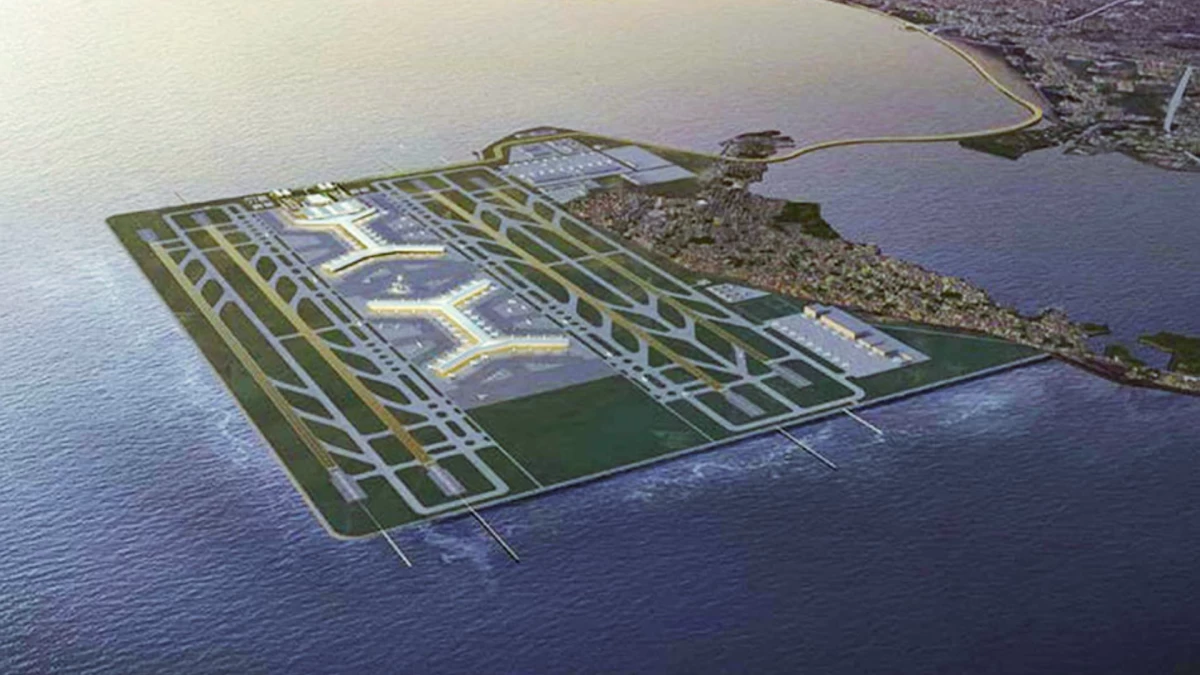
An artist’s rendition of the proposed Sangley Point International Airport. I Manila Bulletin file photo
Indian infrastructure giant GMR Group is exploring the prospect of adding another airport to its growing list of aviation projects in the Philippines, as it looks to capitalize on enhanced bilateral ties between New Delhi and Manila.
In a statement, GMR chairman for energy and international airports Srinivas Bommidala said the conglomerate is actively considering expanding its footprint in the country.
“We'll be more than happy, because we have already done two projects in the Philippines in recent years. And certainly, as a private investor, we'll be more than happy to look at good opportunities,” he said.
GMR has an established track record in the local aviation industry, having developed Mactan-Cebu International Airport (MCIA) into a world-class gateway following its takeover in 2014 with Megawide Construction Corp.
GMR is also involved in the construction of the new passenger terminal building of Clark International Airport, enabling the airport to handle more passengers while providing better services.
The company most recently partnered with Cavitex Holdings Inc. and House of Investments for the development of Sangley Point International Airport (SPIA) in Cavite.
SPIA, which is expected to cost around ₱215.69 billion, is designed to ease congestion at Ninoy Aquino International Airport (NAIA), which is located more than 10 kilometers away.
Once completed, the airport is expected to create up to 15,000 jobs and generate an estimated $500 million in additional revenue for the government.
While this is underway, Bommidala said GMR is looking at other regional airports in the country as its next project.
The Department of Trade and Industry (DTI) said last year that some of the regional airports that GMR has expressed interest in operating and upgrading include those in Laoag and Siargao.
Strengthening these airports is expected to improve connectivity to some of the country’s top tourist destinations, with the famous sand dunes and historic sites in the north and the popular island destination in the south.
Both airports are actively undergoing terminal expansions to accommodate increased passenger traffic, according to the Department of Transportation (DOTr).
Bommidala said having another airport under GMR’s portfolio would be a “win-win” for both India and the Philippines, whose cooperation has steadily strengthened in recent years.
At present, both countries are looking to begin negotiations for a preferential trade agreement (PTA), which aims to reduce barriers to trade in goods and services.
GMR expects its newly inaugurated Alluri Sitarama Raju International Airport in the southeastern Indian state of Andhra Pradesh to be the main gateway for increased ties between India and the Philippines.
Positioned as the main gateway for trade and tourism with Southeast Asia, GMR said the airport could pave the way for more direct flights between India and the Philippines in the future.