






Manila Bulletin
 Property and Living
Ayala Land builds for the long run with sustainability at its core
Property and Living
Ayala Land builds for the long run with sustainability at its core
Property and Living
Ayala Land builds for the long run with sustainability at its core
Ayala Land builds for the long run with sustainability at its core
The developer earns a spot in the 2026 S&P Global Sustainability Yearbook for its ESG performance and commitment to responsible property development
Published Aug 11, 2026 10:27 pm


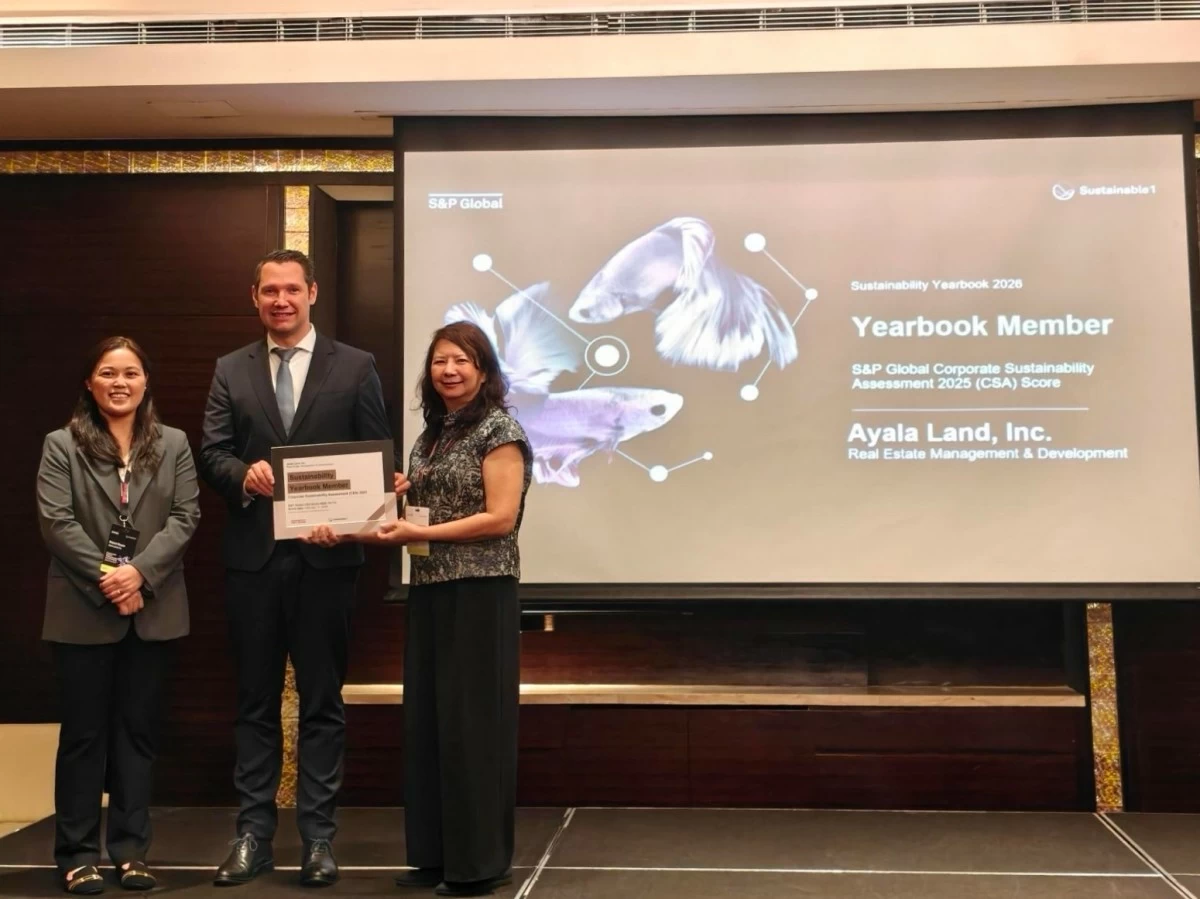
Mabel Reyes, Ayala Land’s Corporate Sustainability manager (left) and Anna Maria Gonzales, Head of Sustainability (right), accepting the Certificate of Recognition from Michael Taschner, global head of Sustainability Services at S&P Global (middle) (Photo: Ayala Land)
As property development evolves, projects are increasingly valued not only for what they add to the built environment but also for how they support business growth and resilience. This broader approach is reflected in Ayala Land, Inc.’s (ALI) inclusion in the 2026 S&P Global Sustainability Yearbook, recognizing its sustainability performance and efforts to create lasting value.
The recognition was presented during the “Corporate Risk to Return: The Business Case for Sustainability” forum hosted by S&P Global and the Philippine Stock Exchange at Grand Hyatt Manila in Bonifacio Global City. The forum brought together leaders from government, business, and the investment sector to discuss how sustainability factors are affecting business risks, investment strategies, and corporate decision-making.
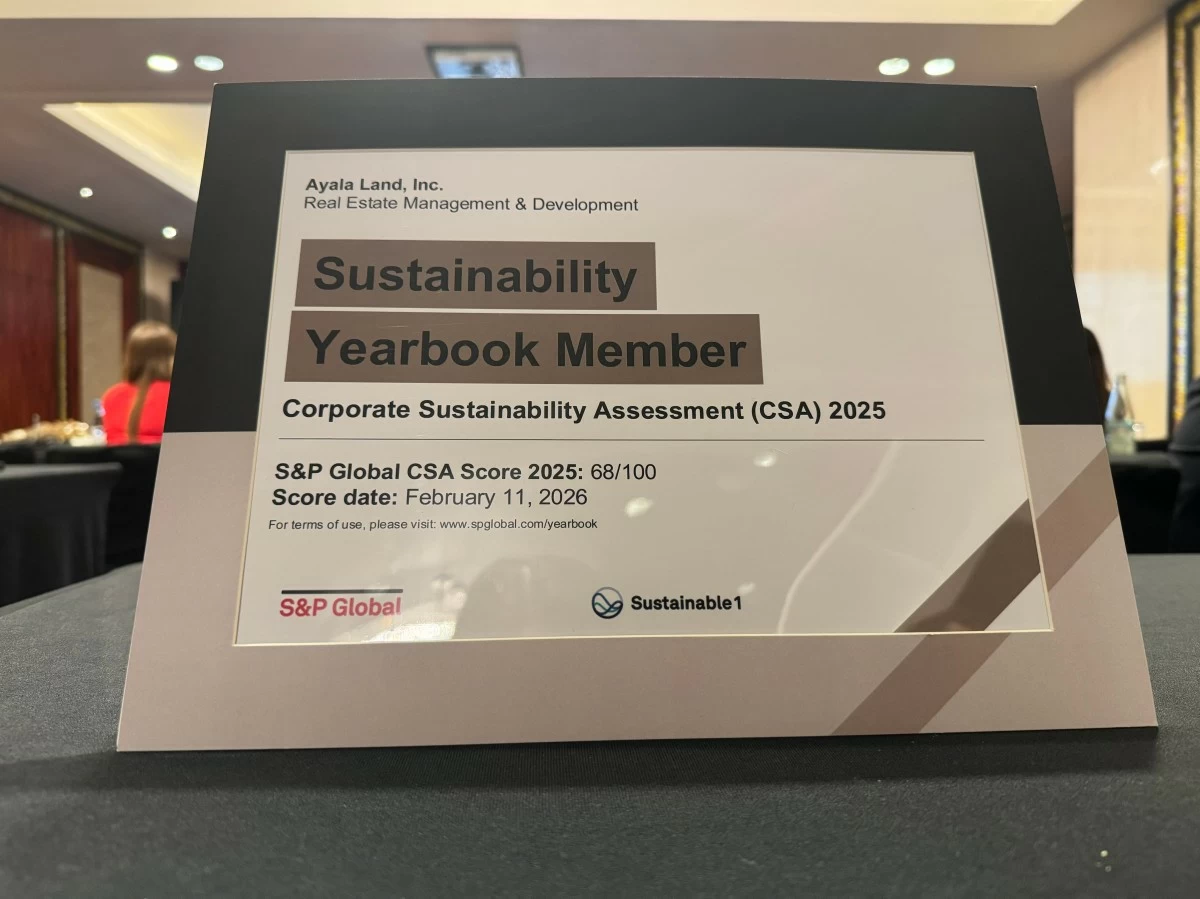
Yearbook member (Photo: Ayala Land)
Michael Taschner, global head of Sustainability Services at S&P Global, presented the 2026 Sustainability Yearbook certificate to ALI for its performance in the Real Estate Management and Development industry. The developer earned a score of 68 out of 100 in the 2025 Corporate Sustainability Assessment, securing its place among the companies featured in the Yearbook.
The result adds to ALI’s wider ESG track record. The developer holds a BBB rating from MSCI, B ratings for Climate Change and Water Security from CDP, and recognition as a CDP Supplier Engagement Leader for its efforts across its supply chain. Morningstar Sustainalytics also gave it a Low-Risk rating, indicating lower exposure to financial risks associated with ESG issues. For the company, these assessments reflect how sustainability considerations are increasingly incorporated into its property operations and business decisions.
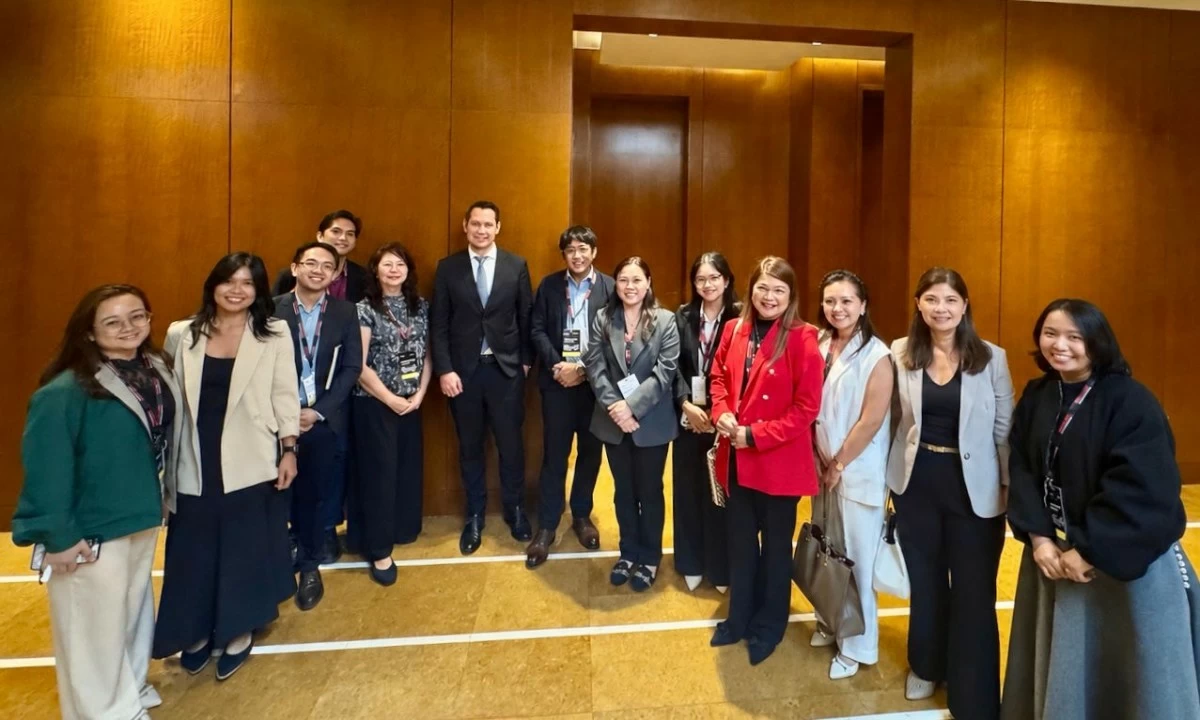
Sustainability teams from the Ayala Group (Photo: Ayala Land)
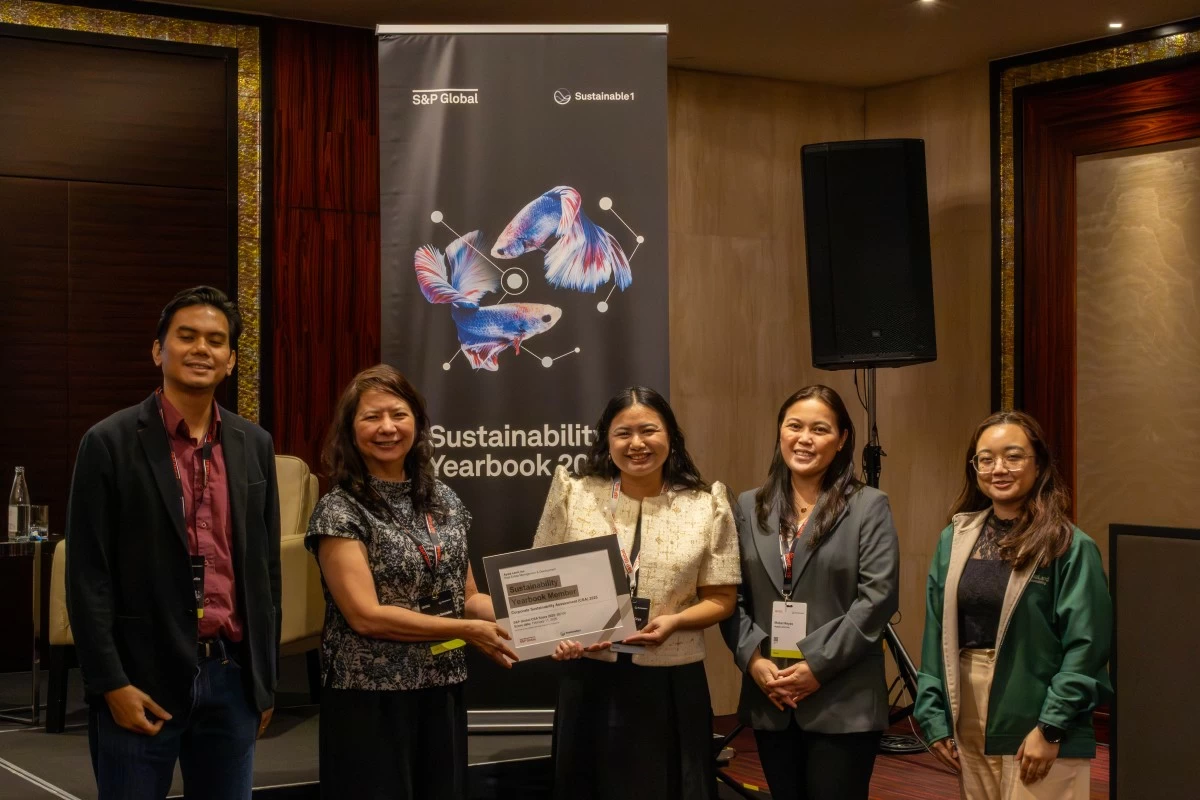
ALI corporate sustainability unit with Ana Katrina Cruz, S&P Global Corporate Engagement manager (Photo: Ayala Land)
This approach also extends to its efforts to reduce emissions and improve property efficiency. ALI is targeting net-zero greenhouse gas emissions by 2050, with 98 percent of its commercial properties already powered by renewable energy or supported by renewable energy certificates. Its malls have more than 15 megawatts (MW) of installed solar capacity, with plans to increase this to 34 MW by 2027.
Sustainability is likewise considered in how properties are designed and operated. Across its portfolio, 62 developments have earned LEED, EDGE, or WELL certifications, covering areas such as energy and water efficiency, resource use, climate resilience, and occupant well-being. Its estates, malls, offices, hotels, and residential projects also implement recycling, composting, waste diversion, and materials recovery programs to reduce landfill waste and improve resource use.
Together, these efforts show how sustainability is becoming part of the developer’s approach to property and business. Renewable energy, green building standards, and waste management measures are helping improve the efficiency and resilience of its portfolio.