ADVERTISEMENT

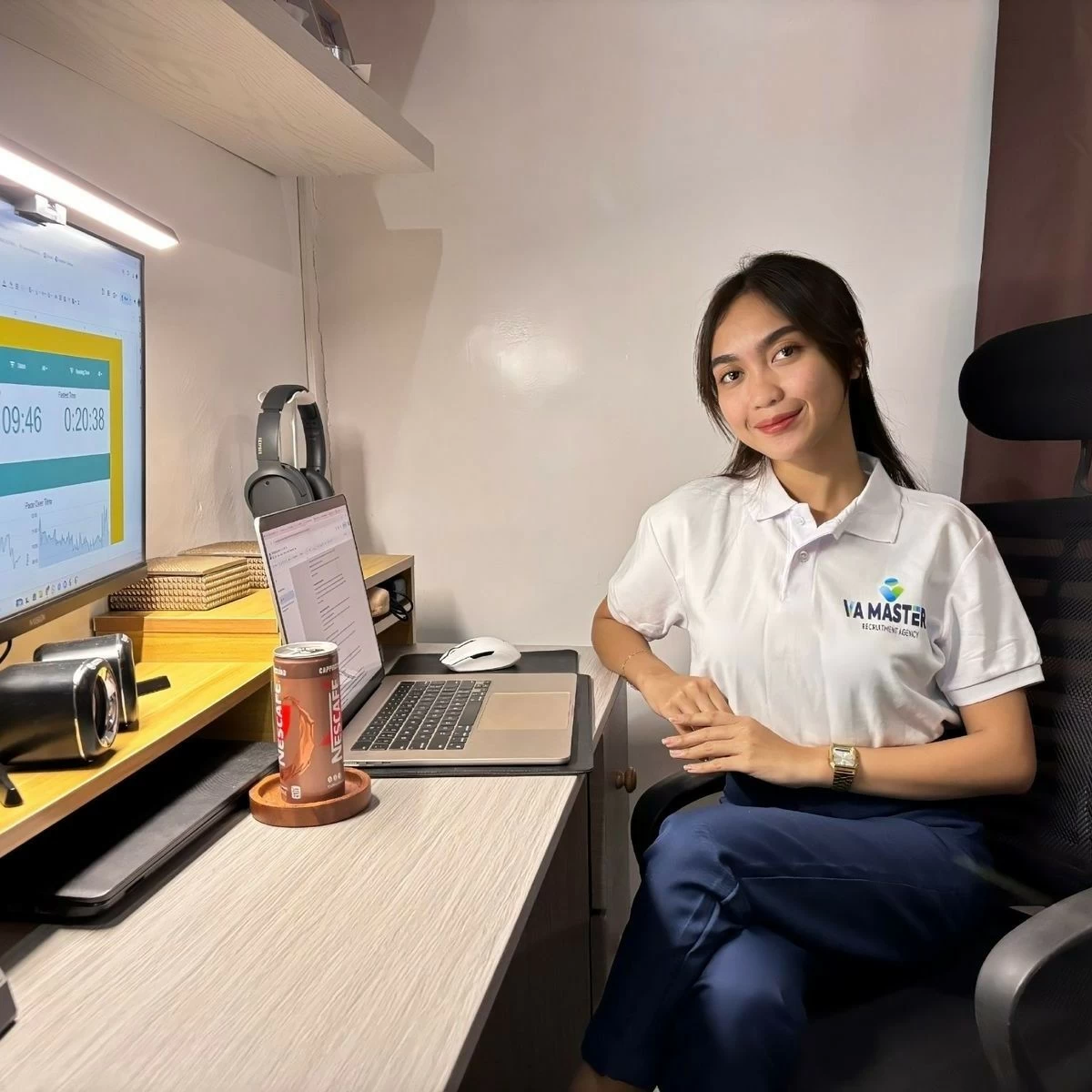
Women lead Philippines' booming VA workforce

Published Aug 10, 2026 01:42 pm

Women are dominating the Philippines’ virtual assistant (VA) industry, accounting for nearly seven in 10 successful hires as the country remains a major source of remote talent for businesses worldwide.

According to the State of the Filipino Virtual Assistant Industry 2026 report by global recruitment agency VA Masters, women accounted for 61.5 percent of 166,350 job applications analyzed and performed better through technical screening, raising their share to 69 percent of successfully placed VAs.

The report showed that the candidate pool is also relatively young, with a median applicant age of 28 years.

VA Masters said its recruitment process is highly selective, with more than 20,000 people applying to its job postings each month, equivalent to about one application every two minutes.

The report also showed that Filipino VAs who secured jobs generally had stronger English proficiency and professional experience than the overall applicant pool.

Among all applicants, 62 percent reported fluent or native-level English proficiency, compared with 80 percent among those hired.

Meanwhile, 36 percent of applicants had at least three years of specialized professional experience, while 20 percent had more than five years of relevant experience.

Among candidates who passed client evaluations and received job offers, 65 percent had at least three years of direct experience in fields such as digital marketing, operations, financial bookkeeping and executive support.

“The language proficiency and execution caliber of the Filipino workforce are underappreciated in global commerce,” VA Masters founder and chief executive officer (CEO) Alon Pearl in a statement on Monday, Aug. 10.

“We are looking at an exceptionally skilled, English-fluent demographic that delivers high-level execution. This enables growing businesses to expand their operational capacity while reducing labor overhead by up to 80 percent compared to local hiring,” Pearl added.

VA Masters said international companies can tap the Philippines’ pool of skilled remote workers across different fields by using strict hiring tests to screen applicants and build support teams.

The recruitment agency estimated that the global virtual assistant services market is worth about $6.5 billion in 2026 and could reach nearly $34 billion by 2030.

It also estimated that the Philippines accounts for 38 percent of the global VA workforce, making the country the world’s largest source of virtual assistant talent.

The growth of remote work opportunities comes as the Philippine labor market showed signs of weakening.

The Philippine Statistics Authority (PSA) last week reported that the unemployment rate rose to 4.9 percent in June from 4.8 percent in May and 3.7 percent a year ago, equivalent to 2.59 million unemployed Filipinos.

The expanding VA industry also comes amid increasing adoption of artificial intelligence (AI), which could reshape jobs in related service industries.

The World Bank earlier identified the Philippines as a significant participant in the global AI landscape, while flagging the potential impact of the technology on the country’s business process outsourcing (BPO) sector, to which the VA industry is closely related. - Danielle T. Bayani

Related Tags

virtual assistant (VA)
ADVERTISEMENT
.most-popular .layout-ratio{ padding-bottom: 79.13%; } @media (min-width: 768px) and (max-width: 1024px) { .widget-title { font-size: 15px !important; } }

{{ articles_filter_1561_widget.title }}

.most-popular .layout-ratio{ padding-bottom: 79.13%; } @media (min-width: 768px) and (max-width: 1024px) { .widget-title { font-size: 15px !important; } }

{{ static_articles_1562_widget.title }}

.most-popular .layout-ratio{ padding-bottom: 79.13%; } @media (min-width: 768px) and (max-width: 1024px) { .widget-title { font-size: 15px !important; } }

{{ articles_filter_1563_widget.title }}

{{ articles_filter_1564_widget.title }}

.mb-article-details { position: relative; } .mb-article-details .article-body-preview, .mb-article-details .article-body-summary{ font-size: 17px; line-height: 30px; font-family: "Libre Caslon Text", serif; color: #000; } .mb-article-details .article-body-preview iframe , .mb-article-details .article-body-summary iframe{ width: 100%; margin: auto; } .read-more-background { background: linear-gradient(180deg, color(display-p3 1.000 1.000 1.000 / 0) 13.75%, color(display-p3 1.000 1.000 1.000 / 0.8) 30.79%, color(display-p3 1.000 1.000 1.000) 72.5%); position: absolute; height: 200px; width: 100%; bottom: 0; display: flex; justify-content: center; align-items: center; padding: 0; } .read-more-background a{ color: #000; } .read-more-btn { padding: 17px 45px; font-family: Inter; font-weight: 700; font-size: 18px; line-height: 16px; text-align: center; vertical-align: middle; border: 1px solid black; background-color: white; } .hidden { display: none; }
function initializeAllSwipers() { // Get all hidden inputs with cms_article_id document.querySelectorAll('[id^="cms_article_id_"]').forEach(function (input) { const cmsArticleId = input.value; const articleSelector = '#article-' + cmsArticleId + ' .body_images'; const swiperElement = document.querySelector(articleSelector); if (swiperElement && !swiperElement.classList.contains('swiper-initialized')) { new Swiper(articleSelector, { loop: true, pagination: false, navigation: { nextEl: '#article-' + cmsArticleId + ' .swiper-button-next', prevEl: '#article-' + cmsArticleId + ' .swiper-button-prev', }, }); } }); } setTimeout(initializeAllSwipers, 3000); const intersectionObserver = new IntersectionObserver( (entries) => { entries.forEach((entry) => { if (entry.isIntersecting) { const newUrl = entry.target.getAttribute("data-url"); if (newUrl) { history.pushState(null, null, newUrl); let article = entry.target; // Extract metadata const author = article.querySelector('.author-section').textContent.replace('By', '').trim(); const section = article.querySelector('.section-info ').textContent.replace(' ', ' '); const title = article.querySelector('.article-title h1').textContent; // Parse URL for Chartbeat path format const parsedUrl = new URL(newUrl, window.location.origin); const cleanUrl = parsedUrl.host + parsedUrl.pathname; // Update Chartbeat configuration if (typeof window._sf_async_config !== 'undefined') { window._sf_async_config.path = cleanUrl; window._sf_async_config.sections = section; window._sf_async_config.authors = author; } // Track virtual page view with Chartbeat if (typeof pSUPERFLY !== 'undefined' && typeof pSUPERFLY.virtualPage === 'function') { try { pSUPERFLY.virtualPage({ path: cleanUrl, title: title, sections: section, authors: author }); } catch (error) { console.error('ping error', error); } } // Optional: Update document title if (title && title !== document.title) { document.title = title; } } } }); }, { threshold: 0.1 } ); function showArticleBody(button) { const article = button.closest("article"); const summary = article.querySelector(".article-body-summary"); const body = article.querySelector(".article-body-preview"); const readMoreSection = article.querySelector(".read-more-background"); // Hide summary and read-more section summary.style.display = "none"; readMoreSection.style.display = "none"; // Show the full article body body.classList.remove("hidden"); } document.addEventListener("DOMContentLoaded", () => { let loadCount = 0; // Track how many times articles are loaded const offset = [1, 2, 3, 4, 5, 6, 7, 8, 9, 10]; // Offset values const currentUrl = window.location.pathname.substring(1); let isLoading = false; // Prevent multiple calls if (!currentUrl) { console.log("Current URL is invalid."); return; } const sentinel = document.getElementById("load-more-sentinel"); if (!sentinel) { console.log("Sentinel element not found."); return; } function isSentinelVisible() { const rect = sentinel.getBoundingClientRect(); return ( rect.top < window.innerHeight && rect.bottom >= 0 ); } function onScroll() { if (isLoading) return; if (isSentinelVisible()) { if (loadCount >= offset.length) { console.log("Maximum load attempts reached."); window.removeEventListener("scroll", onScroll); return; } isLoading = true; const currentOffset = offset[loadCount]; window.loadMoreItems().then(() => { let article = document.querySelector('#widget_1690 > div:nth-last-of-type(2) article'); intersectionObserver.observe(article) loadCount++; }).catch(error => { console.error("Error loading more items:", error); }).finally(() => { isLoading = false; }); } } window.addEventListener("scroll", onScroll); });

Sign up by email to receive news.