






 Business
The Economy
El Niño threatens food prices as Philippine inflation remains highest in region
Business
The Economy
El Niño threatens food prices as Philippine inflation remains highest in region
El Niño threatens food prices as Philippine inflation remains highest in region


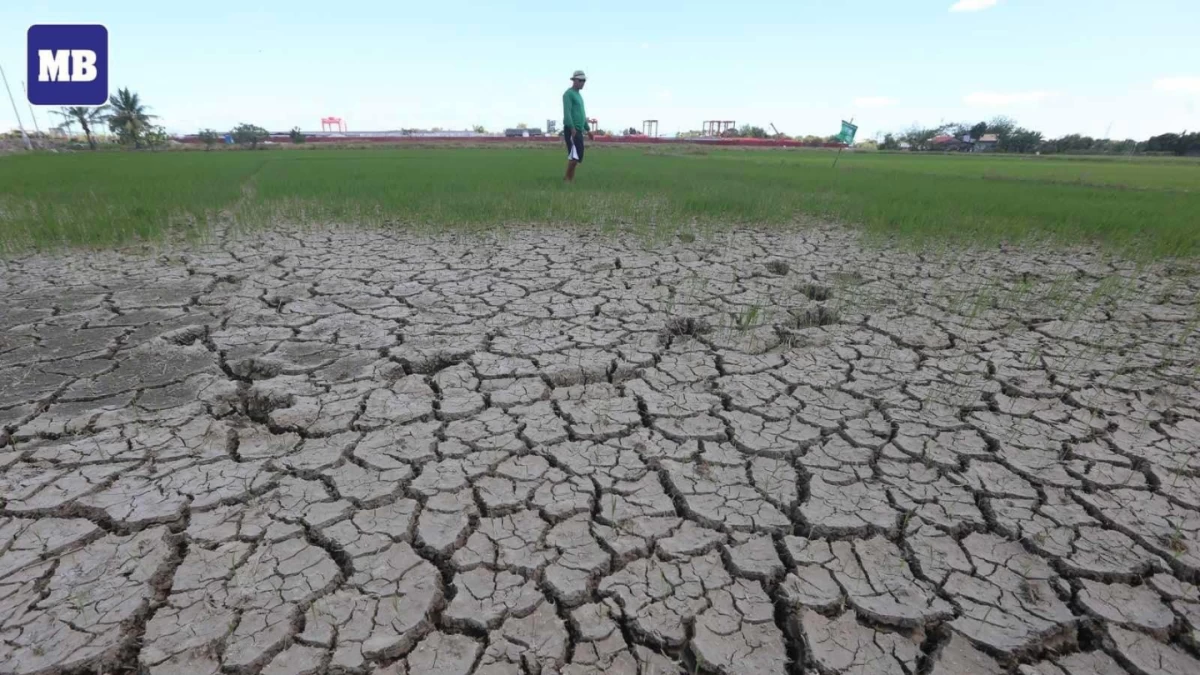
The Philippines faces difficulty bringing inflation back within target as a strengthening El Niño threatens to damage crops and push food prices higher, with the country already posting the highest inflation rate in the region, according to Moody’s Analytics.
In an Aug. 7 report, Moody’s Analytics noted that Philippine headline inflation eased to 6.2 percent year-on-year in July from 6.4 percent in June, but remained above the Bangko Sentral ng Pilipinas’ (BSP) two- to four-percent target range.
Among six Asia-Pacific economies that released July consumer price index (CPI) data last week, the Philippines recorded the strongest inflation despite the slowdown from June.
Vietnam’s July inflation stood at 4.5 percent, followed by Indonesia at 2.9 percent, South Korea at 2.8 percent, and Taiwan at 2.5 percent. Thailand had the lowest rate at 1.9 percent, down from 2.4 percent in June.
Moody’s Analytics cited that food prices in the Philippines increased 5.3 percent year-on-year in July, while utility prices soared 8.2 percent, and transport prices surged 11.9 percent.
Meanwhile, July core inflation, which excludes volatile food and energy items, eased to 4.2 percent from 4.4 percent last June.
“The inflation outlook will largely depend on how developments in the Middle East alter global commodity prices,” Moody’s Analytics said.
It added that the prolonged dry spell due to El Niño “poses a significant risk,” as hotter and drier conditions in the coming months could hurt crops and drive up food prices.
The threat extends across the region, with Moody’s Analytics citing a United Nations (UN) World Food Program (WFP) warning that a strengthening El Niño could leave an estimated 8.2 million additional people in Asia-Pacific facing acute food insecurity as hot and dry weather hampers planting seasons and harvests.
Moody’s Analytics noted that the previous El Niño episode from late 2023 to early 2024 contributed to higher food inflation in the Philippines, India, and Indonesia.
The renewed inflation threat comes as the Philippine economy is also grappling with its weakest growth since the Covid-19 pandemic.
Real gross domestic product (GDP) growth slowed to 2.3 percent year-on-year in the second quarter from 2.8 percent in the first quarter, marking the weakest performance since the first quarter of 2021, when the economy contracted during the depths of the pandemic.
On a seasonally adjusted quarter-on-quarter basis, GDP growth likewise slowed to 0.6 percent from 0.9 percent.
Moody’s Analytics attributed the broader slowdown partly to weak domestic demand, as private consumption growth decelerated for the fifth consecutive quarter while private investment fell sharply from a year ago.
Earlier, state weather bureau Philippine Atmospheric, Geophysical, and Astronomical Services Administration (PAGASA) officially raised the alert status to an active El Niño, warning that a severe “super El Niño” is likely to develop late in 2026 with an 81-percent probability and persist into the following year.
This poses a threat to the country’s food supply, with the Department of Agriculture (DA) warning that a severe dry period could cause a 20- to 30-percent decline in rice yields, equivalent to more than half a million metric tons (MT) of rice. - Danielle T. Bayani