






Manila Bulletin
 Business
Banking & Finance
DOF steps up shuttering of 21 state-run firms to free up funds
Business
Banking & Finance
DOF steps up shuttering of 21 state-run firms to free up funds
Business
Banking & Finance
DOF steps up shuttering of 21 state-run firms to free up funds
DOF steps up shuttering of 21 state-run firms to free up funds
By Derco Rosal
Published Aug 10, 2026 12:00 am


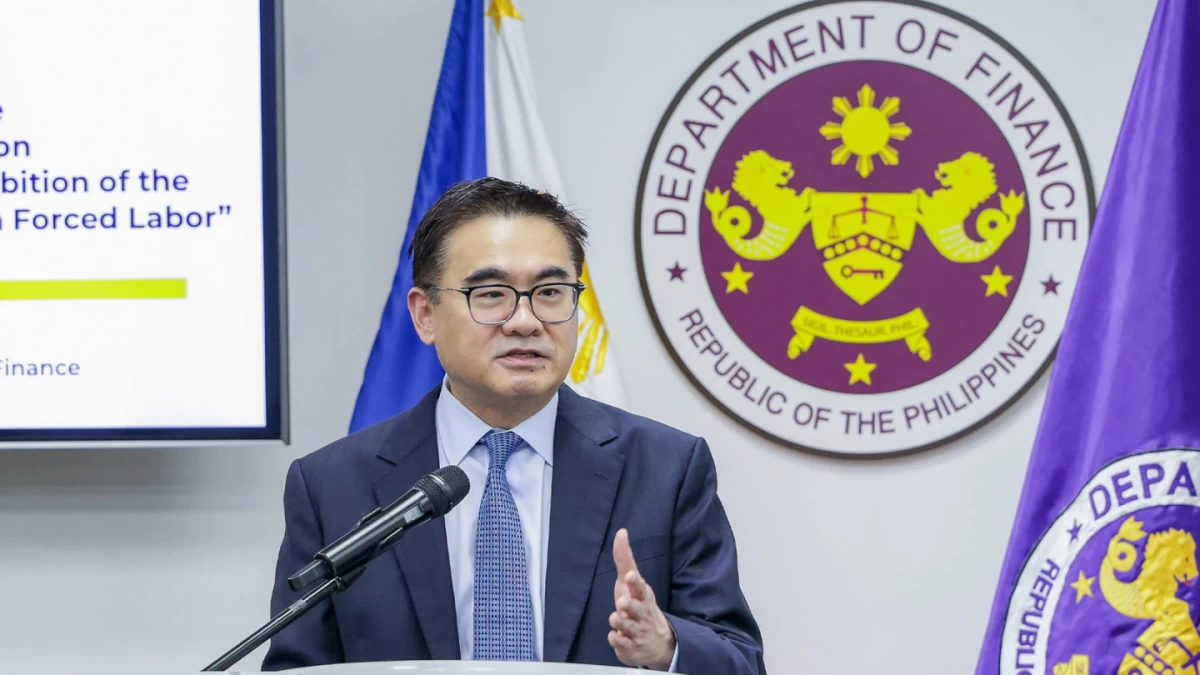
Finance Secretary Frederick D. Go
President Marcos is moving to abolish 21 state-run companies and has categorized 30 others as non-operational, inactive, or deactivated as the government accelerates efforts to wind down underperforming government entities and trim public spending.
Finance Secretary Frederick D. Go said in a DZRH radio interview over the weekend that roughly 10 percent of the country’s more than 100 government-owned and/or -controlled corporations (GOCCs) should be closed down, with several already undergoing formal termination procedures.
“We have over 100 GOCCs. I can say that 10 percent of them should be closed, and they are already in the process of being closed,,“ Go said. “But, of course, the government has a process that needs to be followed, so it’s a bit slow.”
Go told Manila Bulletin over the weekend that some entities have remained stuck in closure proceedings spanning the past two presidential terms.
“GOCCs that can no longer effectively fulfill their mandate or unnecessarily drain public resources should be abolished, or their functions absorbed by another GOCC or government agency,” the finance chief said. “This can free up public resources for programs and services that better serve the people.”
As of June 2026, 124 active state entities across various industries, including 26 government financial institutions, 22 firms in trade, area development, and tourism, 17 in utilities and communications, and 18 structured as realty or holding companies.
At the same time, 30 entities remain inactive or non-operational. The list includes Philippine National Oil Co. Renewables Corp., BCDA Management and Holdings, Inc., DBP Management Corp., GSIS Mutual Fund Inc., GSIS Properties, Inc., Metro Transit Organization, Inc., Philippine Aerospace Development Corp., Batong Buhay Gold Mines, Inc., and select overseas subsidiaries of Land Bank of the Philippines.
Four other state entities—GSIS Family Bank, Intercontinental Broadcasting Corp., Monterrosa Development Corp., and UCPB Savings Bank—are currently undergoing privatization. To date, 11 entities have been fully dissolved, one privatized, three merged, and one liquidated through the Department of Finance’s Privatization Management Office.
The cleanup of inactive entities comes as dividend collections from state-run corporations hit record levels under President Ferdinand Marcos Jr. Remittances have exceeded ₱501.4 billion since mid-2022, averaging ₱125.5 billion annually. That total marks a 31.2 percent increase over collections during the preceding Duterte administration and far outpaces contributions from prior terms.
Under Republic Act No. 7656, state entities are required to remit at least 50 percent of their net earnings to the national treasury as dividends.
The Finance Department requested entities to elevate that payout ratio to 75 percent starting in 2024 to maximize non-tax receipts.
Go expects five additional state firms to become major dividend contributors next year, bolstering non-tax revenue generation to help cover infrastructure costs without raising tax rates.