







Chinese Ambassador: Let's talk
Published Aug 10, 2026 01:48 pm


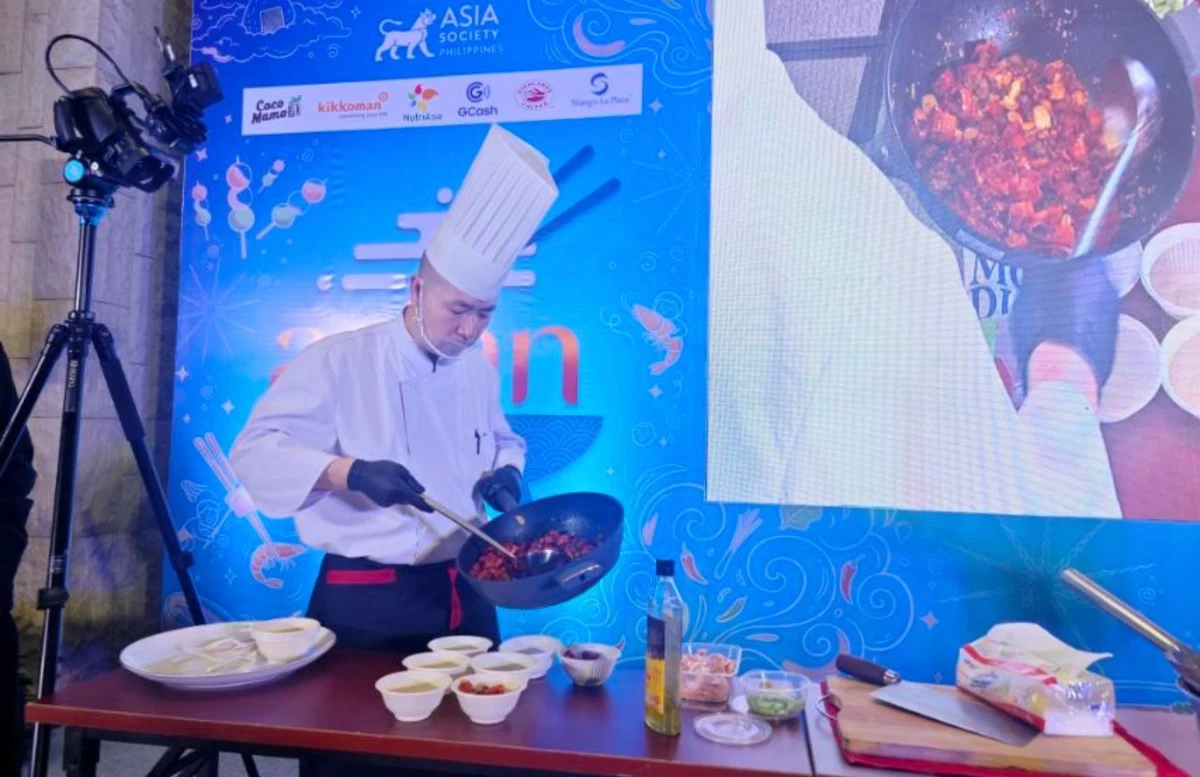
Chef LV Wei of the Chinese Embassy showcases how to cook Chongqing Spicy Chicken to the crowd gathered at the Asian Eats 2026, a food festival organized by the Asia Society Philippines. (Photo: Asia Society Philippines)
There are probably easier places to discuss the state of Philippines-China relations than in the middle of a food festival.
Then again, perhaps there are few better ones.
This writer caught up with Chinese Ambassador Jing Quan at Asia Society Philippines’ Asian Eats 2026 held at the EDSA Shangri-La mall over the weekend, where embassies and cultural institutions had gathered around one of diplomacy’s more agreeable subjects: food.
Asian Eats is built around the idea that cuisine can be a form of cultural diplomacy, bringing people closer through something as seemingly ordinary as what we eat. This year, with the Philippines serving as ASEAN Chair, the festival also placed particular emphasis on Southeast Asia and the region’s interconnected food cultures.
Jing clearly enjoyed the premise. “It’s about the people-to-people culture,” he told me. “People share culture with each other.”
There was something refreshingly simple about the way he put it: you do not need a common language to appreciate another country. Sometimes food, dance, martial arts or simple curiosity will do.
And apparently, the ambassador has been doing quite a bit of eating his way around the Philippines. In the roughly eight months since arriving in the country, Jing shared he had already traveled to 20 provinces. His rule when visiting somewhere new is simple: ask where to find the best local Filipino food. “Not Chinese,” he emphasized, laughing.
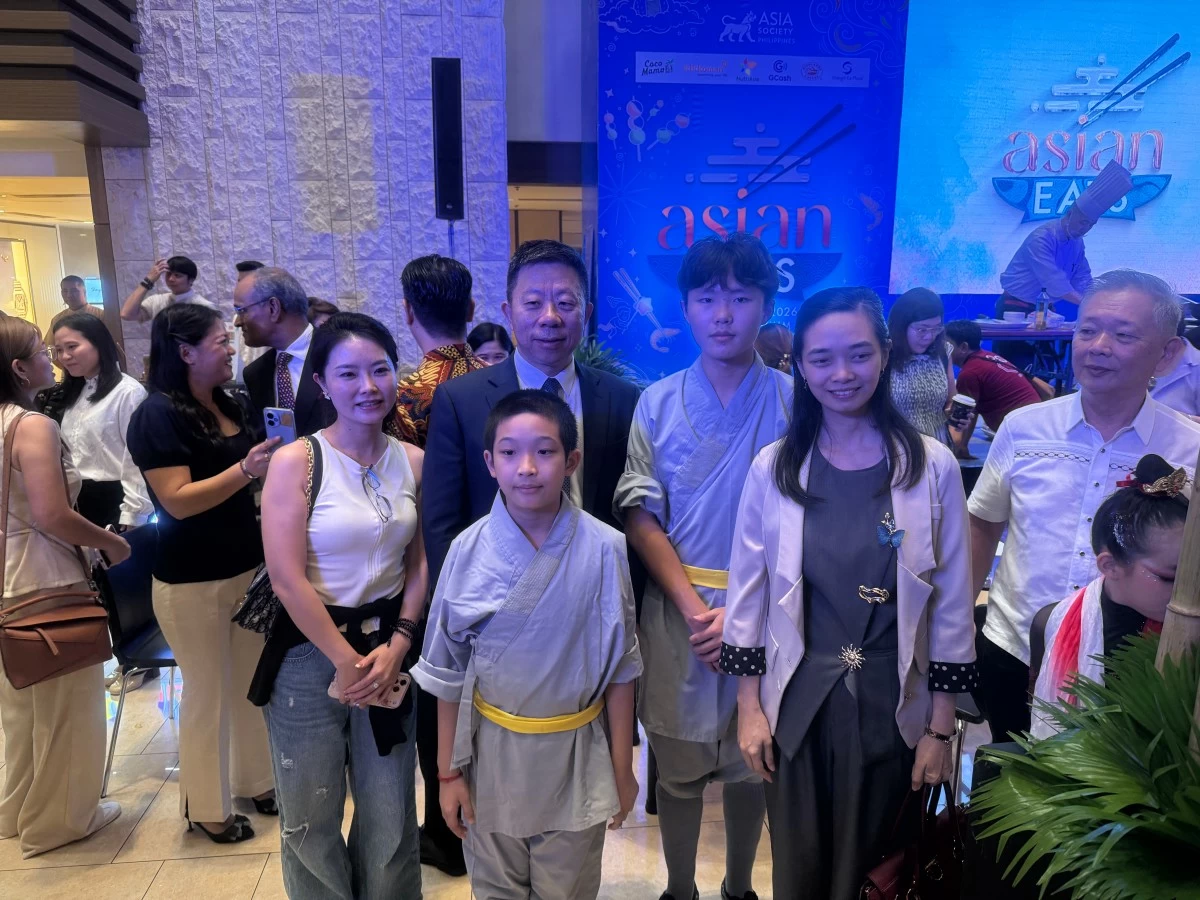
Chinese Ambassador Jing Quan with members of the community at the Asia Society Philippines’ Asian Eats 2026. (Photos: Carolyn Ramoran Hamilton/Manila Bulletin)
Naturally, I asked what had won him over. Sinigang, it turns out, has a fan in the Chinese Embassy.
Food, of course, was doing the heavy lifting that day. Asian Eats, Asia Society Philippines’ flagship culinary and cultural diplomacy festival, brought embassies and communities together through the region’s food and traditions. With the Philippines serving as ASEAN Chair, this year’s edition included a special ASEAN Showcase highlighting Southeast Asia’s shared influences and distinct culinary identities.
The Chinese Embassy’s participation went beyond the table, with dance and Shaolin Kung Fu performances. A highlight was Chef LV Wei’s cooking demonstration of Chongqing spicy chicken.
The dish came with its own history lesson. Chili peppers, now essential to Sichuan and Chongqing cuisine, originated in the Americas and reached China via the Philippines along maritime trade routes. By the 17th century, they had taken root in southwestern China and eventually became integral to the region’s cooking. Chef LV brought that journey full circle by using Philippine-grown chilies for his Chongqing spicy chicken.
There was something wonderfully appropriate about it: a Chinese chef in Manila preparing a Chongqing classic with Philippine-grown chilies, an ingredient whose own history was shaped by trade and exchange across borders.
That exchange was happening all around us, as guests moved between country offerings, performances and cooking demonstrations, encountering unfamiliar cultures in the most accessible way.
It was a fitting setting for my conversation with Jing—and an unexpected entry point into a far more complicated subject. Because enjoying each other’s food is easy. Managing one of the region’s most consequential bilateral relationships is considerably harder.
Philippines-China relations remain strained by competing claims and increasingly serious encounters in the West Philippine Sea.
So I asked Jing the obvious question: what can people-to-people exchanges really accomplish when relations between governments are under this much pressure?
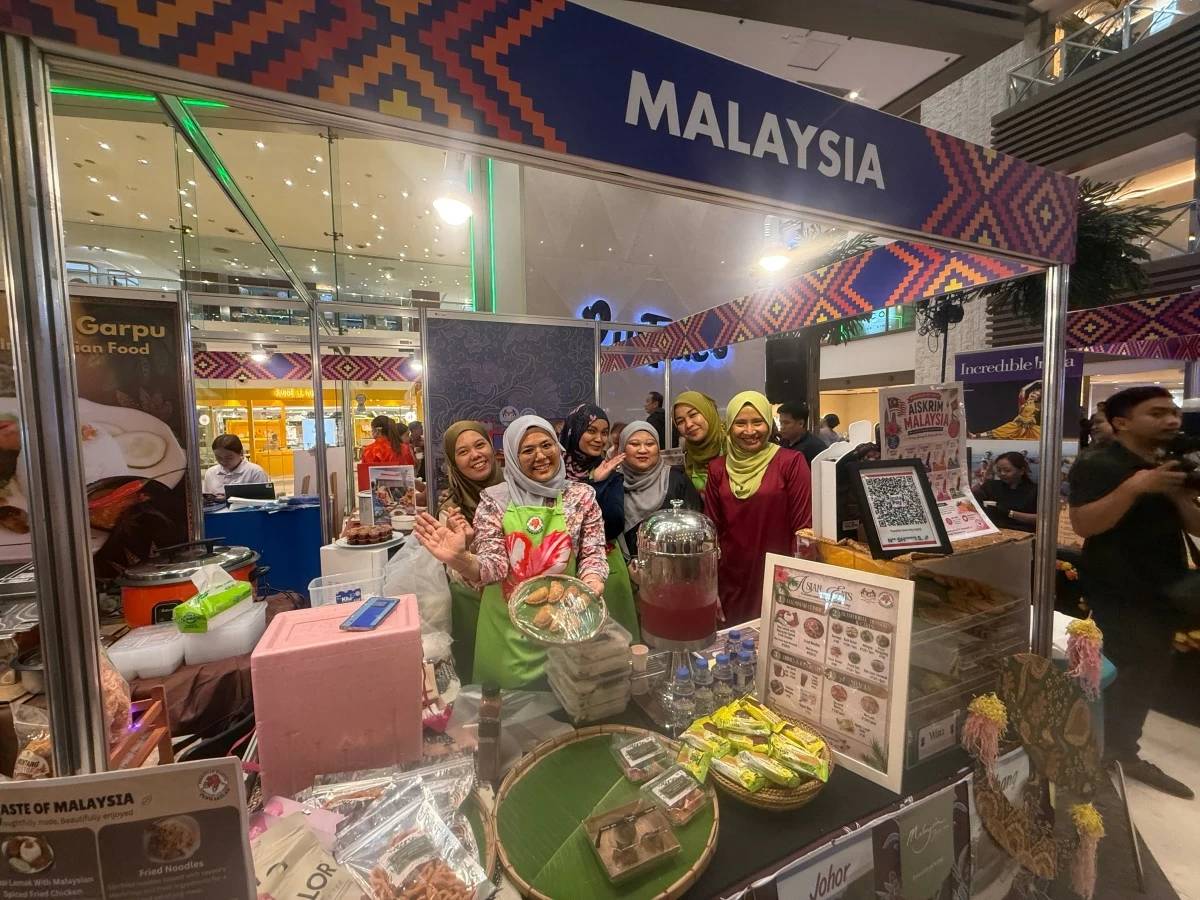
At the Malaysian booth, the Teh Tarik and Nasi Lemak were big hits.
His answer was that disagreements need not consume everything else. “Although we have some disputes, we can manage. We can talk,” he said. The two countries, he said, should continue focusing on trade, culture and exchanges that produce tangible benefits for ordinary Filipinos and Chinese.
That distinction—between having differences and allowing those differences to define the entire relationship—became the thread running through the rest of our conversation.
Jing is particularly interested in the economic side of his posting. Clean energy was the first sector he mentioned where he saw opportunities for greater cooperation. He pointed to electric vehicles, solar projects and waste-to-energy technology, before moving on to artificial intelligence, the digital economy and agricultural technology.
He also wants China buying more from the Philippines. His larger argument is that economic cooperation requires predictability. Businesses are more likely to invest, he said, when they are confident that political deterioration will not suddenly place their investments at risk.
What he hopes to see is what he called a “positive interaction”: more trade and people-to-people exchanges creating greater confidence to manage political differences, and more stable political relations in turn encouraging further business.
The alternative, in his description, is a vicious cycle. There is, of course, an important caveat here. Economic opportunity cannot make legitimate questions of sovereignty, maritime rights and national security disappear. Nor should cultural diplomacy be mistaken for a substitute for the difficult work of statecraft.
But diplomacy has never required countries to agree on everything before they speak to each other. And Jing seems determined to get people speaking again.
He shared that political dialogue between Manila and Beijing, after a period of stalled engagement, has resumed, with five rounds of talks already held this year.
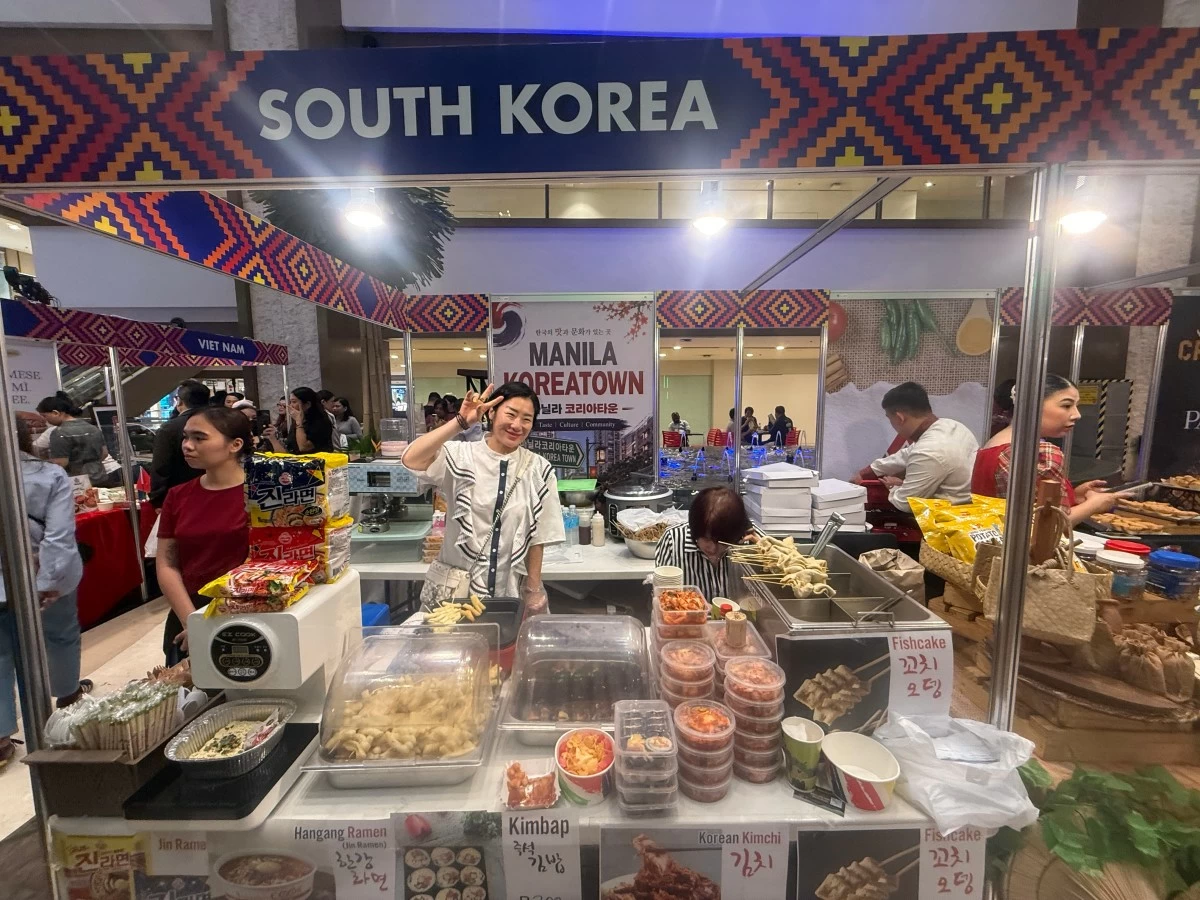
The South Korean booth offered classic dishes like bulgogi and kimchi as well as street food.
He described his own working relations with Philippine officials as “very smooth,” saying he had met with nearly 20 Cabinet-level officials as well as heads of law-enforcement agencies. “Our door is always open,” he said.
One area, however, remains particularly difficult. Military-to-military exchanges, Jing acknowledged, have effectively stopped. He hopes to see those channels restored as well. “Let’s calm down. Let’s talk to each other,” he said, stressing that difficult issues should be managed while both countries continue working in areas where cooperation remains possible.
Whether Manila and Beijing can actually create that virtuous cycle is another matter entirely. There are disputes between the Philippines and China that cannot be resolved over dinner, however good the food may be. Recent events in the West Philippine Sea are a reminder that cultural warmth and geopolitical friction can exist simultaneously.
Perhaps that is precisely why encounters like Asian Eats are worth paying attention to. Earlier this year, Jing spoke before Asia Society Philippines about restarting political dialogue, expanding people-to-people exchanges and deepening economic cooperation, while also acknowledging maritime disputes among the major challenges confronting bilateral relations.
At Asian Eats, those people-to-people exchanges took on a much simpler form. Jing put it rather neatly when we first started talking: people from different countries can still like each other’s culture.
That will not solve the West Philippine Sea. But diplomacy is rarely built from a single grand gesture. Sometimes it begins by preserving enough space for another conversation.
And, apparently, a bowl of sinigang.