






Manila Bulletin
 Opinion
Artificial intelligence and poverty eradication: Keeping humanity at the center
Opinion
Artificial intelligence and poverty eradication: Keeping humanity at the center
Opinion
Artificial intelligence and poverty eradication: Keeping humanity at the center
Artificial intelligence and poverty eradication: Keeping humanity at the center
Published Aug 10, 2026 12:05 am


FROM THE MARGINS
Over the past two years, I have intentionally immersed myself in learning about Artificial Intelligence. I have attended conferences, joined discussions, experimented with platforms such as ChatGPT and Gemini, and explored how AI is transforming industries, organizations, and everyday life. The more I learn, the more convinced I become that AI is not simply another technological trend. It represents one of the most significant shifts of our generation.
My mentor and good friend, Dr. Gilbert Llanto, once gave me advice that rings truer today than ever: “Aris, this is the wave of the future. Either you adapt, or you become obsolete.” He spoke these words years ago, but in an era where AI is making strides in medicine, law, and science. That reality has fully arrived.
Like every transformative technology, AI inspires both excitement and concern. Some envision breakthroughs in medicine, education, agriculture, and finance. Others worry about misinformation, privacy, discrimination, and job displacement. These concerns are legitimate. The answer is neither to fear AI nor embrace it uncritically, but to govern it wisely and ensure that its benefits reach everyone and not only those who possess technological advantage.
Recently, while visiting Jakarta, Indonesia, I met young innovators at a company called Sarana. During our discussion, I asked whether they could develop an AI-assisted system tool to analyze an organization’s internal staff data and identify employees with leadership potential. I was surprised to learn that the software had already been developed, and primarily by a 21-year-old engineer. That experience reminded me that the greatest resource in the age of AI is not the technology itself, but human creativity.
The Philippines has no shortage of talented young people. What we need is an environment that nurtures innovation while ensuring that technology advances alongside our national development goals.
For organizations dedicated to poverty eradication like microfinance institutions (MFIs), cooperatives, social enterprises, and development organizations, AI could be a tool that enables us to serve people better. Used responsibly, AI can help us make faster decisions, anticipate risks, personalize services, and extend assistance to more families without sacrificing the compassion that defines our work.
The opportunities are boundless. In agriculture, AI can help smallholder farmers improve productivity by analyzing weather patterns, predicting pest outbreaks, optimizing irrigation, and providing better market information. In disaster risk management, it can strengthen community resilience through improved forecasting and faster emergency response. In financial inclusion, AI can help MFIs better understand clients, improve credit assessment, detect early signs of financial distress, and recommend more appropriate financial and insurance products. AI can also help MFIs expand outreach to underserved communities by identifying areas with limited access to financial services, automating routine transactions, improving customer support through multilingual digital assistants, and enabling field staff to devote more time to financial coaching, enterprise development, and building lasting client relationships. Healthcare, education, and government services can also benefit from more efficient and personalized service delivery.
Yet we should not ignore the challenges that accompany these opportunities.
AI will reshape labor markets. Some routine jobs may disappear, while new professions emerge. The challenge for the Philippines is to manage this transition responsibly. Government, educational institutions, and the private sector must invest in reskilling, digital literacy, and lifelong learning so Filipino workers can thrive in an AI-enabled economy. Productivity gains should complement human labor, not unnecessarily replace it. Economic growth is meaningful only when it creates decent jobs and expands opportunities for ordinary families.
Responsible AI also requires sound governance. Governments must establish policies that protect privacy, safeguard personal data, promote transparency, and minimize algorithmic bias. Businesses must likewise adopt ethical AI practices that emphasize accountability, fairness, and respect for human dignity. Public trust will ultimately determine whether AI fulfills its promise for society.
Development organizations have an equally important responsibility to ensure that AI does not deepen existing inequalities. Communities with limited digital access or skills should not be left further behind. Digital inclusion must become part of financial inclusion.
As we embrace AI, we should remember what has sustained social enterprises for decades. Success has never depended solely on efficient systems or sophisticated technology. It has been built on trust, empathy, and genuine human relationships. Artificial Intelligence should, therefore, augment human intelligence — not replace human compassion.
If guided by sound public policy, ethical business practices, and a steadfast commitment to inclusive development, AI can become one of the most powerful tools for reducing poverty. It can help us make better decisions, respond faster to crises, improve livelihoods, and expand opportunities for millions of Filipinos.
Technology will continue to evolve. That is inevitable. Our responsibility is to ensure that our values evolve with it. The future should not simply be more intelligent. It should also be more just, more inclusive, and more humane.
* * *
"We always need to think of AI as a scaffolding for human potential versus a substitute."- Satya Nadella
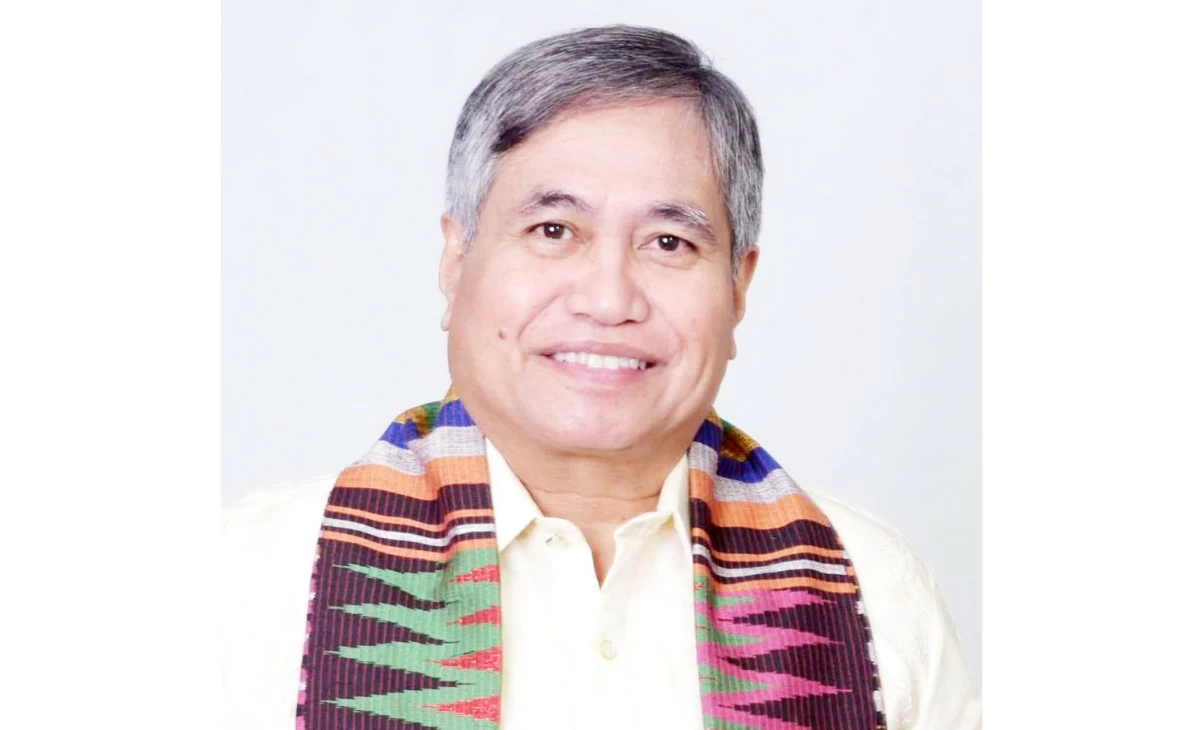
(Dr. Jaime Aristotle B. Alip is a poverty eradication advocate. He is the founder of the Center for Agriculture and Rural Development Mutually-Reinforcing Institutions (CARD MRI), a group of 23 organizations that provide social development services to 8 million economically-disadvantaged Filipinos and insure more than 27 million nationwide.)