ADVERTISEMENT

AI drives Philippines electronic exports toward record $50 billion

Published Aug 10, 2026 12:00 am
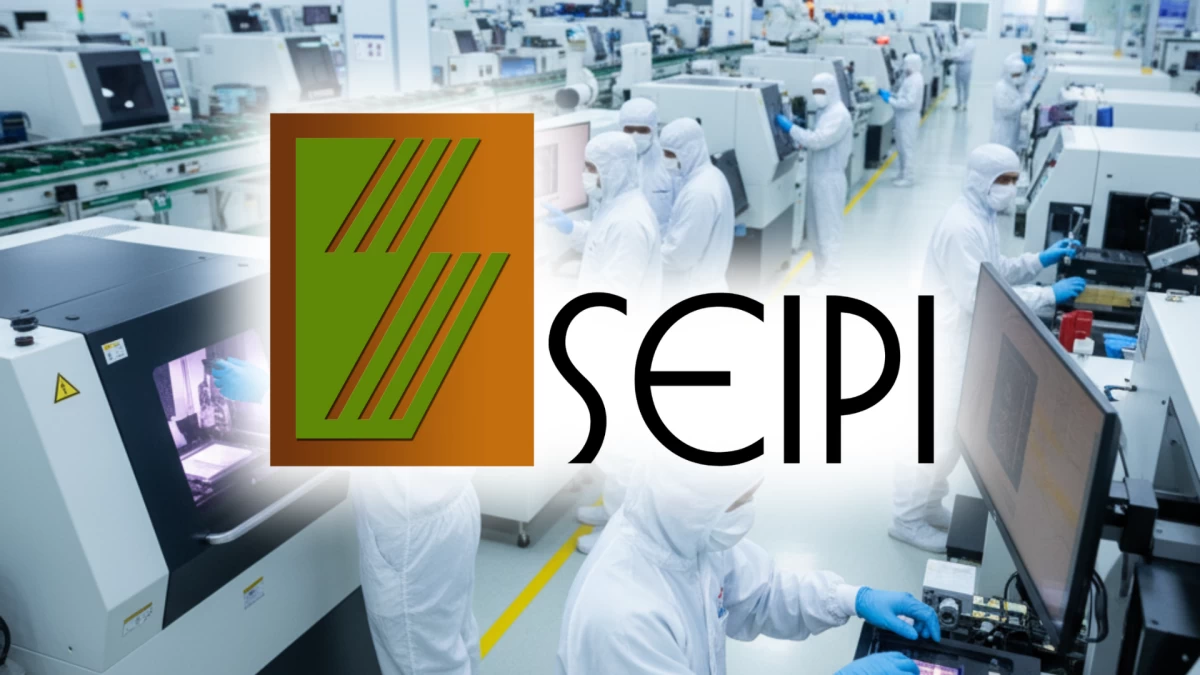
The continued expansion of digital infrastructure for artificial intelligence (AI) is on track to push the country’s electronic exports past the $50-billion mark and set a new all-time high this year, according to the Semiconductor and Electronics Industries in the Philippines Foundation Inc. (SEIPI).
SEIPI President Danilo Lachica told reporters that the industry group now projects full-year electronic exports to grow by 10 percent year-on-year, doubling its initial five-percent growth forecast.
If realized, outbound electronics shipments would reach $53 billion to $54 billion, comfortably surpassing the $49.64 billion recorded in 2025.
This would mark the first time the sector breaches the $50-billion threshold and eclipse the previous record of $49.66 billion set in 2022 by nearly 10 percent.
Lachica said semiconductors, the foundational technology enabling AI, are expected to make up roughly 70 percent of total electronic exports this year.
In 2025, semiconductor shipments reached $35.54 billion, accounting for over 71 percent of the sector's total output.
Though industry stakeholders initially feared higher fuel costs and supply chain disruptions from the Middle East conflict would dampen demand, the global AI boom has more than offset those headwinds.
While domestic manufacturers do not produce specialized AI chips directly, Lachica noted that surging international demand for the supporting semiconductors that power data centers and critical digital infrastructure.
“With any new technology, there will be a plateau over time. But I think AI development is not even there yet. There are many more growth opportunities and advancements in technology,” Lachica said.
He added that while AI dominates headlines, demand remains strong across traditional sectors, including automotive electronics, telecommunications, and radar systems.
Growth is further bolstered by the exemption of Philippine electronic exports from a 12.5-percent United States (US) tariff, safeguarding shipments to America—the country's second-largest export market. Hong Kong remains the top destination, with China ranking third.
Looking ahead, SEIPI is closely monitoring plans for the proposed Pax Silica industrial hub in New Clark City, designated to become the country's flagship semiconductor production zone.
The facility is projected to generate $200 billion in incremental export revenues over a 30-year buildout timeline, with full development targeted as early as 2058.
“That's not going to happen if the industry and the government don't support it,” Lachica said. “That's why we need to help each other.”

Related Tags

Semiconductor and Electronics Industries in the Philippines Foundation Inc. (SEIPI) Semiconductors
ADVERTISEMENT
.most-popular .layout-ratio{ padding-bottom: 79.13%; } @media (min-width: 768px) and (max-width: 1024px) { .widget-title { font-size: 15px !important; } }

{{ articles_filter_1561_widget.title }}

.most-popular .layout-ratio{ padding-bottom: 79.13%; } @media (min-width: 768px) and (max-width: 1024px) { .widget-title { font-size: 15px !important; } }

{{ static_articles_1562_widget.title }}

.most-popular .layout-ratio{ padding-bottom: 79.13%; } @media (min-width: 768px) and (max-width: 1024px) { .widget-title { font-size: 15px !important; } }

{{ articles_filter_1563_widget.title }}

{{ articles_filter_1564_widget.title }}

.mb-article-details { position: relative; } .mb-article-details .article-body-preview, .mb-article-details .article-body-summary{ font-size: 17px; line-height: 30px; font-family: "Libre Caslon Text", serif; color: #000; } .mb-article-details .article-body-preview iframe , .mb-article-details .article-body-summary iframe{ width: 100%; margin: auto; } .read-more-background { background: linear-gradient(180deg, color(display-p3 1.000 1.000 1.000 / 0) 13.75%, color(display-p3 1.000 1.000 1.000 / 0.8) 30.79%, color(display-p3 1.000 1.000 1.000) 72.5%); position: absolute; height: 200px; width: 100%; bottom: 0; display: flex; justify-content: center; align-items: center; padding: 0; } .read-more-background a{ color: #000; } .read-more-btn { padding: 17px 45px; font-family: Inter; font-weight: 700; font-size: 18px; line-height: 16px; text-align: center; vertical-align: middle; border: 1px solid black; background-color: white; } .hidden { display: none; }
function initializeAllSwipers() { // Get all hidden inputs with cms_article_id document.querySelectorAll('[id^="cms_article_id_"]').forEach(function (input) { const cmsArticleId = input.value; const articleSelector = '#article-' + cmsArticleId + ' .body_images'; const swiperElement = document.querySelector(articleSelector); if (swiperElement && !swiperElement.classList.contains('swiper-initialized')) { new Swiper(articleSelector, { loop: true, pagination: false, navigation: { nextEl: '#article-' + cmsArticleId + ' .swiper-button-next', prevEl: '#article-' + cmsArticleId + ' .swiper-button-prev', }, }); } }); } setTimeout(initializeAllSwipers, 3000); const intersectionObserver = new IntersectionObserver( (entries) => { entries.forEach((entry) => { if (entry.isIntersecting) { const newUrl = entry.target.getAttribute("data-url"); if (newUrl) { history.pushState(null, null, newUrl); let article = entry.target; // Extract metadata const author = article.querySelector('.author-section').textContent.replace('By', '').trim(); const section = article.querySelector('.section-info ').textContent.replace(' ', ' '); const title = article.querySelector('.article-title h1').textContent; // Parse URL for Chartbeat path format const parsedUrl = new URL(newUrl, window.location.origin); const cleanUrl = parsedUrl.host + parsedUrl.pathname; // Update Chartbeat configuration if (typeof window._sf_async_config !== 'undefined') { window._sf_async_config.path = cleanUrl; window._sf_async_config.sections = section; window._sf_async_config.authors = author; } // Track virtual page view with Chartbeat if (typeof pSUPERFLY !== 'undefined' && typeof pSUPERFLY.virtualPage === 'function') { try { pSUPERFLY.virtualPage({ path: cleanUrl, title: title, sections: section, authors: author }); } catch (error) { console.error('ping error', error); } } // Optional: Update document title if (title && title !== document.title) { document.title = title; } } } }); }, { threshold: 0.1 } ); function showArticleBody(button) { const article = button.closest("article"); const summary = article.querySelector(".article-body-summary"); const body = article.querySelector(".article-body-preview"); const readMoreSection = article.querySelector(".read-more-background"); // Hide summary and read-more section summary.style.display = "none"; readMoreSection.style.display = "none"; // Show the full article body body.classList.remove("hidden"); } document.addEventListener("DOMContentLoaded", () => { let loadCount = 0; // Track how many times articles are loaded const offset = [1, 2, 3, 4, 5, 6, 7, 8, 9, 10]; // Offset values const currentUrl = window.location.pathname.substring(1); let isLoading = false; // Prevent multiple calls if (!currentUrl) { console.log("Current URL is invalid."); return; } const sentinel = document.getElementById("load-more-sentinel"); if (!sentinel) { console.log("Sentinel element not found."); return; } function isSentinelVisible() { const rect = sentinel.getBoundingClientRect(); return ( rect.top < window.innerHeight && rect.bottom >= 0 ); } function onScroll() { if (isLoading) return; if (isSentinelVisible()) { if (loadCount >= offset.length) { console.log("Maximum load attempts reached."); window.removeEventListener("scroll", onScroll); return; } isLoading = true; const currentOffset = offset[loadCount]; window.loadMoreItems().then(() => { let article = document.querySelector('#widget_1690 > div:nth-last-of-type(2) article'); intersectionObserver.observe(article) loadCount++; }).catch(error => { console.error("Error loading more items:", error); }).finally(() => { isLoading = false; }); } } window.addEventListener("scroll", onScroll); });

Sign up by email to receive news.