






 Philippines
National
First Lady hails 200 Filipino children given new lease on life through India liver transplants
Philippines
National
First Lady hails 200 Filipino children given new lease on life through India liver transplants
First Lady hails 200 Filipino children given new lease on life through India liver transplants


At A Glance
- First Lady Liza Araneta-Marcos hailed Indraprastha Apollo Hospital's milestone of 200 successful pediatric liver transplants involving Filipino children.
- Apollo said Filipino children with complex liver diseases have traveled to New Delhi for transplantation, with the hospital reporting a 93 percent success rate in pediatric liver transplants.
- The milestone highlights the growing medical ties between the Philippines and India and the challenges faced by Filipino families seeking highly specialized treatment abroad.
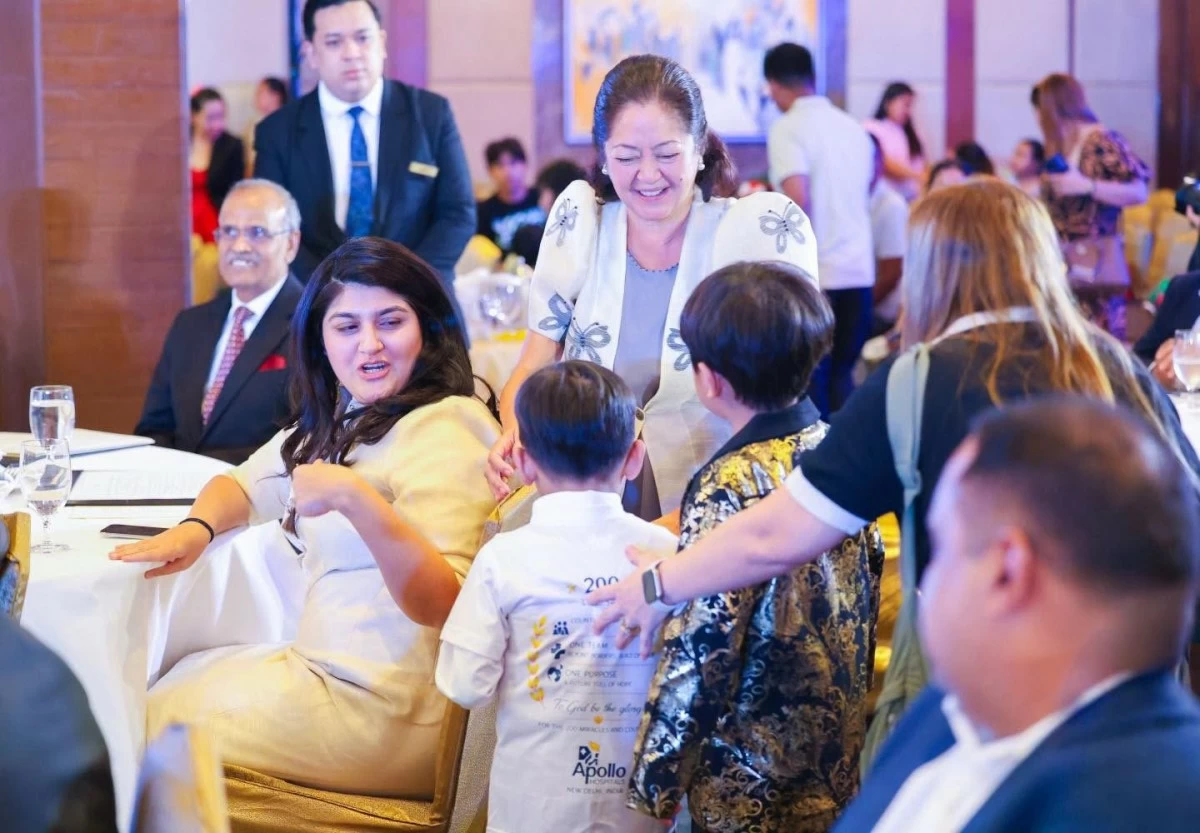
First Lady Liza Araneta-Marcos has hailed the successful liver transplants performed on 200 Filipino children at an Indian hospital, saying the procedures gave them "a renewed chance to dream, grow and enjoy the childhood they deserve."
Araneta-Marcos served as chief guest at a gathering in Makati on Friday, Aug. 7, marking Indraprastha Apollo Hospital's milestone of 200 successful pediatric liver transplants involving children from the Philippines.
In a Facebook post after the event, the First Lady described the milestone as "deeply heartwarming" and expressed gratitude to Prof. Anupam Sibal and the Apollo medical team for their work in treating Filipino children with complex liver diseases.
"Through your skill, compassion and unwavering dedication, you have not only saved lives -- you have given hope to hundreds of Filipino families," Araneta-Marcos said.
She said the milestone showed "just how precious the gift of life truly is," while recognizing the 200 children who were given another opportunity to live, grow, and enjoy their childhood.
200 children, one medical milestone
Apollo said the completion of 200 successful pediatric liver transplants for Filipino children marked an important milestone in its pediatric liver transplant program and its long-standing association with Filipino patients and families.
Filipino children, it said, have traveled to its New Delhi facility for treatment of conditions including biliary atresia, metabolic liver diseases, and liver cancer, where liver transplantation may be the life-saving option for children with end-stage liver disease.
Apollo reported a 93 percent success rate in pediatric liver transplants, although its news release did not specify the period covered by the figure or the measure used to determine "success."
Dr. Prathap Reddy, founder chairman of Apollo Hospitals Group, said the milestone reflected the trust Filipino families had placed in the hospital and the advances in clinical expertise and multidisciplinary care for complex pediatric cases.
Dr. Anupam Sibal, group medical director and senior pediatric gastroenterologist and hepatologist of Apollo Hospitals Group, said pediatric liver transplantation was among the most complex surgeries, particularly for very small children.
Sibal added that Apollo's experience included combined liver-kidney transplants, liver transplants in babies weighing as little as 3.5 kilograms, and ABO-incompatible transplants in which donors and recipients have different blood groups.
"Every successful transplant represents a child given a second chance at a healthy life," Sibal said.
Dr. Neerav Goyal, senior consultant and head of liver transplant surgery at Indraprastha Apollo Hospital, said treating very small children requires precise surgical planning, meticulous vascular reconstruction and coordination among several medical specialties.
Goyal said improvements in surgical techniques, anesthesia, intensive care, and immunosuppression had contributed to improved outcomes, while transplant care continued from evaluation through lifelong follow-up.
Recently, Filipino twin toddlers Tyler and Kelly Clarito underwent separate living donor liver transplants at Apollo Hospitals in New Delhi after developing liver failure linked to Choledochal Cyst Type IVA, a rare congenital disorder.
Tyler underwent his transplant on May 29, while Kelly followed on June 3, with their mother, Daisy Ann Clarito, donating part of her liver to Tyler and their maternal uncle, Roy Escasinas, donating part of his liver to Kelly.
Their father, Wilson Clarito, said the family spent months seeking treatment before the twins were brought to India, where the surgeries and subsequent recovery gave the children a chance to return home.
The twins' case also underscored the sacrifices involved in securing a transplant abroad, with their family relying on assistance from several Philippine officials and private supporters for hospital expenses, airfare, and accommodation.
Apollo Managing Director Shivakumar Pattabhiraman said the hospital had built long-standing relationships with Filipino patients, families and clinicians who shared the goal of securing timely access to specialized care.
The hospital said its Liver Transplant Program has performed more than 5,000 transplants involving patients from 50 countries, while its broader solid organ transplant program has performed more than 28,000 liver, kidney, heart, lung, intestinal, pancreas, and multi-organ transplants.
The Manila gathering was attended by Indian Ambassador Harsh Kumar Jain, Sen. Erwin Tulfo, Sen. Bong Go, Sen. Robinhood Padilla, Manila Mayor Francisco "Isko Moreno” Domagoso, Makati Mayor Nancy Binay, and Overseas Workers Welfare Administration (OWWA) Administrator Patricia Yvonne "PY" Caunan.