







'Caskets' are not political arguments
Published Aug 9, 2026 12:05 am
|
Updated Aug 8, 2026 04:44 pm


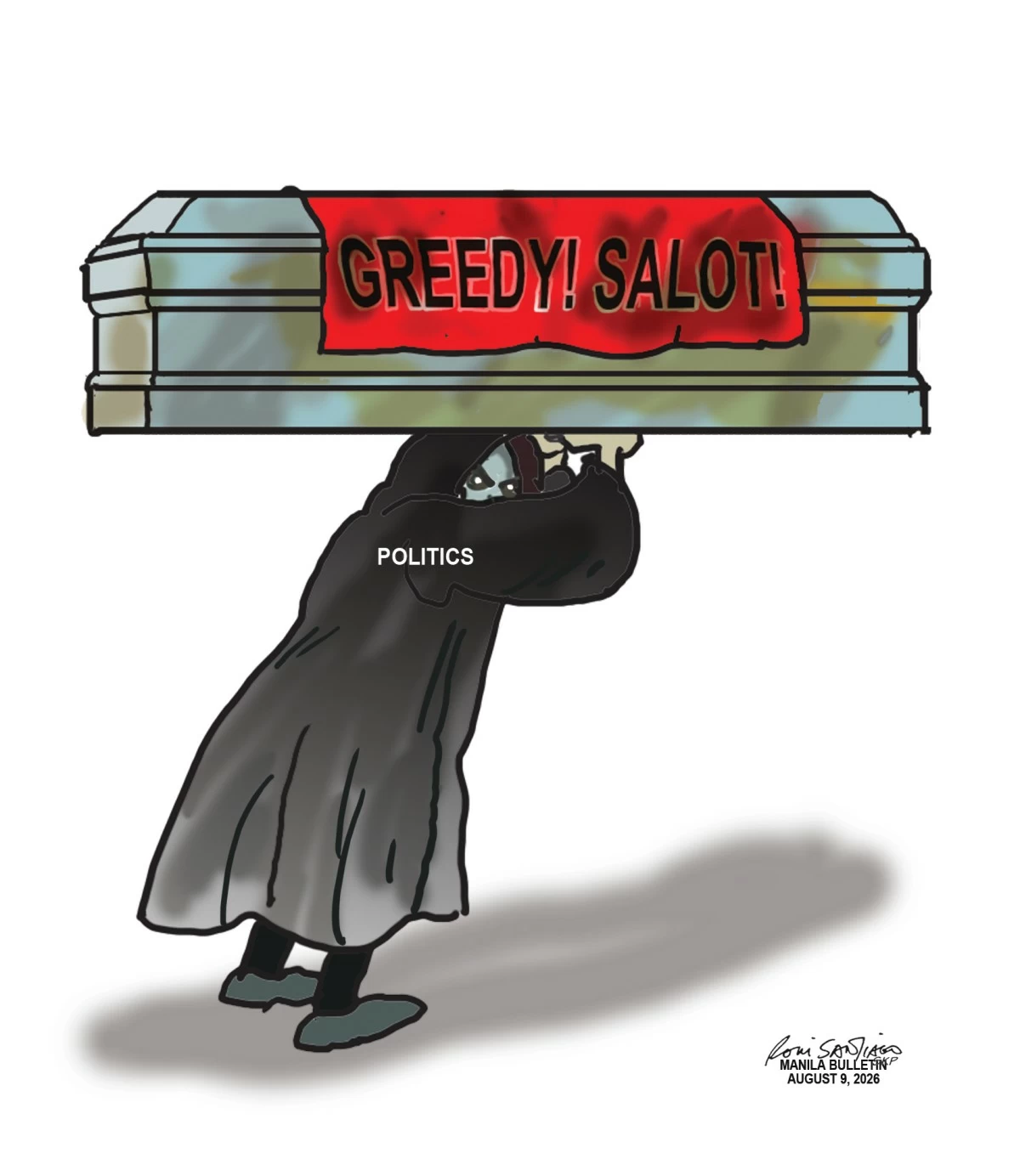
The five caskets scattered across Metro Manila, carrying anti-China and anti-Communist Party of the Philippines-New People’s Army (CPP-NPA) messages, are a disturbing reminder that in a democracy, even a legitimate message can be discredited by the manner in which it is delivered.
The caskets reportedly appeared in Manila, Caloocan, Quezon City and Makati on Aug. 7, in locations chosen for maximum public visibility. A subsequent Quezon City police operation identified the driver of a vehicle allegedly used to unload one casket. Investigators were told that different vehicles were used, with drivers reportedly paid ₱8,000 and helpers ₱1,000 each.
Those details make the incident more troubling, not necessarily because of what the messages conveyed, but due to the apparent orchestration behind them.
If the objective was to condemn China, the CPP-NPA or communist violence, why resort to caskets? Why make death the centerpiece of political persuasion? Why turn public spaces into stages for a spectacle designed to shock before it persuades?
Propaganda may be effective at attracting attention. But attention does not necessarily equate to credibility.
The public should therefore resist two equally dangerous reactions. The first is to accept the messaging at face value simply because it is packaged dramatically. The second is to dismiss it immediately without asking who organized it, who financed it and what larger objective may lie behind it.
There may be more to this operation than the slogans suggest. Its apparent coordination, multiple vehicles, and reported payments warrant serious scrutiny. Authorities must determine whether this was simply an independently organized propaganda stunt or whether individuals, organizations, or other interests deliberately sought to manipulate public sentiment.
The investigation, however, must not become an excuse for political speculation. The government should follow the evidence, preserve CCTV and digital records, trace vehicle rentals and payments, identify the organizers and establish who financed and directed the operation. If laws were violated, those responsible should be prosecuted in accordance with due process. The inquiry should continue until the chain of responsibility is established, not merely until convenient individuals are identified.
The government should also communicate transparently. Filipinos deserve to know what investigators have established, what remains unverified and what evidence supports official conclusions. That distinction matters in an era when propaganda can spread faster than facts.
The public, meanwhile, has a role here. Do not reward theatrical misinformation with instant outrage or unquestioning applause. Verify before sharing. Ask who benefits from the spectacle. Report suspicious activities to authorities. Demand evidence from the government—and accountability from those who manufacture political messaging.
There are countless decent ways to oppose communism, criticize China’s policies or denounce violence. Write. Debate. Hold forums. Publish evidence. Organize peaceful assemblies. Present victims’ stories with dignity. Challenge ideas with better ideas.
A democratic and just society should have no shortage of courage. What it should have less tolerance for is political theater that treats death as a prop.
If the message is worth hearing, it deserves something better than a casket.