







Staying ahead of stagflation
Published Aug 8, 2026 12:05 am
|
Updated Aug 7, 2026 06:04 pm


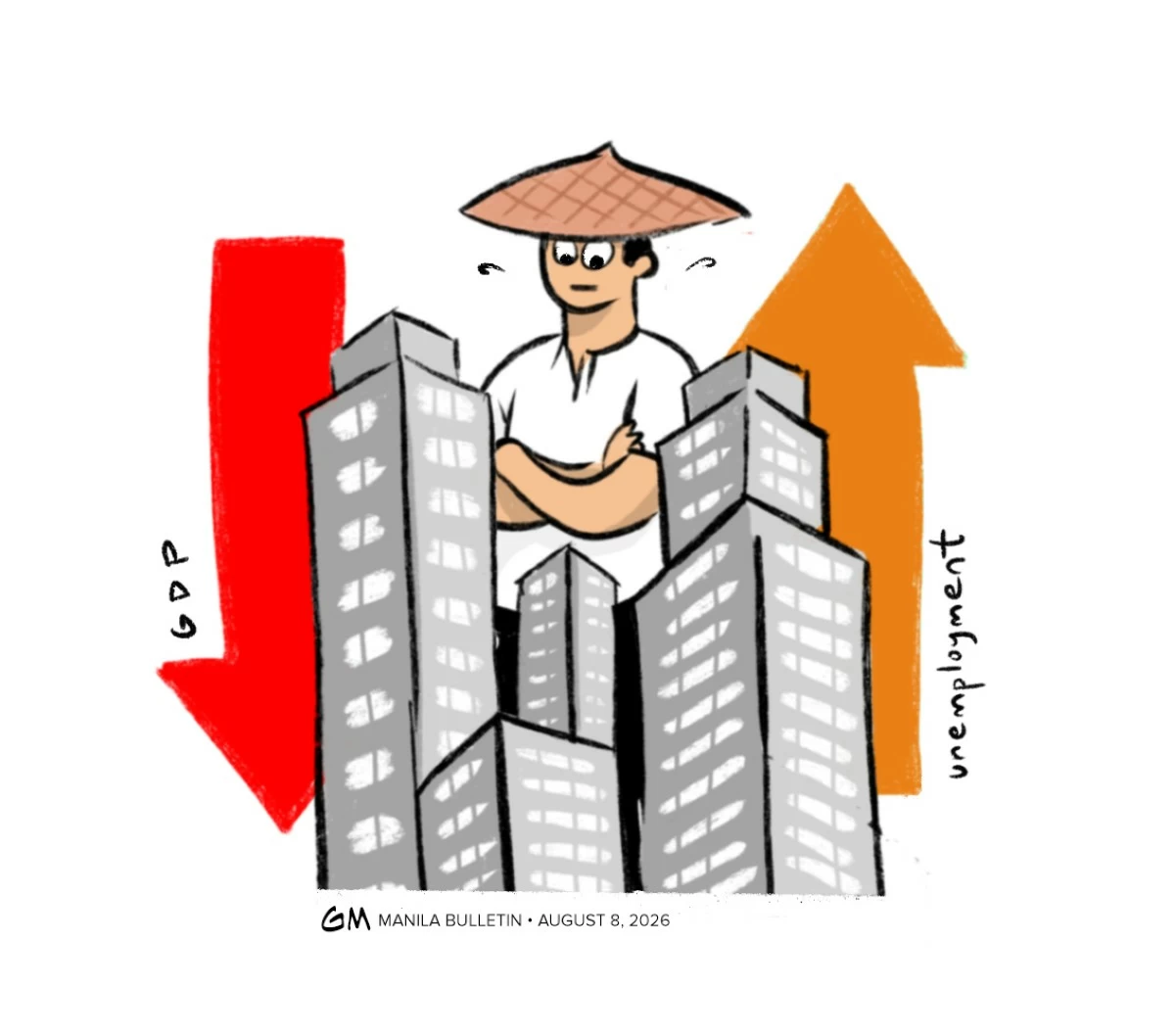
The latest economic numbers present a sobering picture. Philippine gross domestic product (GDP) growth slowed further to 2.3 percent in the second quarter of 2026, the weakest pace since the aftermath of the global financial crisis (GFC) if the Covid-19 pandemic years are excluded. At the same time, domestic inflation remains the highest in Southeast Asia, while unemployment has climbed as the labor market struggles to absorb a growing workforce. These are hardly the indicators any country wants to see together.
It is therefore unsurprising that the specter of stagflation—a toxic combination of weak economic growth, elevated inflation, and persistent unemployment—has resurfaced in public discussion. Yet caution is needed before attaching that label to the Philippine economy.
When asked by Manila Bulletin whether the country is at risk of stagflation, Department of Economy, Planning, and Development (DEPDev) Secretary Arsenio M. Balisacan, the country’s chief economist, gave a measured response: “I don’t think so.” Balisacan’s optimism was anchored not on wishful thinking, but on what he described as emerging signs of recovery, particularly the expected pickup in public investments and the corresponding improvement in private-sector confidence.
The DEPDev chief’s broader assessment also pointed to encouraging indicators, including recovering agricultural output, stronger manufacturing activity, improving exports, and rising business sentiment. That reassurance deserves attention.
Stagflation is not merely a period of slow growth. It is an entrenched condition in which weak output, high inflation, and labor market deterioration reinforce one another, leaving policymakers with few effective options. The Philippines is certainly under pressure, but there are still reasons to believe it can avoid falling into that trap.
That said, avoiding stagflation should not become an excuse for complacency. For many Filipino families, technical definitions matter far less than everyday realities. Whether economists call it stagflation or simply a difficult economic period, households continue to grapple with expensive food, elevated transport and utility costs, as well as uncertainty over jobs and incomes. Businesses, especially small enterprises, face higher operating costs while consumers remain cautious with spending.
The challenge, therefore, is not simply to lift GDP growth for its own sake. Growth must be broad-based and felt by ordinary Filipinos.
The government’s immediate priorities are already clear. Public infrastructure spending must accelerate after delays earlier this year, helping stimulate private investment and job creation. Measures to stabilize food and energy prices should remain at the forefront, since these have the most direct impact on household budgets. Assistance under the Unified Package for Livelihoods, Industry, Food, and Transport (UPLIFT) Framework, support for farmers and fisherfolk, strategic food buffers, as well as efforts to strengthen energy security all point in the right direction, provided implementation remains timely and effective.
Equally important is creating better employment opportunities. The rise in unemployment despite continued job creation shows that the economy must not only generate jobs but generate enough quality jobs for a growing labor force.
The second-quarter GDP report should therefore serve as both a warning and a call to action. The economy has not entered stagflation, but neither has it fully emerged from its current difficulties. There are foundations for recovery, as the government believes, but those foundations must quickly translate into tangible improvements in people’s lives.
Ultimately, economic success will not be measured solely by whether the country avoids a textbook definition of stagflation. It will be measured by whether inflation eases, more Filipinos find stable as well as productive work, businesses regain confidence to invest, and families once again feel that progress is within reach.