






Manila Bulletin
 Environment and Sustainability
Keeping the momentum: How NEO's existing buildings continue to lead in sustainable real estate
Environment and Sustainability
Keeping the momentum: How NEO's existing buildings continue to lead in sustainable real estate
Environment and Sustainability
Keeping the momentum: How NEO's existing buildings continue to lead in sustainable real estate
Keeping the momentum: How NEO's existing buildings continue to lead in sustainable real estate
By MBrand
Published Aug 8, 2026 11:15 am
|
Updated Aug 10, 2026 10:03 am


Across seven certified green office buildings in Bonifacio Global City, NEO is showing that existing and established properties can remain efficient, resilient, people-centered, and competitive through continuous investment and improvement.
Sustainability in real estate is often associated with new buildings. But as cities continue to grow around properties that have already been built, an equally important question emerges: How can existing buildings continue to perform sustainably over time?
NEO is showing that age does not have to limit a building’s environmental performance, workplace quality, or long-term competitiveness.
The company owns, develops, and manages seven certified green office buildings in Bonifacio Global City, with a combined gross floor area of 256,707 square meters. Several of these properties have been operating for more than two decades, yet the portfolio continues to perform through regular upgrades, careful operations, proactive maintenance, and steady investment.
Since shifting its entire portfolio to off-site renewable energy in 2013, NEO has expanded its sustainability efforts beyond energy management and conservation. Today, its approach covers water conservation, waste circularity, occupant health and well-being, resilience, connectivity, community engagement, and transparent governance.
Rather than treating sustainability as a standard achieved once, NEO uses it as a framework for continuously improving how its buildings are managed, experienced, and prepared for the future.
“Old and existing assets can deliver on multiple fronts—from zero carbon and health and safety to waste, community, and resilience.”— Raymond Rufino, Chief Executive Officer, NEO
Measurable progress, even with higher occupancy
The performance of an existing building is best demonstrated by how it improves over time.
In 2025, average tenant occupancy across NEO’s portfolio increased from 94.5% to 95.94%. Despite more people using its buildings, NEO reduced emissions from building operations by 14.46%, electricity consumption by 1.74%, and water consumption by 3.17% across the portfolio compared with 2024.
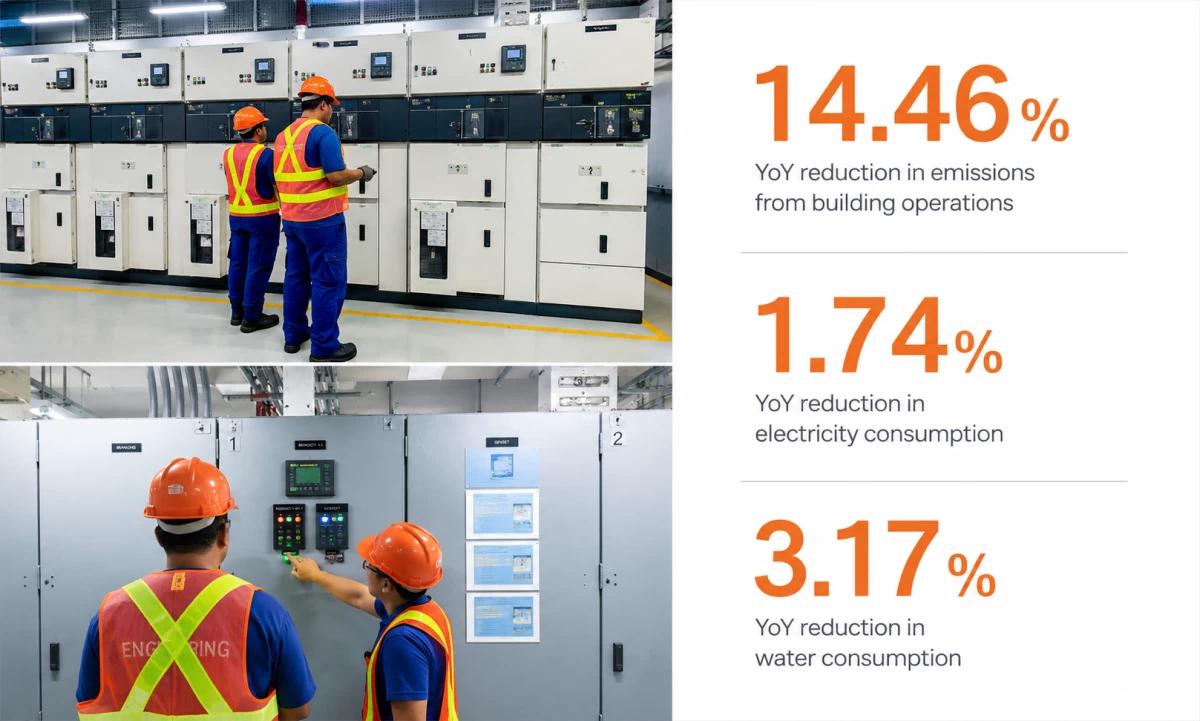
These improvements were supported by ongoing building optimization, conservation programs, performance monitoring, preventive maintenance, and tenant participation.
For businesses, efficient building operations offer value beyond environmental targets. They can support more reliable services, better-managed operating costs, improved workplace conditions, and closer alignment with corporate sustainability commitments. For property owners, continuous improvement helps established assets remain attractive and competitive alongside newer developments.
NEO’s portfolio has also earned recognized local and international sustainability credentials covering green building performance, zero carbon, occupant well-being, resilience, and digital connectivity. These include 5-Star BERDE and Advancing Net Zero Philippines certifications from the Philippine Green Building Council; EDGE Zero Carbon certification and A+ Building Resilience Index ratings from the International Finance Corporation (IFC); WELL Health-Safety and WELL Equity Ratings; and WiredScore certifications.
Its EDGE performance further demonstrates what retrofitting can achieve in existing properties, with energy savings ranging from 41% to 48%, water savings of 44% to 56%, and reductions of 83% to 98% in embodied energy in materials.
Together, these results show that sustainable real estate is not defined only during design and construction. It is also shaped by how effectively a building is operated, upgraded, and continuously improved throughout its life.
Rethinking waste through circularity
Improving an existing building also means looking beyond electricity and water use. It requires examining what happens to the materials and waste generated within the workplace.
One of NEO’s priorities in 2025 was to reduce dependence on landfills while giving tenants more practical ways to participate in responsible waste management.
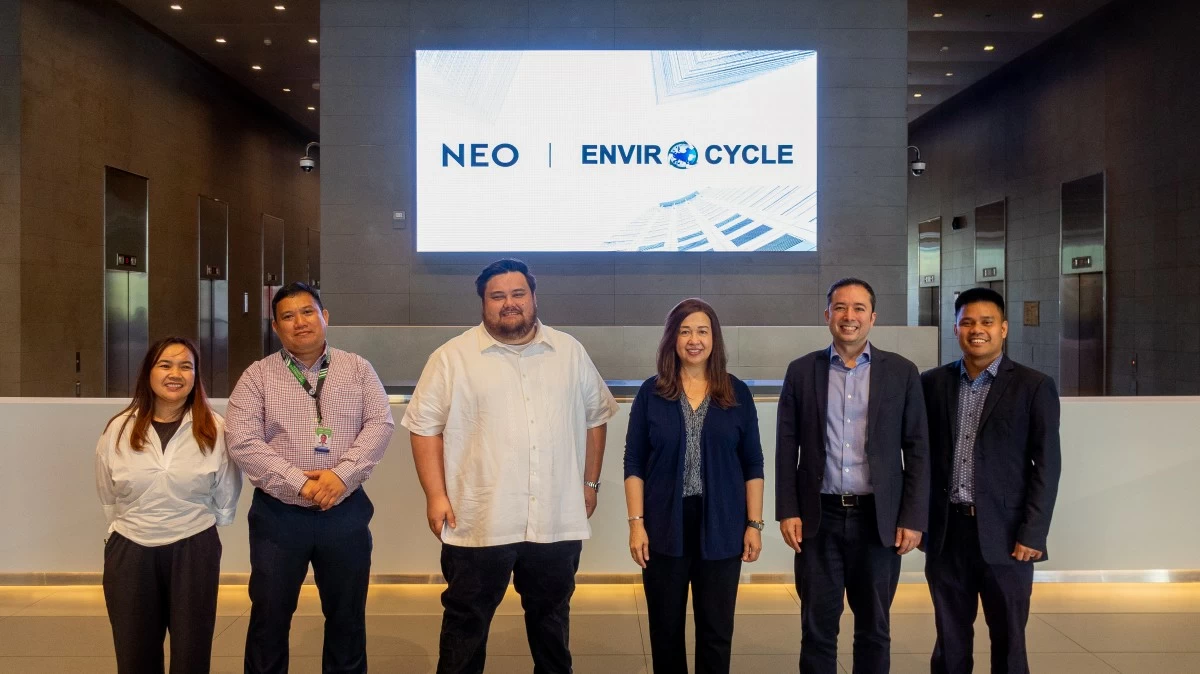
Through its partnership with HMR Envirocycle Philippines, NEO introduced an electronic-waste recycling program across all seven buildings. Designated collection points allow tenants to properly dispose of end-of-life mobile phones, computers, chargers, and other electronic equipment through a convenient and traceable channel.
The collected items are processed by an accredited recycling partner, ensuring that hazardous components are handled responsibly while usable materials are recovered and returned to formal recycling streams.
NEO also partnered with Holcim Philippines through Geocycle to address residual waste that can no longer be reused or recycled through conventional methods. Instead of being sent to landfills, qualified materials are co-processed as alternative fuel or raw material for cement manufacturing.
Through this collaboration, NEO became the first in the Philippine private real estate sector to adopt cement-kiln co-processing for post-consumer waste in partnership with Holcim.
The two programs address different parts of the waste stream, but they reflect the same objective: making circularity part of everyday building operations.
For tenants, these initiatives provide accessible ways to support responsible disposal and resource recovery within the workplace. For NEO, they strengthen waste diversion, reduce landfill dependency, and promote more efficient use of resources across the portfolio.
Healthy workplaces are sustainable workplaces
Buildings are ultimately used and experienced by people. Their long-term value depends not only on resource efficiency, but also on whether occupants feel healthy, safe, included, and supported in the places where they work.
Through the implementation of WELL at Scale across its portfolio, NEO’s health and well-being strategies now reach more than 27,500 building occupants. All seven buildings achieved WELL Health-Safety and WELL Equity Ratings.
In 2025, NEO was also recognized with the WELL Health and Safety Leadership Award, Equity Leadership Award, and WELL Community Award.
These programs cover areas such as indoor environmental quality, health and well-being support, inclusion, emergency preparedness, community engagement, and responsible building operations. By embedding these measures into everyday property management, NEO treats occupant health and safety as outcomes that must be monitored and continuously improved.
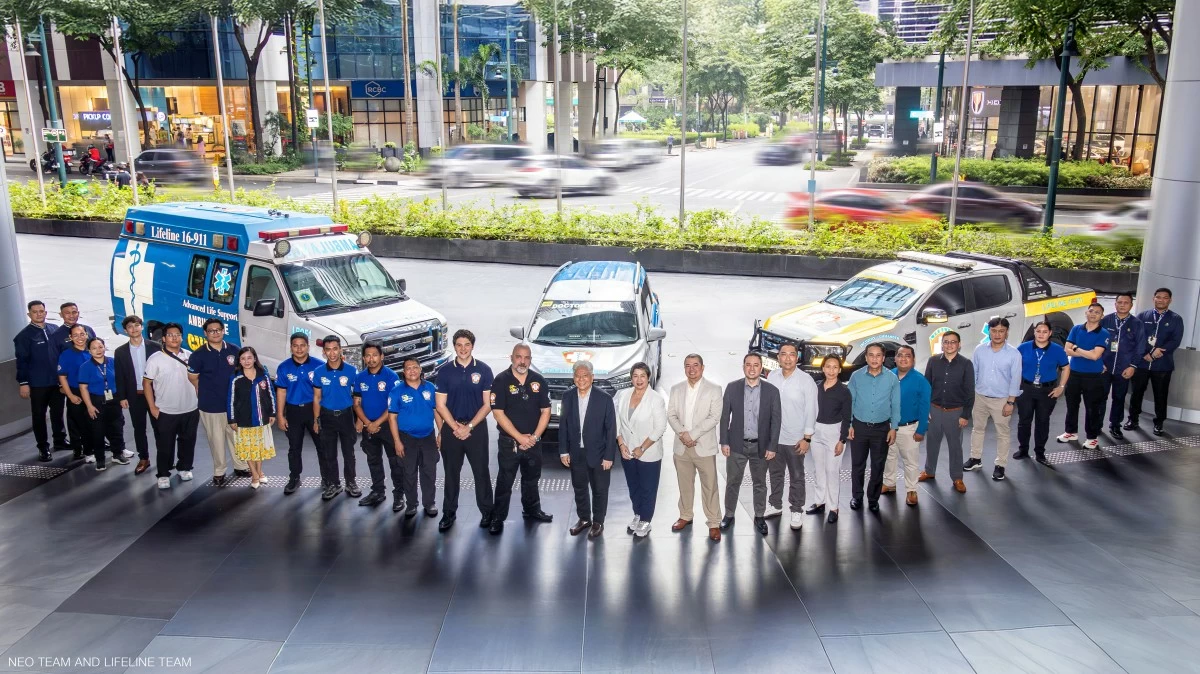
The company further strengthened emergency preparedness through its partnership with Lifeline. A dedicated ambulance coverage system provides coordinated emergency medical support across NEO’s seven-building portfolio, complementing existing security procedures, emergency drills, occupational health measures, and building safety systems.
For tenants and their employees, this creates greater confidence in the workplace. Reliable building operations, timely emergency response, and proactive preparedness also contribute to business continuity and long-term organizational resilience.
Extending impact beyond the workplace
NEO’s sustainability efforts are not limited to the physical performance of its buildings. The company also uses its portfolio as a platform for tenant participation, environmental action, education, and community engagement.
In partnership with WWF-Philippines, NEO organized a coastal clean-up at the Las Piñas–Parañaque Critical Habitat and Ecotourism Area. The activity brought together 71 employee and tenant volunteers, who collected 116 sacks of waste weighing 574 kilograms.
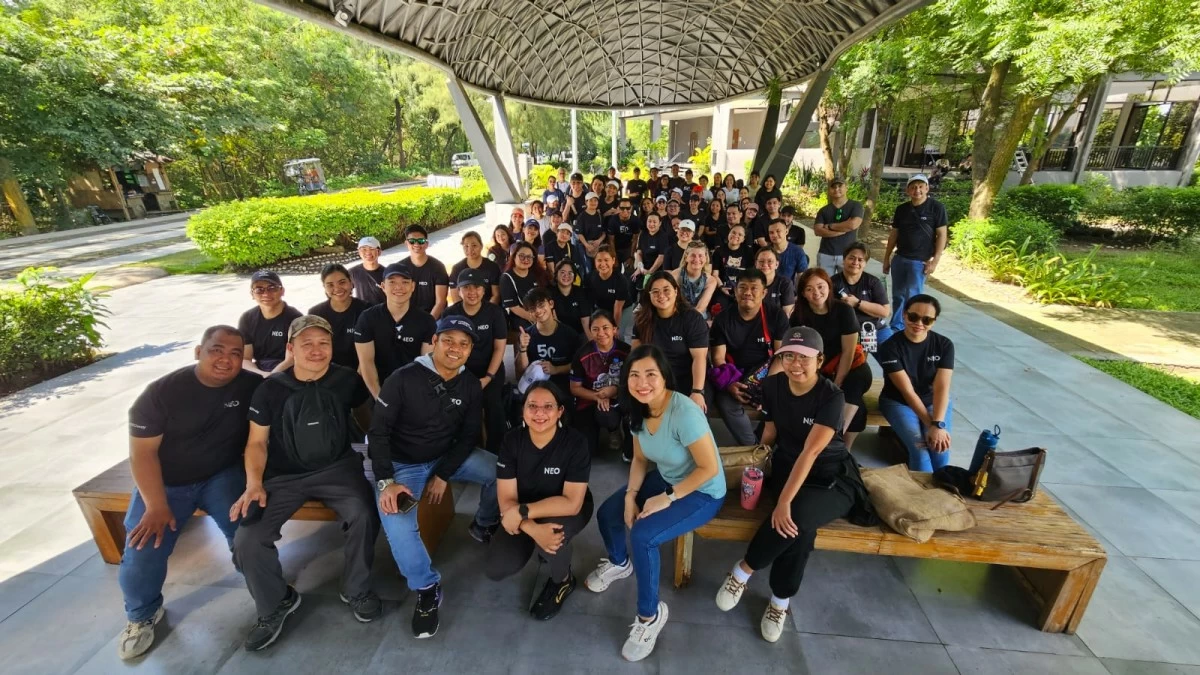
Tenant volunteers joined the activity for the first time in 2025, contributing to a 25% increase in participation compared with the previous year. Their involvement reflects NEO’s broader goal of turning sustainability into a shared responsibility among building owners, property teams, tenants, and employees.
NEO also collaborated with students, instructors, and the Sisters from The Sisters of Mary School on a mural program across its properties. Inspired by Philippine landmarks, cultural heritage, and national identity, the artworks transformed selected building spaces into visual expressions of creativity and local pride.
Following the project, NEO donated drawing tablets to participating students to support their continued development in both traditional and digital art.
While different in form, the WWF and Sisters of Mary initiatives demonstrate how established buildings can create value beyond their physical boundaries. They can become places where environmental awareness, creativity, learning, and community participation are encouraged.
Accountability and resilience
As a privately held and non-listed company, NEO is not required to publish a sustainability report. It continues to do so because it considers transparency and accountability essential to long-term progress.
This commitment received international recognition in 2025 when NEO was awarded the Grand Award for Best Sustainability Report—Non-Listed Company and received a commendation for the Carbon Neutral Award at the Hong Kong ESG Reporting Awards. NEO was also included in the Greater Bay Area Outstanding ESG Disclosure List.
These recognitions affirm the quality of NEO’s disclosures, its approach to climate accountability, and its efforts to communicate measurable sustainability performance.
Resilience is equally important to the continued performance of its existing buildings. NEO’s A+ Building Resilience Index rating is supported by preventive maintenance, regular testing of critical equipment and building systems, business continuity planning, emergency exercises, and coordination with organizations such as the Bureau of Fire Protection, the Bonifacio Global City Estates Association, and Lifeline.
For businesses located within the portfolio, this focus on preparedness helps reduce operational risk and supports safer, more reliable working environments. For NEO, it strengthens the long-term relevance and competitiveness of properties that must continue adapting to changing environmental, operational, and tenant requirements.
Keeping existing buildings ready for what comes next
NEO’s sustainability journey continues in 2026.
Its priorities include pursuing WELL certifications across the portfolio, working toward a 4-Star GRESB rating, increasing waste diversion from landfills, beginning the management of indirect emissions generated across its broader value chain, and expanding the NEO Green Team to achieve majority employee participation across departments.
These next steps reinforce a long-term approach centered on continually improving existing assets rather than viewing sustainability as a completed milestone.
For tenants, this means workplaces that remain aligned with evolving expectations around efficiency, employee experience, safety, resilience, and responsible business practices. For the broader real estate industry, it provides an example of how established properties can continue to contribute to sustainable urban development.
By proving that existing buildings can continue to improve, adapt, and lead, NEO is helping expand the meaning of sustainable real estate—one that is measured not only by how buildings are designed, but by how they are managed, experienced, and continuously improved over time.
This is #theNEOway: keeping the momentum by improving the performance of existing buildings, helping communities thrive, and enabling businesses to grow more responsibly.