






Manila Bulletin
 Philippines
National
CJ Gesmundo: Distinct roles of judiciary, media in upholding rule of law
Philippines
National
CJ Gesmundo: Distinct roles of judiciary, media in upholding rule of law
Philippines
National
CJ Gesmundo: Distinct roles of judiciary, media in upholding rule of law
CJ Gesmundo: Distinct roles of judiciary, media in upholding rule of law
Published Aug 8, 2026 12:12 pm


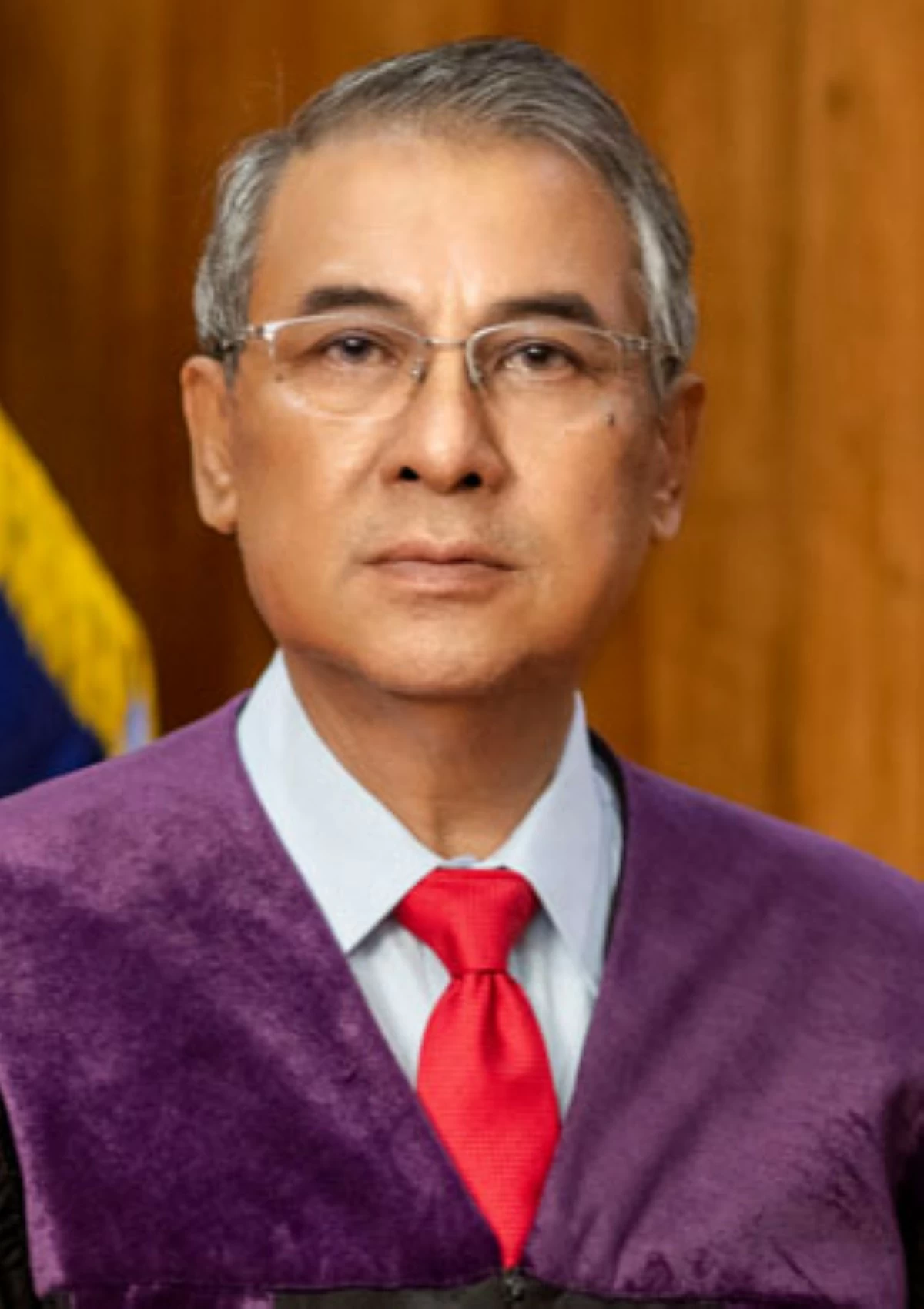
Chief Justice Alexander G. Gesmundo underscored the distinct roles of the judiciary and the media in strengthening public understanding of the principles and confidence in institutions that uphold the rule of law.
He said that both the judiciary and the media rely on confidence that comes from faithfully fulfilling their respective responsibilities.
“The judiciary earns that confidence through the fair and impartial administration of justice; the media earns it through responsible journalism and fidelity to truth,” he pointed out.
The Chief Justice was guest speaker during the “Judiciary Night” event of the Manila Overseas Press Club (MOPC) held in Makati City last Friday night, August 7.
He recalled that the Supreme Court (SC) has been serving as the guardian of the Constitution, the protector of rights and liberties, and the final arbiter of legal disputes affecting our nation.
He pointed out that “through periods of transformation, uncertainty, and challenge, the Court has remained committed to preserving the constitutional order and the rule of law.”
“But the enduring value of an institution is reflected not only in the legacy it inherits, but also in its capacity for renewal. For the Judiciary, renewal means safeguarding judicial independence while continuously improving the administration of justice. It means ensuring that courts remain not only independent, but also efficient, accessible, and responsive to the needs of the people,” he said.
Gesmundo recalled that three years ago, he was guest speaker during MOPC’s “Judiciary Night” and tackled the SC’s Strategic Plan for Judicial Innovations 2022–2027 (SPJI).
“Today, the SPJI serves as the framework guiding the Judiciary’s continuing efforts toward institutional improvement. It has provided direction for reforms designed to strengthen judicial integrity, enhance court efficiency, expand access to justice, and modernize the delivery of judicial services,” he said.
He pointed out that the purpose of the innovations and reforms is to make the justice system responsive to the needs and realities of the Filipinos.
Since the foundation of all efforts is integrity, the judiciary has continued to strengthen the mechanisms that promote accountability and professionalism throughout the justice system, he said.
Also, he said the SC adopted the Code of Judicial Conduct and Accountability and the Code of Conduct and Accountability for Court Officials and Employees as the court “recognizes that the delivery of justice depends not only on the decisions issued by judges, but also on the dedication, professionalism, and ethical conduct of every person who forms part of the Judiciary.”
He emphasized that the dignity and credibility of the judiciary are preserved not only in the courtroom, “but also in every act of service performed in the name of justice.”
At the same time, Gesmundo cited the SC’s continuing efforts to modernize its processes and expand access to judicial services since “justice cannot remain distant from the people who need it most.”
He cited initiatives such as eCourt PH 2.0, electronic filing and service, digital records management, and other technological innovations to make court processes more efficient and accessible.
He also cited the use of artificial intelligence through Scriptix, an AI-assisted transcription software that significantly reduces the time needed to prepare court transcripts from weeks to days, allowing court personnel to focus on more essential judicial work.
Thereafter, he said the Rules on Electronic Notarization will soon allow the electronic notarization of digital documents anywhere in the country, making notarization more convenient and accessible.
To improve access to legal information, Gesmundo said the SC launched the Philippine Reports E-Books on the Supreme Court E-Library, enabling lawyers, judges, law students, researchers, and the public to access the court’s official decisions anytime and anywhere.
He also cited the Rules on Unified Legal Aid Services (ULAS), the free legal service to indigent Filipinos. Through ULAS, lawyers are mandated to render at least 60 hours of free legal service every three years to indigent Filipinos.
In its earlier press statement, the MOPC described Gesmundo as “a reformist jurist, one rich in knowledge and practice of law, skilled in the administration of a complex and labyrinthine system that is the judiciary, imbued with enormous integrity and independence and yet keenly attuned to the needs of people who have less in law, less in life and less in the dignity that all men are entitled to.”
Chief Justice Gesmundo will retire on Nov. 6, 2026 when he reaches the mandatory retirement age of 70. He was appointed SC associate justice on Aug. 14, 2017 and as chief justice on April 5, 2021.
He said: “As my service as Chief Justice draws to a close, I do so with a deep sense of gratitude and humility. The opportunity to serve as Chief Justice has never been a personal distinction. It has been a responsibility sustained each day by the dedication of countless individuals who quietly perform the work of justice across the country.
“Looking back on this journey, one lesson stands above all others: the strength of the Judiciary has never rested on the efforts of any single individual. It rests on the collective commitment of those who carry out its mission- on justices and judges who decide with courage and fairness, on court officials and employees who perform their duties with dedication and professionalism, on lawyers who uphold their responsibilities as officers of the court, on our partners in government, civil society, academe, and the media who contribute to the continuing work of strengthening the rule of law, and on citizens who come before our courts believing that justice will be administered fairly, impartially, and with respect for their rights and dignity.
“The Judiciary does not belong to any one person, administration, or generation. It belongs to the Constitution and, ultimately, to the Filipino people whom it serves.”