






Manila Bulletin
 Philippines
National
Star prosecutor's remarks show that VP Duterte is in a tough spot regarding acknowledgment receipts
Philippines
National
Star prosecutor's remarks show that VP Duterte is in a tough spot regarding acknowledgment receipts
Philippines
National
Star prosecutor's remarks show that VP Duterte is in a tough spot regarding acknowledgment receipts
Star prosecutor's remarks show that VP Duterte is in a tough spot regarding acknowledgment receipts
Published Aug 7, 2026 03:59 am


At A Glance
- Private prosecutor Amando Virgil Ligutan questions the legitimacy of acknowledgment receipts used by Vice President Sara Duterte to liquidate P612.5 million confidential funds, highlighting signatures tied to dubious names.
- He stressed that the public expects real names on receipts, while findings from the House panel and the NBI revealed missing birth records and identical handwriting across multiple ARs.
- The prosecution argued these issues show the systematic misuse of confidential funds, forming the basis of impeachment charges for constitutional violation, graft, and betrayal of public trust.
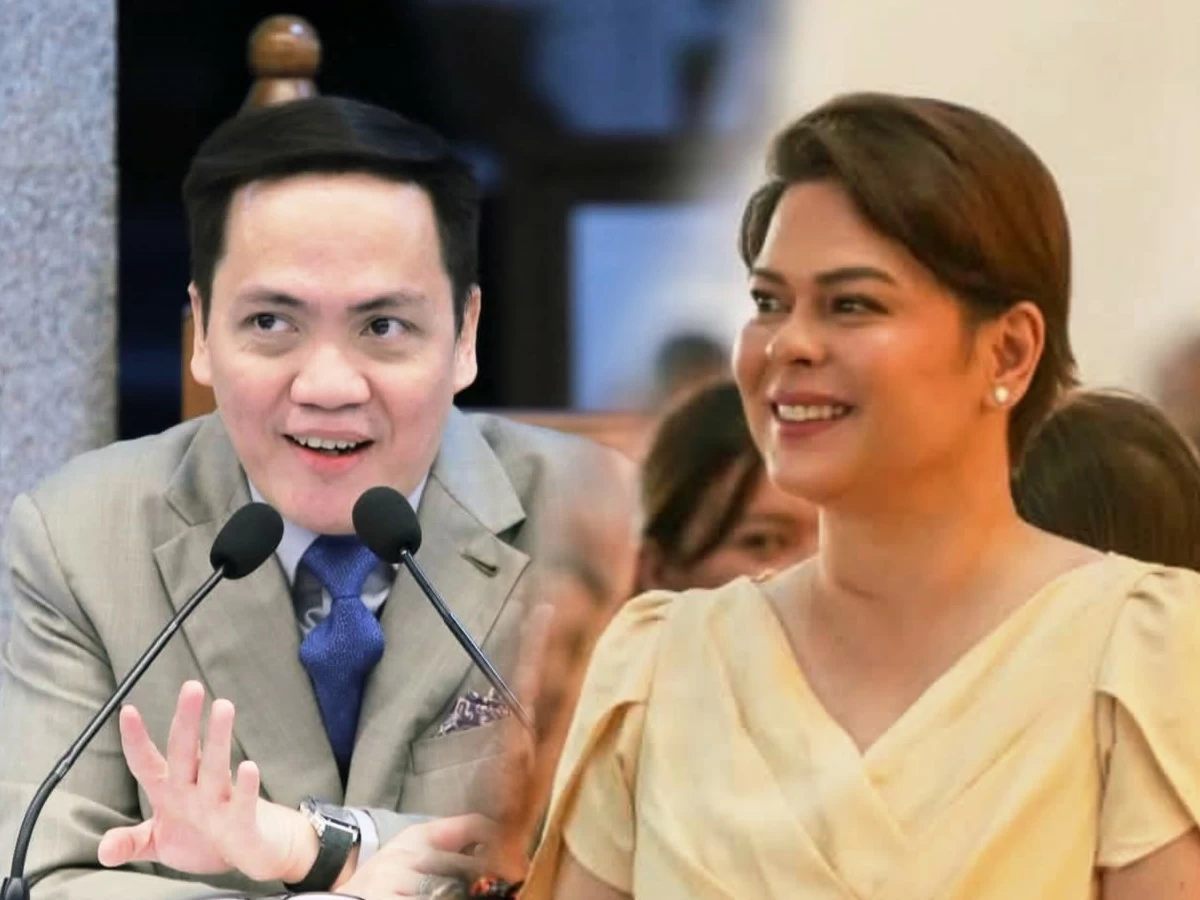
Private prosecutor Amando Virgil Ligutan (left), Vice President Sara Duterte (Facebook)
Private prosecutor Amando Virgil Ligutan--arguably one of the breakout stars in Vice President Sara Duterte's Senate impeachment trial--has asked a question that seemingly places the respondent between the devil and the deep blue sea when It comes to proving the legitimacy of acknowledgment receipts (ARs).
It had been established in the trial that respondent Duterte had relied on ARs to liquidate her offices' P612.5 million confidential funds between December 2022 and the third quarter of 2023.
The ARs contained the signatures of dubious-sounding names such as "Mary Grace Piattos", "Andy Lim", "Milky Sekuya", and "Kokoy Villamin", just to name a few.
The question now is: Are these names fictitious, or are they aliases used by people who do intelligence work? We're talking about confidential funds, after all.
"Kung alias ‘yung ginagamit niyong pangalan ng recipient, eh ba’t may pirma? Ano ibig sabihin nun? Yung pirma ba, alias din?” Ligutan asked, sarcastically.
(If the recipient’s name used is an alias, then why is there a signature? What does that mean? Is the signature also an alias?)
The prosecution had earlier said that if the names were indeed aliases, the respondent would still have to supply their real identities to the Commission on Audit (COA), which audited the P612.5 spent by the Office of the Vice President (OVP) and the Department of Education (DepEd).
But Ligutan pointed out that the respondent had been mum about this. “Kailanman po ay hindi po sinabi at wala pa pong sinasabi ’yung Vice President o ’yung kampo niya kung alias ba ’yan o totoong tao."
(At no point has the Vice President or her camp said whether that is an alias or a real person.)
The lawyer from Cebu said the ARs should be used to identify the actual recipients of the public funds.
“Ang default na inaasahan ng taumbayan, dapat tama, totoong pangalan ng totoong tao ang nakasulat sa isang acknowledgment receipt o resibo,” he underscored.
(The default expectation of the public is that the name written on an acknowledgment receipt must be correct—the real name of a real person.)
What if they're real people?
What if Duterte’s lawyers insist that Mary Grace Piattos, et al are real people? For longtime followers of the confidential funds issue against the Vice President, this doesn't sound tenable.
In December 2024, the House Committee on Good Government and Public Accountability said that 400 individuals listed as recipients of confidential funds disbursed by the OVP and DepEd had no birth certificates. No less than the Philippine Statistics Authority (PSA) confirmed this.
National Bureau of Investigation (NBI) findings also bared that multiple AR bore signatures written by the same hand or person.
Many of the good government panel's findings were later cited in impeachment complaints filed against Duterte.
The prosecution panel has so far presentated four witnesses under article I of the articles of impeachment. The particular article claims the "systematic misuse" of P612.5 million confidential funds by Duterte, which according to the prosecutors constitutes culpable violation of the Constitution, graft and corruption, and betrayed public trust.
It remains to be seen how the defense team reconciles everything about the ARs and confidential funds in general during the presentation of their own pieces of evidence.