






Manila Bulletin
 Business
The Economy
Filipino consumers face price hikes as Goldman Sachs warns of renewed inflation
Business
The Economy
Filipino consumers face price hikes as Goldman Sachs warns of renewed inflation
Business
The Economy
Filipino consumers face price hikes as Goldman Sachs warns of renewed inflation
Filipino consumers face price hikes as Goldman Sachs warns of renewed inflation
By Derco Rosal
Published Aug 7, 2026 10:30 am


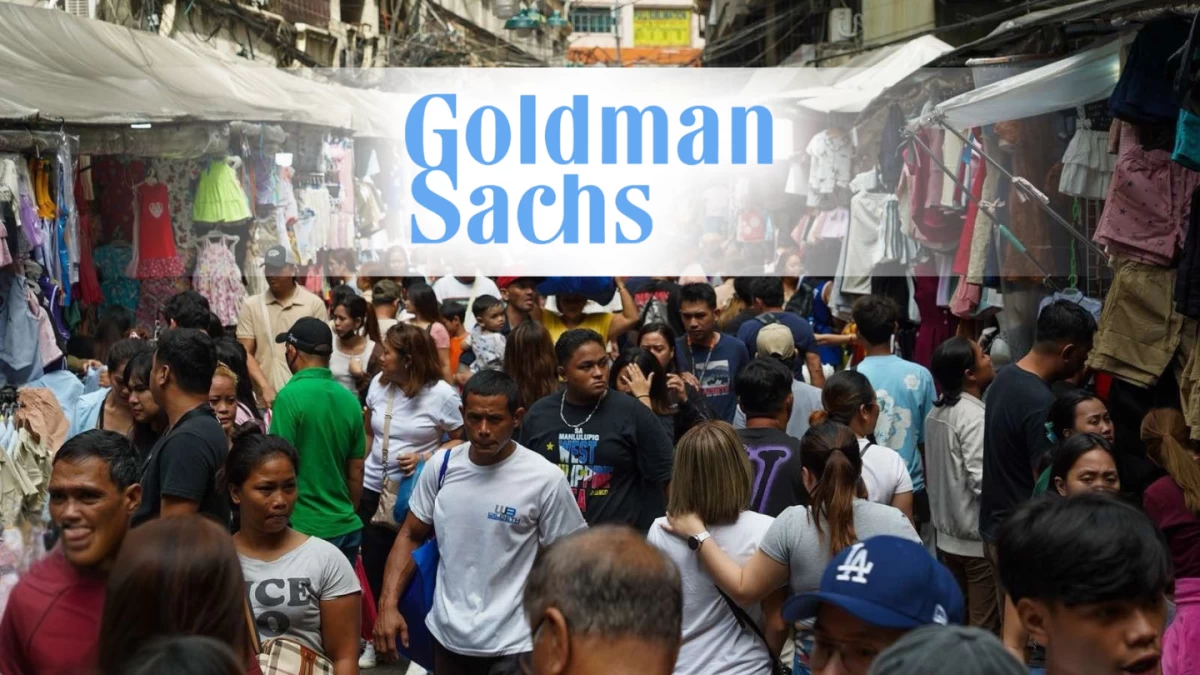
Filipino consumers face a renewed risk of higher retail prices as manufacturers move to pass escalating production costs onto buyers, according to a Goldman Sachs Group Inc. report obtained by the Manila Bulletin.
In the commentary, Goldman Sachs economists Chris Poh and Danny Suwanapruti noted that companies are preparing to offset persistent supply chain disruptions and higher input expenses by raising consumer prices.
The re-escalation of conflict in the Middle East has pushed production costs higher, signaling intensifying inflationary pressures across the manufacturing sector.
Despite these cost pressures, domestic industrial activity showed resilience in July. S&P Global’s Philippines Manufacturing Purchasing Managers’ Index (PMI) rose to 51.8 in July from 50.9 in June, its third consecutive monthly rise and bringing the headline index broadly in line with its long-run average.
The acceleration to a five-month high was driven by stronger demand, which lifted output and new orders. A PMI reading above 50 indicates expansion in the sector.
However, manufacturing indicators point to a potential rebound in price pressures, even as broader inflation figures show near-term relief. Headline inflation slowed to 6.2 percent in July—its lowest level in three months since peaking at 7.2 percent in April. Core inflation, which excludes volatile food and energy items, also continued to moderate.
Goldman Sachs pointed out that despite the July dip, inflation remained above the midpoint of the Bangko Sentral ng Pilipinas’ (BSP) forecast range of 5.6 percent to 6.6 percent, and far above the government’s 4.0 percent target ceiling.
The central bank currently projects inflation to average 6.4 percent this year and 4.5 percent in 2027—both well above official targets. Upward price risks driven by imported oil and elevated production costs are expected to keep monetary authorities on high alert.
Since Middle East hostilities flared up in late February, the BSP has raised its benchmark borrowing rate twice, bringing key interest rates to 4.75 percent. The Monetary Board will hold its fourth policy meeting of the year on Aug. 27, followed by scheduled sessions on Oct. 22 and Dec. 17.