






Manila Bulletin
 Philippines
National
Bill expanding government's options for socialized housing hurdles House
Philippines
National
Bill expanding government's options for socialized housing hurdles House
Philippines
National
Bill expanding government's options for socialized housing hurdles House
Bill expanding government's options for socialized housing hurdles House
Published Aug 7, 2026 11:25 am


At A Glance
- The House overwhelmingly passes HB No. 9697 on third reading, amending the Urban Development and Housing Act to expand land acquisition, financing, and partnership options for socialized housing.
- The bill allows use of idle and foreclosed properties, prioritizes informal settlers and displaced families, and requires developers to allocate portions of projects for socialized housing.
- It streamlines permits, offers tax incentives, strengthens LGU roles, and directs fines to housing programs, aiming to make housing policy more responsive and effective.
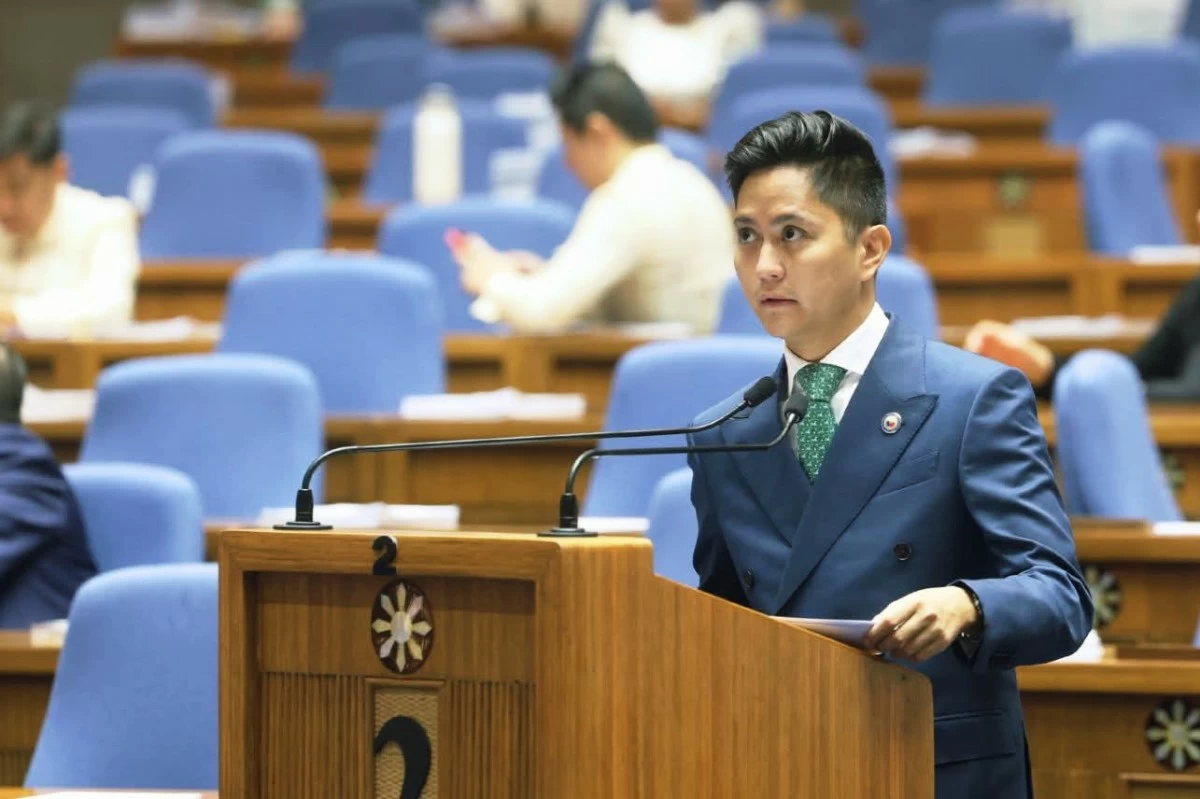
Ilocos Norte 1st district Rep. Sandro Marcos (Facebook)
A measure that seeks to expands the land, financing, and partnership options available for socialized housing projects was overwhelmingly passed on third and final reading in the House of Representatives.
Approved on the strength of 205 "yes" votes as opposed to only three "no" votes during plenary session Wednesday, Aug. 5 was House Bill (HB) No. 9697, House Majority Leader Ilocos Norte 1st district Rep. Sandro Marcos said.
No abstentions were recorded during nominal voting among the congressmen.
According to Rep. Marcos, HB No. 9697 seeks to improve the delivery of socialized housing programs by amending Sections 10, 18, and 20 of Republic Act (RA) No. 7279, or the Urban Development and Housing Act of 1992, as amended by RA No. 10884, or the Balanced Housing Development Program Amendments.
The presidential son said the measure would help the government turn more idle, foreclosed and underused properties into secure communities for Filipinos who need housing most.
“President Ferdinand ‘Bongbong’ R. Marcos Jr. has made housing a central part of his development agenda, and Speaker Bojie Dy has ensured that the House responds with legislation that can actually move projects from paper to construction. HB No. 9697 gives government and the private sector more workable routes to provide ordinary families with safe, dignified and affordable homes,” Rep. Marcos noted.
If enacted, the bill would amend key provisions of RA No. 7279, or the Urban Development and Housing Act of 1992, to improve the delivery of socialized housing programs.
The bill expands the methods for acquiring land and creating housing projects to include community mortgages, land swapping, land consolidation, land banking, donations, joint ventures, negotiated purchases, direct purchases and unsolicited proposals under the Public-Private Partnership (PPP) Code.
Government-owned and foreclosed properties may be acquired by local governments, the Department of Human Settlements and Urban Development (DHSUD) and national housing agencies primarily through negotiated purchase.
Properties forfeited because of unpaid real property taxes would be prioritized for socialized housing, while qualified beneficiaries already occupying the land would receive the right of first refusal.
Subdivision developers would be required to provide socialized housing equivalent to at least 15 percent of the total project area or project cost, while condominium and vertical housing developers would comply at a rate of at least 5 percent.
Developers may satisfy the requirement through new settlements, joint ventures, community mortgage projects or payments dedicated to housing programs in the city or municipality where the private project is located.
The resulting housing projects would prioritize informal settler families, underprivileged and homeless citizens and residents displaced by major infrastructure projects.
Local governments would receive a two-year exclusive period to use payments made by developers for their own socialized housing programs, subject to extensions during disasters, calamities and other extraordinary circumstances.
HB No.9697 also provides for one-stop shops, simplified accreditation and the issuance of complete permits, licenses and clearances within 90 days, while extending qualified tax incentives to participating socialized housing projects.
“We are making housing policy more responsive to the realities faced by our communities. Hindi sapat ang housing target kung mabagal ang permits, kulang ang lupa at walang malinaw na paraan para magtulungan ang national government, LGUs at private developers,” said the majority leader.
(The housing target is not enough if permits are slow, land is lacking, and there is no clear way for the national government, LGUs, and private developers to work together.)
The measure also increases penalties for violations, directs collected fines to socialized housing in the affected locality and requires the DHSUD to issue implementing rules within 90 days and submit an evaluation and accomplishment report to Congress.