







URC earnings rise on stronger branded, feed sales


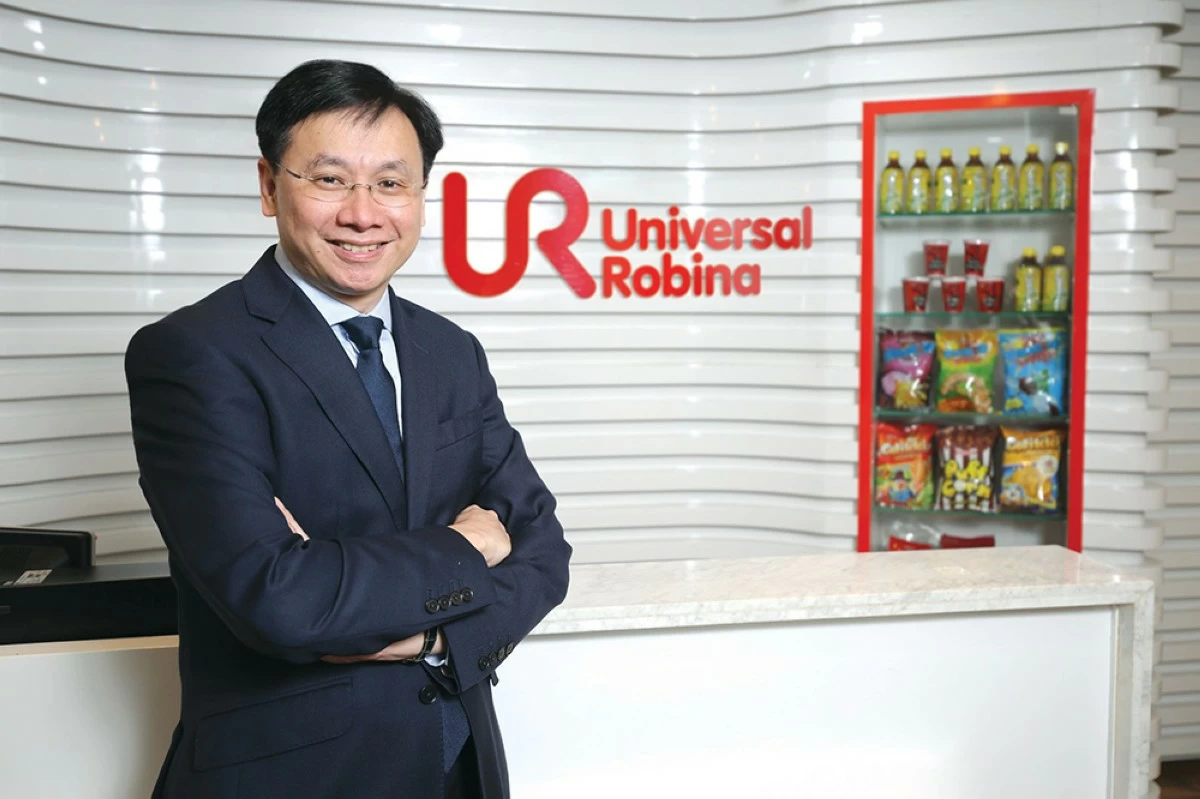
Universal Robina Corp. (URC), the Gokongwei Group’s food and beverage unit, reported a 10.1-percent increase in attributable net income to ₱6.91 billion for the first half of 2026 from ₱6.28 billion in the same period last year on growing demand for branded products and animal feeds.
In a disclosure to the Philippine Stock Exchange (PSE) on Thursday, Aug. 6, URC said net income from continuing operations improved to ₱7.15 billion for the first half of 2026 from the ₱6.71 billion reported in the same period last year.
URC’s net income from discontinued operations amounted to ₱55 million for the first half of 2026 from the ₱27-million net loss reported in the same period last year, mainly due to foreign exchange (forex) gains.
Core attributable net income (operating profit after equity earnings, net finance costs, other income-net, and provision for income tax) amounted to ₱6.68 billion, a 2.9-percent increase from the ₱6.49 billion recorded in the same period last year.
URC generated consolidated sales of goods and services of ₱89.34 billion, up four percent year-on-year.
Sales of goods and services of URC’s branded consumer foods (BCF) segment increased by 6.5 percent to ₱61.58 billion from ₱57.81 billion.
BCF domestic operations posted a 6.3-percent increase in net sales from ₱39.6 billion for the first half of 2025 to ₱42.08 billion, supported by price increases. BCF international operations reported a seven-percent increase in net sales from ₱18.22 billion to ₱19.5 billion, driven by favorable forex impact.
In constant United States (US) dollar terms, net sales remained in line with the prior period. Strong execution in Malaysia and the ongoing recovery in Vietnam helped offset the weaker performance in Thailand and global exports.
BCF sales accounted for 68.9 percent of URC’s total consolidated sales of goods and services for the first half of 2026.
Animal nutrition and health (ANH) posted a 21.3-percent increase in net sales from ₱6.34 billion to ₱7.69 billion due to higher volume.
Sales of goods and services of commodities amounted to ₱20.08 billion, a decrease of 7.6 percent from the ₱21.74 billion recorded in the same period last year. Sales of the sugar business declined by five percent to ₱13.3 billion from ₱14 billion, driven by a lower average selling price, while the renewables business also declined by 30.6 percent to ₱2.53 billion due to lower sales volumes and a lower average selling price.
Sales of URC’s flour business amounted to ₱3.46 billion, an increase of 12.8 percent from ₱3.07 billion, mainly due to favorable selling prices and higher sales volumes as its Sariaya facility increased its contribution to the business.
Sales of the farms business increased by 7.5 percent to ₱792 million from ₱737 million due to higher volume, while the packaging division recorded no sales for the first half of 2026 compared with ₱286 million in the same period of 2025, following the wind-down of polypropylene packaging operations last year.
For the second quarter of 2026, URC’s sales improved by two percent to ₱41.5 billion, led by the company’s branded businesses, particularly BCF and ANH, supported by resilient core demand and sustained brand investments. The continued scale-up of the flour business also contributed positively to overall performance.
Operating income grew by two percent year-on-year in the second quarter despite higher oil-related costs from the Middle East conflict and the anticipated weakness in the sugar business due to lower volumes and softer market prices.
Net income from continuing operations was ₱3.0 billion in the second quarter, up 25 percent year-on-year, while core attributable net income grew by 10 percent to ₱2.9 billion, aided by disciplined financing cost management and reflecting the continued strength of URC’s bottom-line performance.
“Our second-quarter performance demonstrates the strength and balance of our portfolio. Growth from our branded consumer and animal nutrition businesses, alongside improving contributions from flour, enabled us to deliver on our plans despite the anticipated softness in sugar,” said URC President and Chief Executive Officer (CEO) Irwin Lee.
He noted, “We were able to manage disruption and cost impacts triggered by the ongoing conflict in the Middle East. While geopolitical tensions and inflationary pressures remain risks going forward, our strong brands, distribution and customer partnerships, and disciplined operational execution provide us with the flexibility to adapt and sustain competitive advantage in a volatile environment.” - James A. Loyola