






 Philippines
National
Senate now has sole authority over VP Sara's impeachment trial—spox
Philippines
National
Senate now has sole authority over VP Sara's impeachment trial—spox
Senate now has sole authority over VP Sara's impeachment trial—spox


At A Glance
- The Supreme Court's dismissal of Vice President Sara Duterte's petition to nullify the House of Representatives' impeachment proceedings against her confirms that the role of the House is done and that the Senate now has the sole authority over the trial, Senate Impeachment Court spokesperson Atty. Regie Tongol said.
The Supreme Court’s dismissal of Vice President Sara Duterte’s petition to nullify the House of Representatives’ impeachment proceedings against her confirms that the role of the House is done and that the Senate now has the sole authority over the trial.
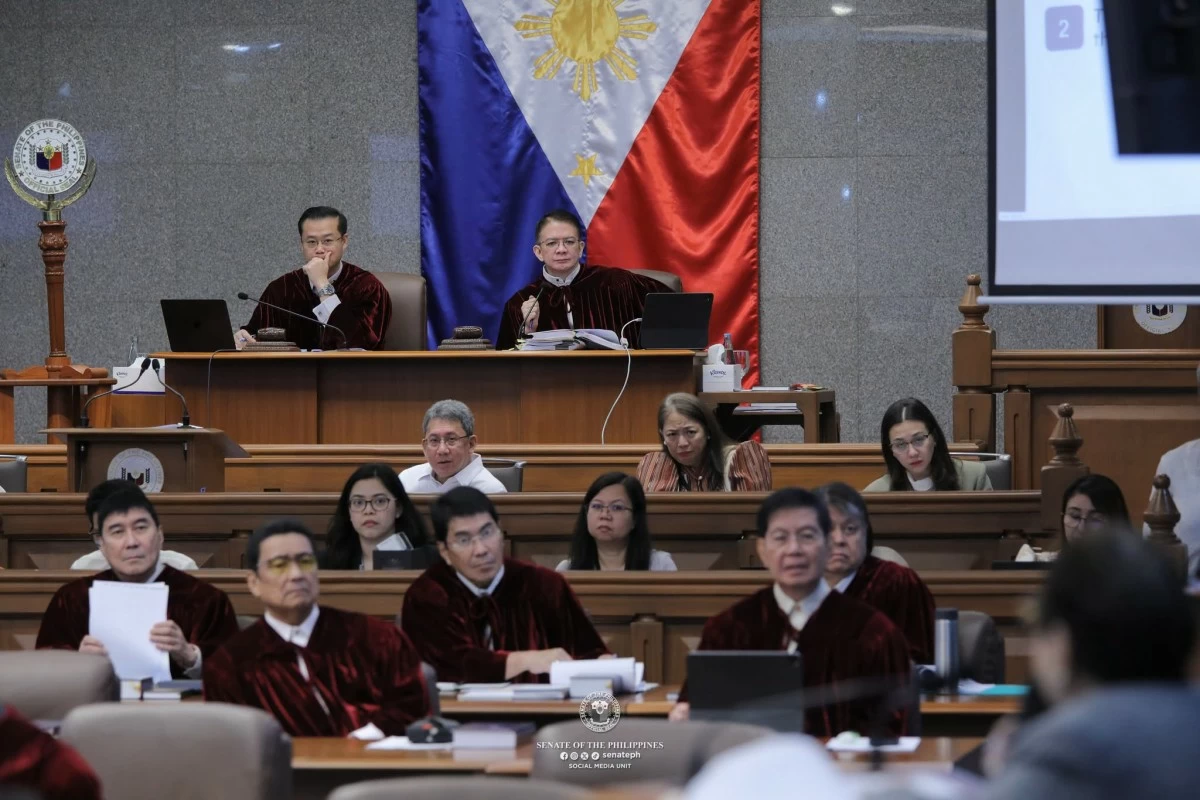
In a statement, Senate Impeachment Court spokesperson Regie Tongol affirmed that the High Court’s decision to dismiss the petitions as moot only affirmed what the Constitution states.
“In dismissing these cases as moot, the High Court merely confirmed what the Constitution has long dictated: the House's work is done. The accusatory phase is unequivocally complete; the adjudicatory phase has already commenced before the Impeachment Court,” Tongol said on Thursday, August 6.
His statement came a day after the SC dismissed the petitions filed by Duterte and lawyer Israelito Torreon questioning the House impeachment proceedings.
According to the SC, the issues raised have become moot as the Articles of Impeachment were already transmitted to the Senate.
Tongol said that because of the SC ruling, the exclusive jurisdiction of the Impeachment Court is now absolute.
“Pursuant to Article XI, Section 3(6) of our 1987 Constitution, the Impeachment Court now holds the sole and exclusive power to try and decide this case. The jurisdiction of the Impeachment Court is now absolute,” he said.
And since the Impeachment Court is fully insulated from the proceedings in the House of Representatives, it now begins with a clean slate in this adjudicatory phase, the spokesperson said.
“The Court’s standard from this point on is simple: the prosecutors bear the heavy burden of proof, and the Court will ensure that the respondent receives full, uncompromising due process in accordance with the constitutional guarantee of the presumption of innocence,” Tongol said.
“Moving forward, the Impeachment Court will be guided solely by the Constitution, the Rules of Procedure in Impeachment Trials, the Rules of Court, jurisprudence, and the solid evidence formally presented before the Court itself,” he further said.