

ADVERTISEMENT

PDIC moves to reclaim ₱107 billion from treasury

Published Aug 6, 2026 03:40 pm

At A Glance

  • State-run Philippine Deposit Insurance Corp. (PDIC) is ramping up efforts to rebuild its deposit insurance fund after remitting ₱107 billion to the national government, even as it said it had met its operational targets despite the fund's depletion.
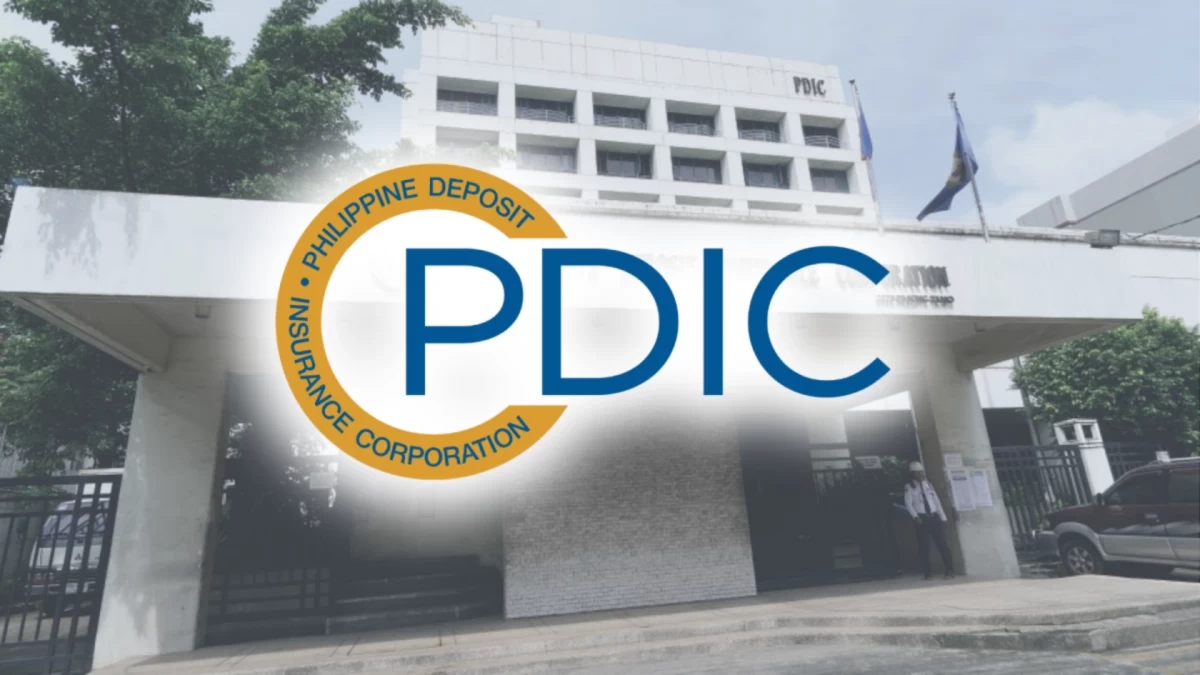
State-run Philippine Deposit Insurance Corp. (PDIC) is intensifying efforts to recover ₱107 billion remitted to the national treasury to rebuild its deposit reserve cushion even as executives maintain operational targets remain intact despite the reduced capital base.
PDIC President and Chief Executive Officer Roberto B. Tan told reporters on the sidelines of an event co-hosted with the Philippine Information Agency that the state corporation is coordinating with pertinent government authorities to retrieve the transferred capital.
Tan expressed optimism that a full refund remains feasible as legal assessments continue.
Recall that the PDIC transferred the funds to the Bureau of the Treasury (BTr) last year to support the Marcos administration’s priority projects, including subways, railways, and social safety nets.
While the fund was dwindling, Tan noted that the PDIC had to ensure the corporation delivered its mandate.
“We have to make sure that it does not, in any way, have a negative effect on our primary mandate, which is to maintain a deposit insurance fund that will be able to cover expected as well as unexpected losses or bank failures,” Tan said.
Despite the transfer of funds, the CEO said the PDIC was still able to meet the corporation’s minimum targets. Once returned, he said the ₱107 billion fund will be reinjected into the deposit insurance fund.
Tan previously reported that the deposit insurance fund stood at over ₱250 billion in early 2025, a sharp decline from ₱310.1 billion at the end of 2023.
Bangko Sentral ng Pilipinas (BSP) Governor Eli Remolona Jr., who chairs the PDIC board, earlier said PDIC lawyers are looking into the case again and assessing the possibility of recovering the fund.
While the move would prove beneficial to the stability of the country's deposit insurance system, it could complicate how the finance department manages the state's fiscal direction, especially as it has relied on such transfers to narrow the budget deficit and fund infrastructure.
This case, however, is not an isolated one, as the Philippine Health Insurance Corp. (PhilHealth) also remitted ₱60 billion to the state purse. Due to the Supreme Court’s order to return the funds, PhilHealth was able to claw back its money.
For its part, if the PDIC successfully argues for a refund, it could force the national government to find alternative funding sources for its multibillion-peso infrastructure pipeline at a time when fiscal space remains tight.
As of the first six months of 2026, the national government's (NG) fiscal deficit widened to ₱786.8 billion, from the ₱765.5 billion shortfall recorded during the same period in 2025, due to stronger spending that outpaced revenue growth.
Total revenues during the first half climbed 5.7 percent to ₱2.39 trillion from the ₱2.26 trillion collected in the first half of 2025. Meanwhile, total expenditures for the first half accelerated to ₱3.18 trillion from ₱3.03 trillion disbursed a year earlier.
While efforts to reclaim the fund are underway, the PDIC is likewise lobbying for a five-point agenda in Congress in a bid to upgrade the country's deposit insurance system amid a shifting financial landscape, particularly one shaped by inflation.
According to Tan, the reforms would expand deposit insurance to eligible deposits in non-bank financial institutions, increase coverage for payroll and other socially important accounts, speed up claims payouts, and allow the government to temporarily guarantee all deposits during systemic financial crises to help prevent bank runs.
Insured deposits reached ₱5.29 trillion in the first quarter of 2026, accounting for nearly a quarter of the country's ₱22.04 trillion in total bank deposits. Depositors with balances above ₱1 million drove the bulk of overall deposit growth.

Related Tags

PDIC funds Philippine Deposit Insurance Corp. (PDIC) Roberto B. Tan Bureau of the Treasury (BTr)
ADVERTISEMENT
.most-popular .layout-ratio{ padding-bottom: 79.13%; } @media (min-width: 768px) and (max-width: 1024px) { .widget-title { font-size: 15px !important; } }

{{ articles_filter_1561_widget.title }}

.most-popular .layout-ratio{ padding-bottom: 79.13%; } @media (min-width: 768px) and (max-width: 1024px) { .widget-title { font-size: 15px !important; } }

{{ static_articles_1562_widget.title }}

.most-popular .layout-ratio{ padding-bottom: 79.13%; } @media (min-width: 768px) and (max-width: 1024px) { .widget-title { font-size: 15px !important; } }

{{ articles_filter_1563_widget.title }}

{{ articles_filter_1564_widget.title }}

.mb-article-details { position: relative; } .mb-article-details .article-body-preview, .mb-article-details .article-body-summary{ font-size: 17px; line-height: 30px; font-family: "Libre Caslon Text", serif; color: #000; } .mb-article-details .article-body-preview iframe , .mb-article-details .article-body-summary iframe{ width: 100%; margin: auto; } .read-more-background { background: linear-gradient(180deg, color(display-p3 1.000 1.000 1.000 / 0) 13.75%, color(display-p3 1.000 1.000 1.000 / 0.8) 30.79%, color(display-p3 1.000 1.000 1.000) 72.5%); position: absolute; height: 200px; width: 100%; bottom: 0; display: flex; justify-content: center; align-items: center; padding: 0; } .read-more-background a{ color: #000; } .read-more-btn { padding: 17px 45px; font-family: Inter; font-weight: 700; font-size: 18px; line-height: 16px; text-align: center; vertical-align: middle; border: 1px solid black; background-color: white; } .hidden { display: none; }
function initializeAllSwipers() { // Get all hidden inputs with cms_article_id document.querySelectorAll('[id^="cms_article_id_"]').forEach(function (input) { const cmsArticleId = input.value; const articleSelector = '#article-' + cmsArticleId + ' .body_images'; const swiperElement = document.querySelector(articleSelector); if (swiperElement && !swiperElement.classList.contains('swiper-initialized')) { new Swiper(articleSelector, { loop: true, pagination: false, navigation: { nextEl: '#article-' + cmsArticleId + ' .swiper-button-next', prevEl: '#article-' + cmsArticleId + ' .swiper-button-prev', }, }); } }); } setTimeout(initializeAllSwipers, 3000); const intersectionObserver = new IntersectionObserver( (entries) => { entries.forEach((entry) => { if (entry.isIntersecting) { const newUrl = entry.target.getAttribute("data-url"); if (newUrl) { history.pushState(null, null, newUrl); let article = entry.target; // Extract metadata const author = article.querySelector('.author-section').textContent.replace('By', '').trim(); const section = article.querySelector('.section-info ').textContent.replace(' ', ' '); const title = article.querySelector('.article-title h1').textContent; // Parse URL for Chartbeat path format const parsedUrl = new URL(newUrl, window.location.origin); const cleanUrl = parsedUrl.host + parsedUrl.pathname; // Update Chartbeat configuration if (typeof window._sf_async_config !== 'undefined') { window._sf_async_config.path = cleanUrl; window._sf_async_config.sections = section; window._sf_async_config.authors = author; } // Track virtual page view with Chartbeat if (typeof pSUPERFLY !== 'undefined' && typeof pSUPERFLY.virtualPage === 'function') { try { pSUPERFLY.virtualPage({ path: cleanUrl, title: title, sections: section, authors: author }); } catch (error) { console.error('ping error', error); } } // Optional: Update document title if (title && title !== document.title) { document.title = title; } } } }); }, { threshold: 0.1 } ); function showArticleBody(button) { const article = button.closest("article"); const summary = article.querySelector(".article-body-summary"); const body = article.querySelector(".article-body-preview"); const readMoreSection = article.querySelector(".read-more-background"); // Hide summary and read-more section summary.style.display = "none"; readMoreSection.style.display = "none"; // Show the full article body body.classList.remove("hidden"); } document.addEventListener("DOMContentLoaded", () => { let loadCount = 0; // Track how many times articles are loaded const offset = [1, 2, 3, 4, 5, 6, 7, 8, 9, 10]; // Offset values const currentUrl = window.location.pathname.substring(1); let isLoading = false; // Prevent multiple calls if (!currentUrl) { console.log("Current URL is invalid."); return; } const sentinel = document.getElementById("load-more-sentinel"); if (!sentinel) { console.log("Sentinel element not found."); return; } function isSentinelVisible() { const rect = sentinel.getBoundingClientRect(); return ( rect.top < window.innerHeight && rect.bottom >= 0 ); } function onScroll() { if (isLoading) return; if (isSentinelVisible()) { if (loadCount >= offset.length) { console.log("Maximum load attempts reached."); window.removeEventListener("scroll", onScroll); return; } isLoading = true; const currentOffset = offset[loadCount]; window.loadMoreItems().then(() => { let article = document.querySelector('#widget_1690 > div:nth-last-of-type(2) article'); intersectionObserver.observe(article) loadCount++; }).catch(error => { console.error("Error loading more items:", error); }).finally(() => { isLoading = false; }); } } window.addEventListener("scroll", onScroll); });

Sign up by email to receive news.