






Manila Bulletin
 Business
Banking & Finance
Independence as the new legacy: Breaking through the financial dilemma of the Filipino sandwich generation
Business
Banking & Finance
Independence as the new legacy: Breaking through the financial dilemma of the Filipino sandwich generation
Business
Banking & Finance
Independence as the new legacy: Breaking through the financial dilemma of the Filipino sandwich generation
Independence as the new legacy: Breaking through the financial dilemma of the Filipino sandwich generation
By MBrand
Published Aug 6, 2026 05:24 pm


By Danica Crisologo
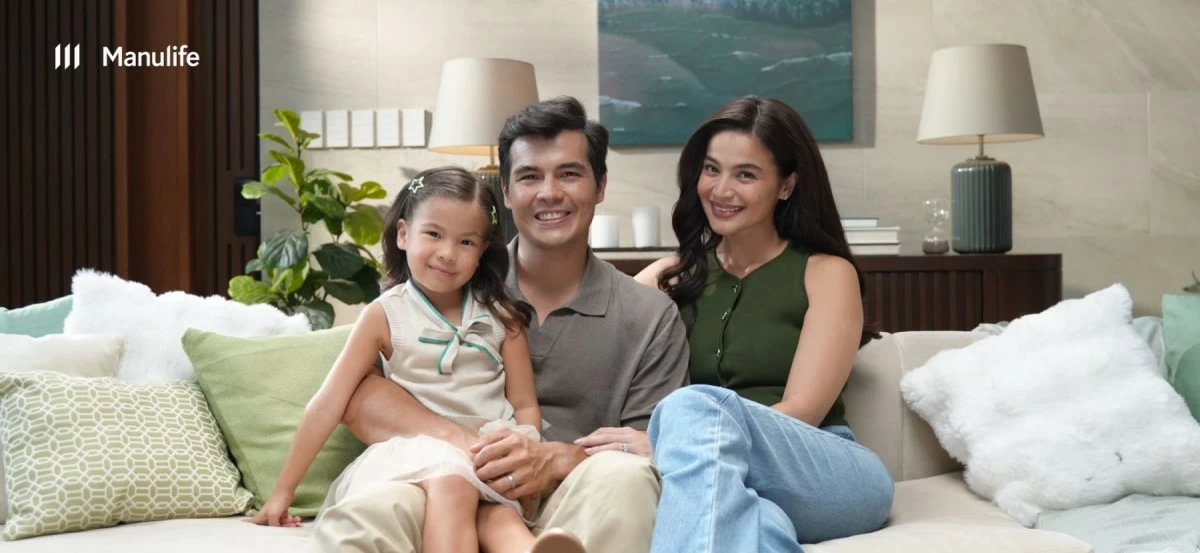
Filipinos have long understood family through care across generations. For many, that meant children looking after their parents in old age, just as their parents once looked after them. Today, that idea of legacy is changing.
Manulife’s Asia Care Survey 2026, which surveyed 1,000 Filipino respondents as part of a nine-market study across Asia, suggests that many Filipinos now want to pass on something different: independence. Among adults aged 25 to 34, 95 percent agree that their own independence and financial freedom are the legacy they most want to leave their loved ones.
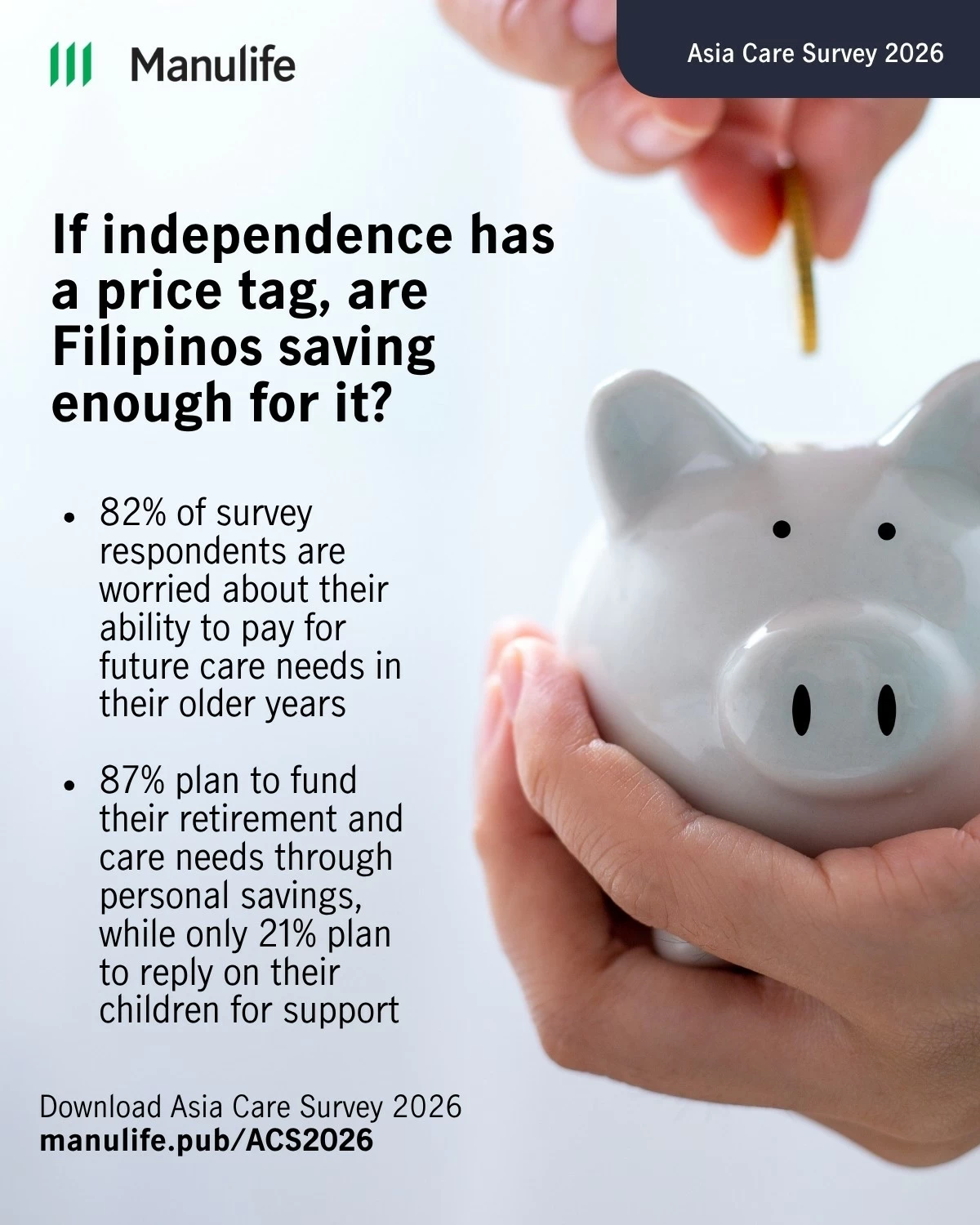
Nine in ten Filipinos say their primary longevity goal is to remain independent and self-sufficient for as long as possible, while 61 percent define freedom in later life as freedom from becoming a burden on others. Respondents also say they would allocate 60 percent of their financial assets toward funding their own health and care needs.
“The findings point to a profound generational shift in how Filipinos think about care, responsibility, and legacy,” said Rahul Hora, President and Chief Executive Officer, Manulife Philippines. “The sandwich generation is carrying today’s obligations while trying to avoid passing the same burden forward. Their aspiration for independence is not about stepping away from family; it is about protecting family in a more sustainable way. As Filipinos live longer, the conversation must move beyond leaving something behind to building the health, financial security, and confidence to live well.”
However, that aspiration is colliding with today’s caregiving realities.
The weight of being in the middle
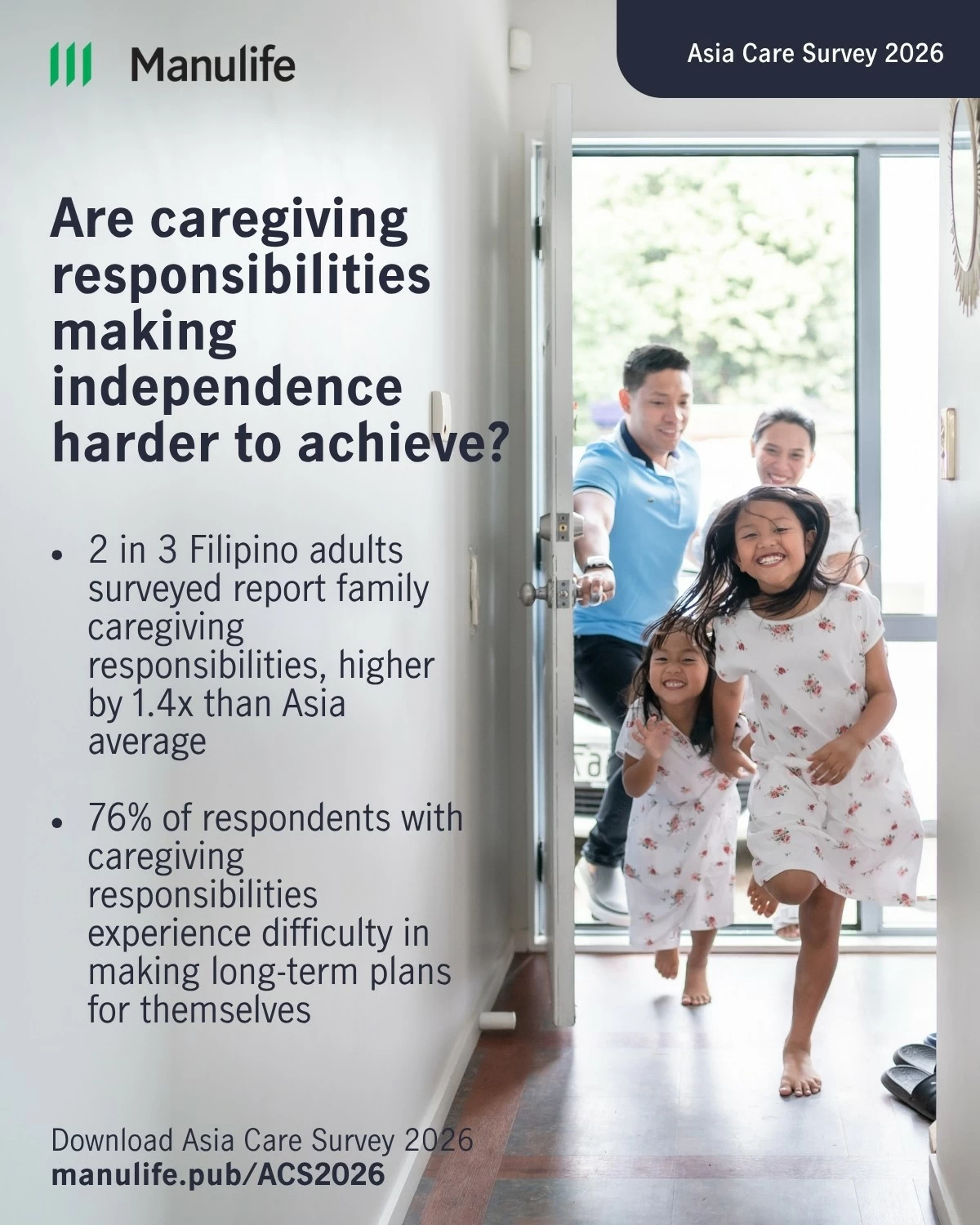
On average, Filipinos expect to spend about 16 years in later life needing care or financial support. For many families, that pressure is already here. Today, 67 percent of Filipino adults provide care to a family member, averaging 32 hours a week, compared with the regional average of 23 hours. At the same time, 68 percent are financially supporting family members, with these responsibilities taking up nearly half of their monthly income.
The burden is especially pronounced among adults aged 25 to 34, where 22 percent simultaneously care for both parents and children. This is the Filipino sandwich generation: trying to build their own future while already carrying responsibilities that make it harder to get ahead. At a stage when they should be strengthening their career and savings, many are starting from a position of pressure, supporting the generations before and after them.
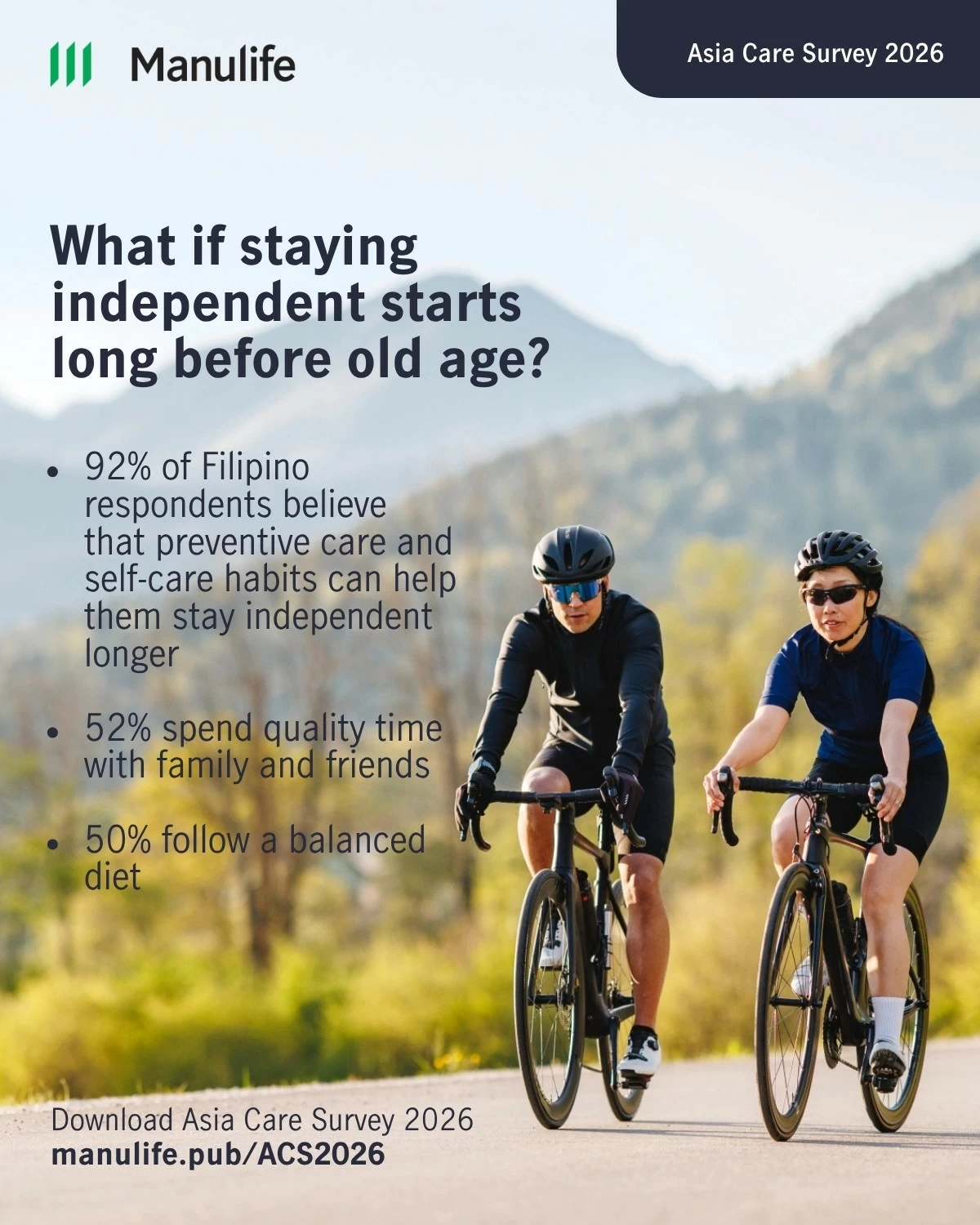
Among this group, 74 percent say these dual responsibilities hinder their ability to build self-reliance, while 71 percent report delaying medical care. While 92 percent of Filipinos agree that preventive care and self-care habits are essential to extending independence, only 26 percent have undergone early screenings or preventive care to guard against chronic illness. The gap is clear: many know what can protect their future, but caregiving and financial pressures limit action.
Among caregivers, 76 percent struggle to make long-term plans, 69 percent find it difficult to balance caregiving with their own lives, 68 percent experience sleep problems, and 67 percent face financial strain and difficulty adjusting life plans. More than half say their physical health has suffered. Among respondents aged 25-34, 80 percent say these financial obligations affect their long-term independence.
Planning for independence
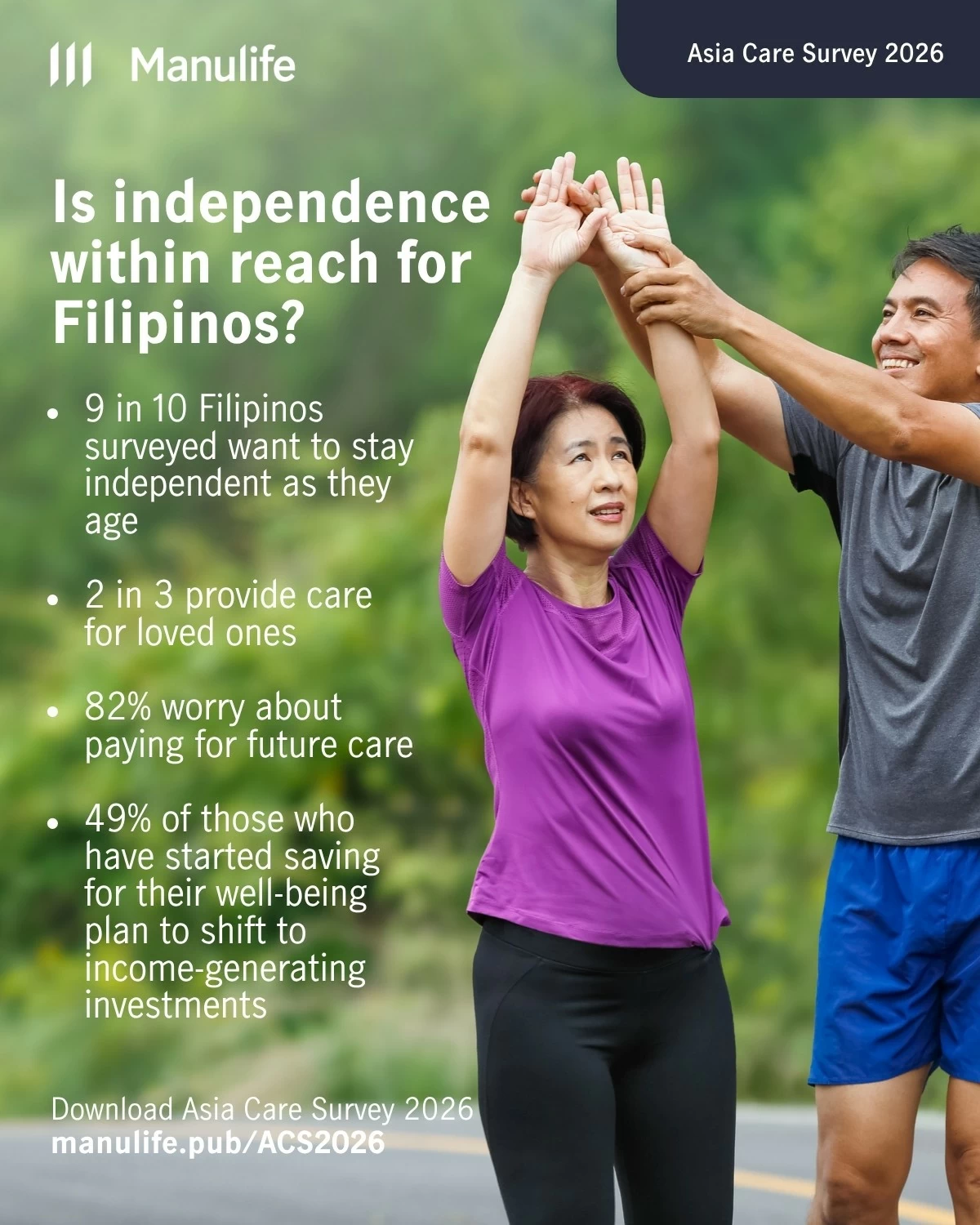
Care affordability has become one of the defining concerns of longer life. More than 82 percent of Filipinos worry about being able to afford care in their later years, with respondents estimating they will need about ₱34,485 a month to cover future care needs.
For families already balancing care and financial responsibilities, the rising cost of future care adds another layer of pressure and makes earlier planning more urgent. While many Filipinos still expect to fund retirement and care through personal savings, at 87 percent, or investments, at 59 percent, the findings show that independence requires more than liquid assets alone. It calls for sustained planning, diversified support, and stronger financial foundations that can help caregivers protect their own future while reducing the burden passed on to the next generation.
“Independence in later life is one of the most meaningful gifts families can prepare for,” Hora added. “It begins with the choices people make earlier, from protecting their health to planning for future care and strengthening their financial resilience. When Filipino families are better prepared, they protect the people they love while giving the next generation more freedom, confidence, and possibility. That is what makes independence a lasting legacy.”
A structured strategy that is built towards financial independence is what closes the dilemma facing Filipino caregivers. By securing their own future, Filipinos are gifting their children the freedom to build theirs. That's the legacy today's generation is building, and a conversation with a Manulife financial advisor is a good place to turn that intention into a plan.
Accessible through Manulife's website, the Asia Care Survey 2026 "Independence is the New Legacy" reinforces the work of the Manulife Longevity Institute, a global research, thought leadership, innovation, advocacy, and community investment platform focused on supporting better health, longevity, and financial security.