








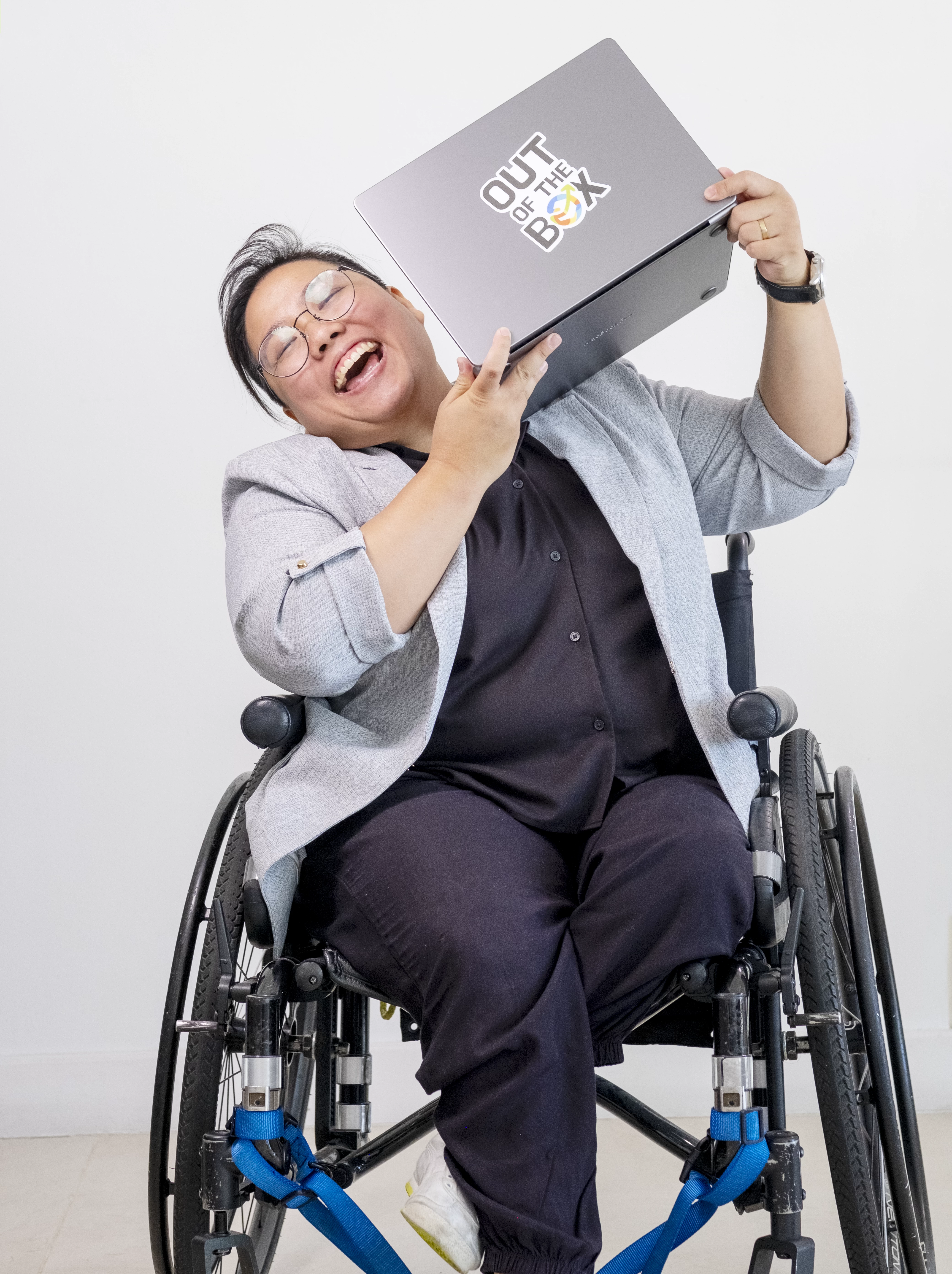
ASEAN PARA GAMES — Kat earned her Silver Medal in Para Powerlifting, 86th kg Category at the ASEAN Para Games 2026 in Nakhon Ratchasima, Thailand last January 2026.
Meet Kat Hernandez, the multi-hyphenate behind Kat Out of the Box, a social media account dedicated to shedding light on what it’s like to be a wheelchair user in the Philippines.
Hernandez was born with a rare disease called Arthrogryposis multiplex congenita. She spent her childhood in and out of hospitals, leading her to choose the medical profession. “It sparked joy in me because I was that kid that wanted to learn everything.”
She is also part of the Philippine National Para Powerlifting Team, a recent development that she calls “unexpected.”
She has also stepped into the public eye, both as the content creator behind Kat Out of the Box on social media and as the subject of a short film “Para-Paraan” (Finding a Way Through), which is part of Cinemalaya 2026.
Support system
Mobility aids are a big reason Hernandez was able to graduate medical school. “I had to use my wheelchair more, even though I was already using leg braces because it was tiring… to do 36 hour duties,” she said. “Ateneo was very nurturing. They made it possible for me to graduate feeling that I’m at par with my peers who don’t have disabilities.”
As a doctor, she is sometimes judged for her appearance. “They see the wheelchair first, so there’s still that stigma sometimes,” she said. “I don’t encounter it often anymore, but I have had some episodes where people judge me before I speak, but once I talk to them, they are confident in my abilities.”
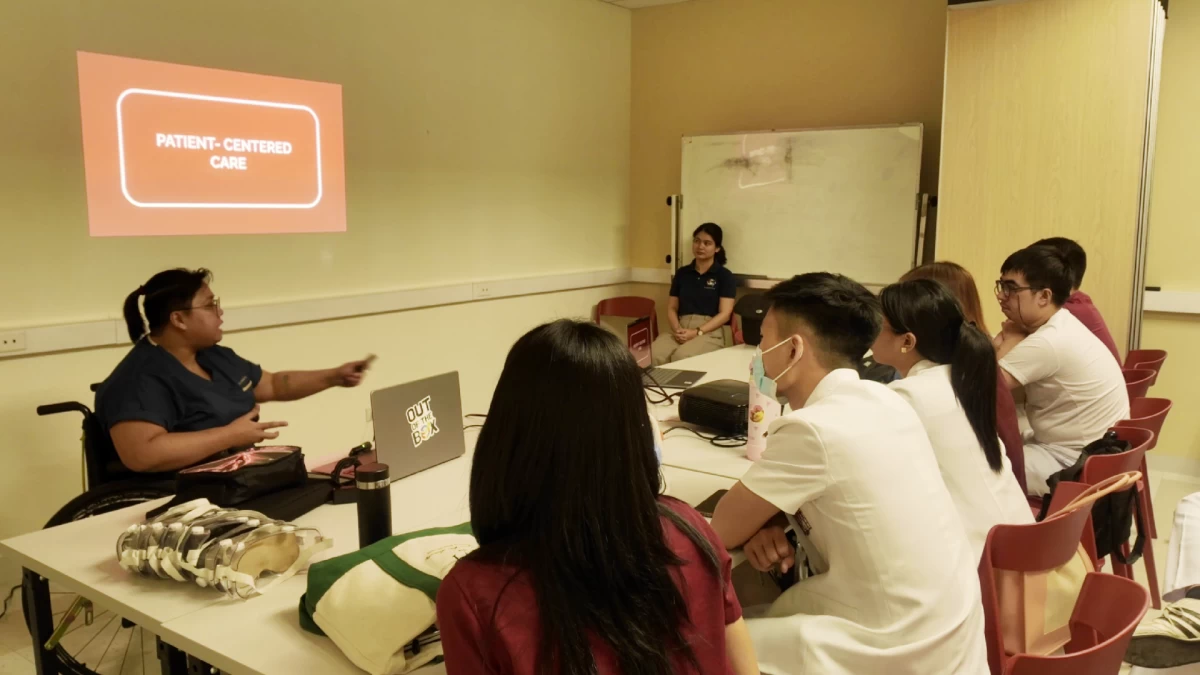
THE NEXT GENERATION — Kat speaking on disability sensitivity to medical interns of UP College of Medicine.
Hernandez also volunteers in UP Manila, conducting bi-monthly disability seminars with incoming medical interns so they can effectively communicate with persons with disabilities. “I believe that all doctors need to learn how to deal with persons with disabilities.”
She credits her strong support system for encouraging her can-do attitude. “I was very blessed to be surrounded by a lot of people who really supported me. My parents… made sure that I had control of what I wanted to do... I was allowed to make my own decisions, and that gave me the confidence to be able to do what I’m doing now.”
This did not prevent her from forming her own “personal stigma with the disabled community,” which she fought hard to erase.
“When I was young, the only thing I saw in the media was stories of pity… and as a kid, I didn’t think of myself that way. Because of the media… I did not want to be part of the disabled community, so I tried my best to hide things that made me disabled,” she said.
“It was only until I started consuming content from abroad about children with disabilities who are showing their lives or their mobility aids that I began to see positive media in terms of living as a person with disability. I wanted to have that as well.”
Positive influence
Hernandez’s decision to document her life as a wheelchair user in the Philippines on social media did not come lightly.
“I wanted better representation for persons with disabilities… That’s why Kat Out of the Box was born,” she said. “I want to show people that people with disabilities can thrive.”
Her first topic was para power lifting. “I was around 30 when I first encountered parasports. My partner pushed me in that direction because I was in my gym era.”
Her partner engineered a meeting with the secretary general of the 2023 ASEAN Paragames. This led to an appointment to observe the Philippine para power lifting team, which turned into an impromptu training session. “I was able to lift 40 kilos and they [said] come train with us… let’s see if we can get you into the team.”
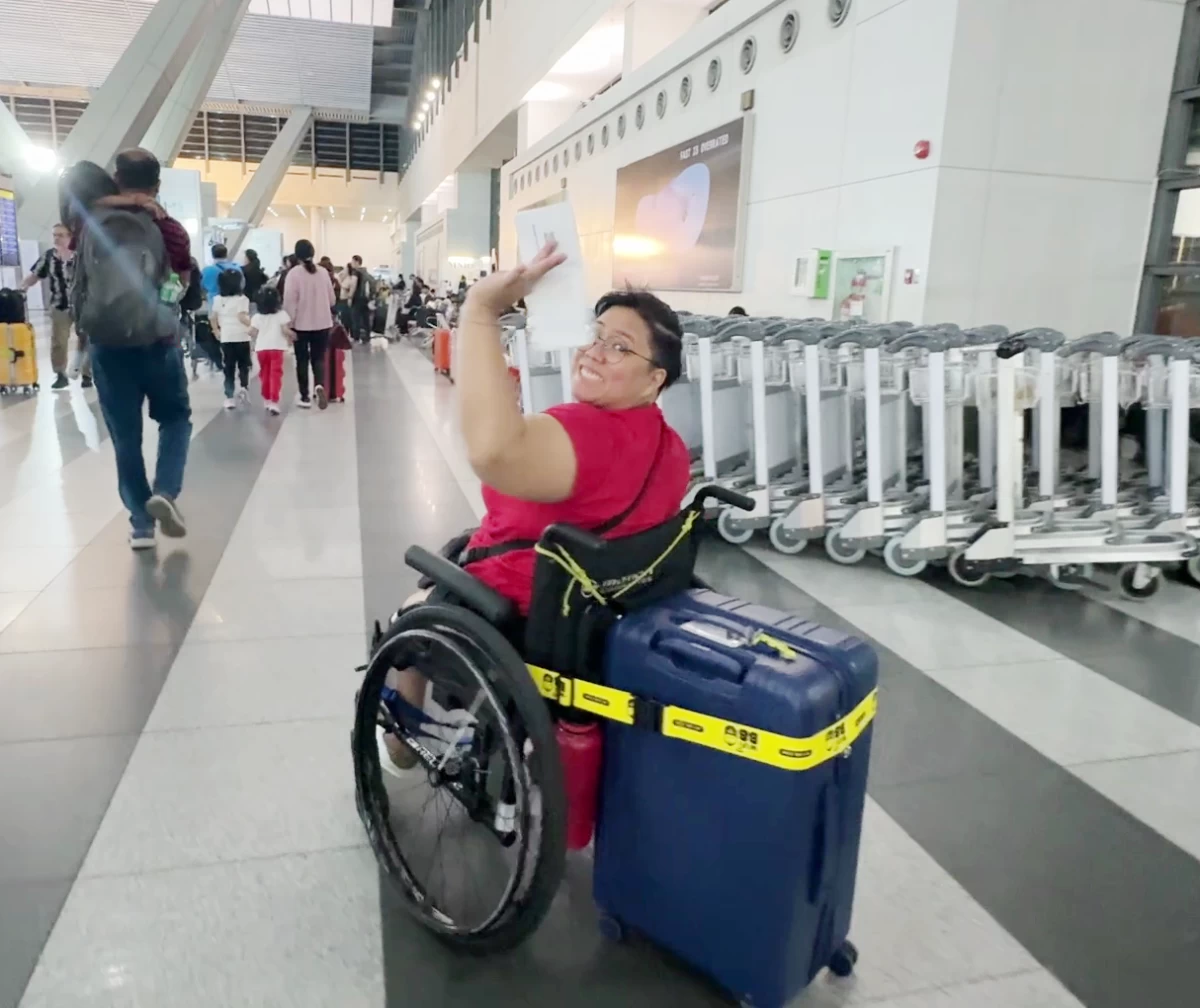
THE WORLD IS HER OYSTER — Kat traveling independently with her
“eight-wheeler contraption” composed of a wheelchair and luggage combo.
In 2024, she won gold competing against non-disabled athletes, leading her to officially become part of the national team. She currently trains three to five times a week, then has physical therapy before seeing patients or doing content.
“Sharing stories about disability turns disability from a big concept into a person, and you’re better able to relate to a person than a big concept,” she said.
“Disability is not unique. We always think, ‘it’s not gonna happen to me.’ The thing is, what if there’s an accident, …you get sick, or… old? There are chances that you can contract disability. By bridging that gap, …awareness when it comes to accessibility will be better because… there will be more empathy in design in the long run.”
A Way Through
Hernandez hopes for a world where “people with disabilities and people without disabilities can coexist together.”
She uses her experience in the UK as an example. “There were people in wheelchairs talking with their friends, riding the tube, eating in restaurants… It wasn’t an isolated event. In the Philippines, it’s so rare to see someone in a wheelchair who’s just out and about,” she said.
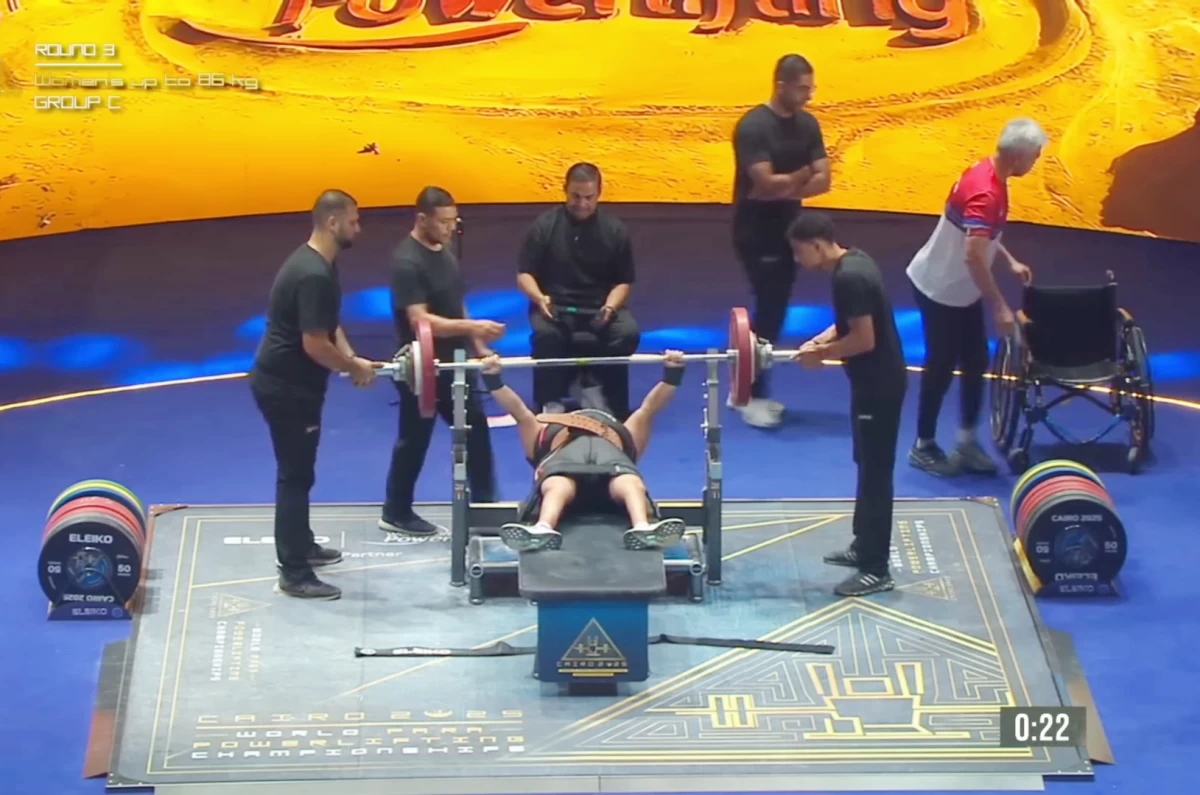
WORLD CHAMPION — Kat lifting 92kg in the Cairo 2025 Elite World Championships for Para Powerlifting in Cairo, Egypt last October 2025.
“If the Philippines was accessible… and mass transportation is good, it would really open up the worlds of people with disabilities and wouldn’t confine us to just one place.”
Like many Filipinos, she’s tired of hearing the word ‘resilience’ used as an excuse for not following accessibility codes when designing public and private infrastructure. “The reason why there is a standard is so that people are able to use it independently… It’s not all the time that you will have someone around you, right?”
“Para-Paraan” specifically discusses this. In the film, Hernandez tackles “three basic tasks for every normal Filipino: doing groceries, going to the bank, and getting medicine.”
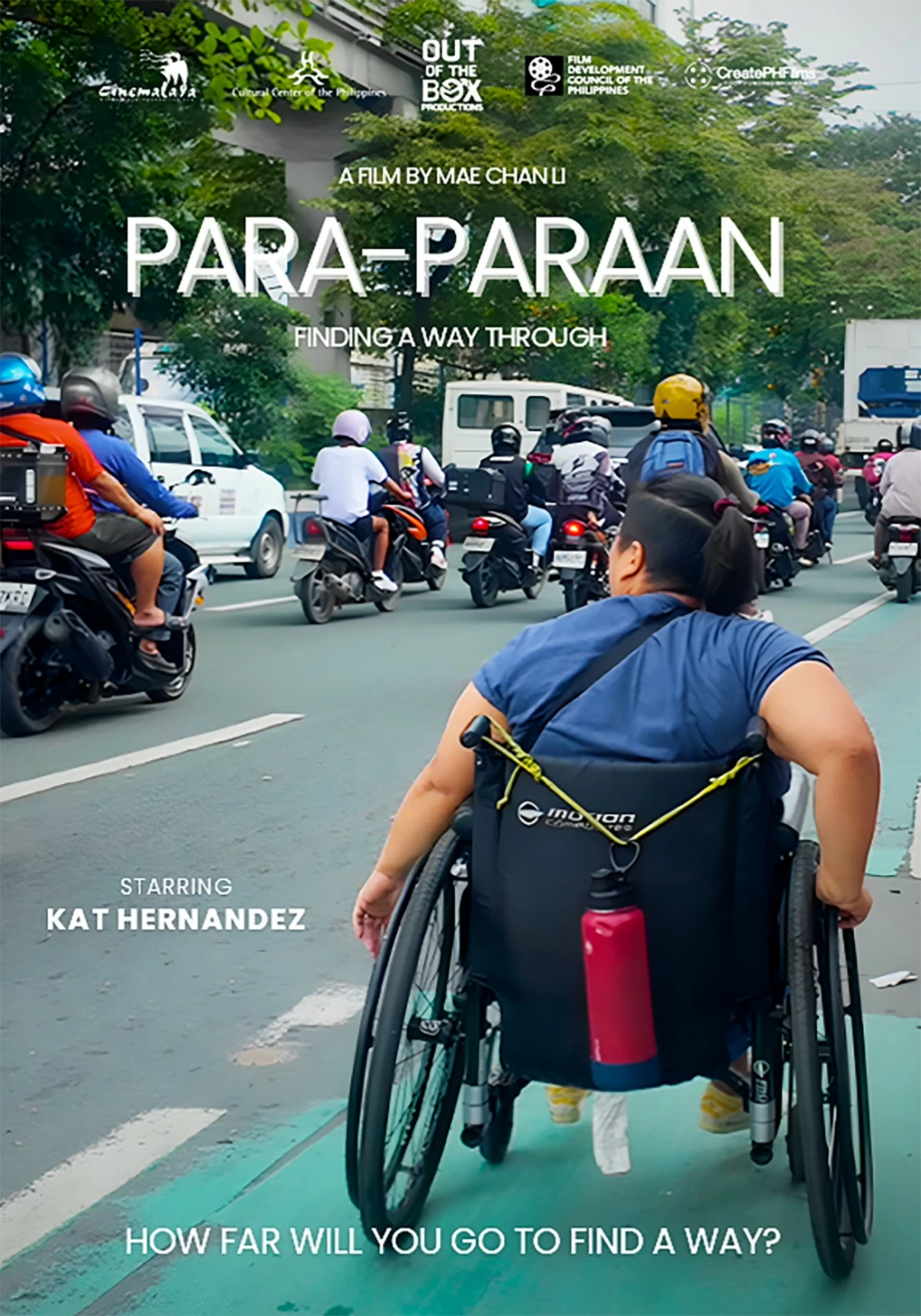
PARA-PARAAN, a short film
by Mae Chan Li and Kat Hernandez, official selection in Cinemalaya 2026.
“We wanted to be able to pose the question of how much more resilience do people with disabilities need to show so that they can belong in society?” she said.
“It’s not really about conquering disability. It’s more about navigating a world where barriers exist and… the presence of persons of disability is an afterthought…
“We want to be able to spark conversations among people without disabilities so they can see that it’s not just our disabilities that make us disabled, it’s actually the barriers around us that contribute the most to us being left behind.” (Photos courtesy of Kat Hernandez)