

ADVERTISEMENT

Chetak launches 3503 electric scooter

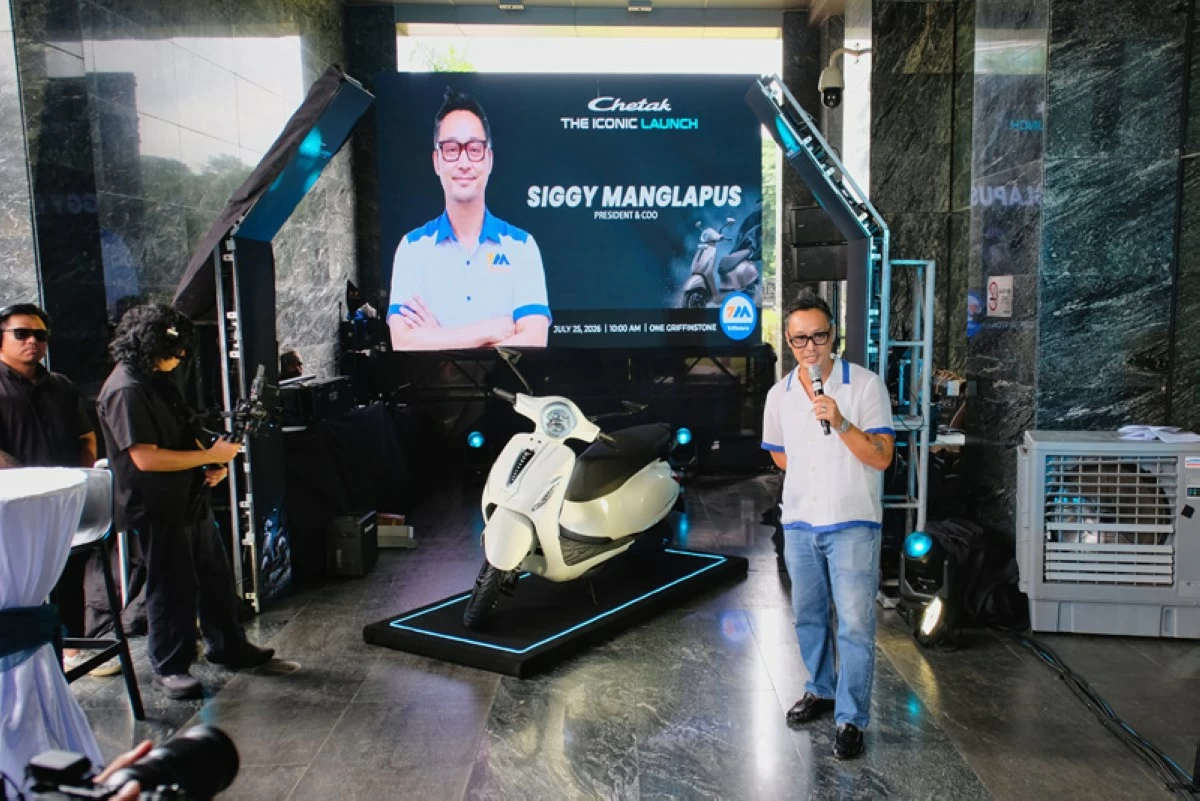
Opens first Philippine showroom

Published Aug 6, 2026 02:58 pm

At A Glance

  • Trimotors Corp has launched the Chetak 3503, an electric motorcycle with 108-kilometers of range on a full charge and a top speed of 63-km/h.
  • Its shape blends classic scooter proportions with restrained contemporary detailing, but the construction is more substantial than the styling suggests.
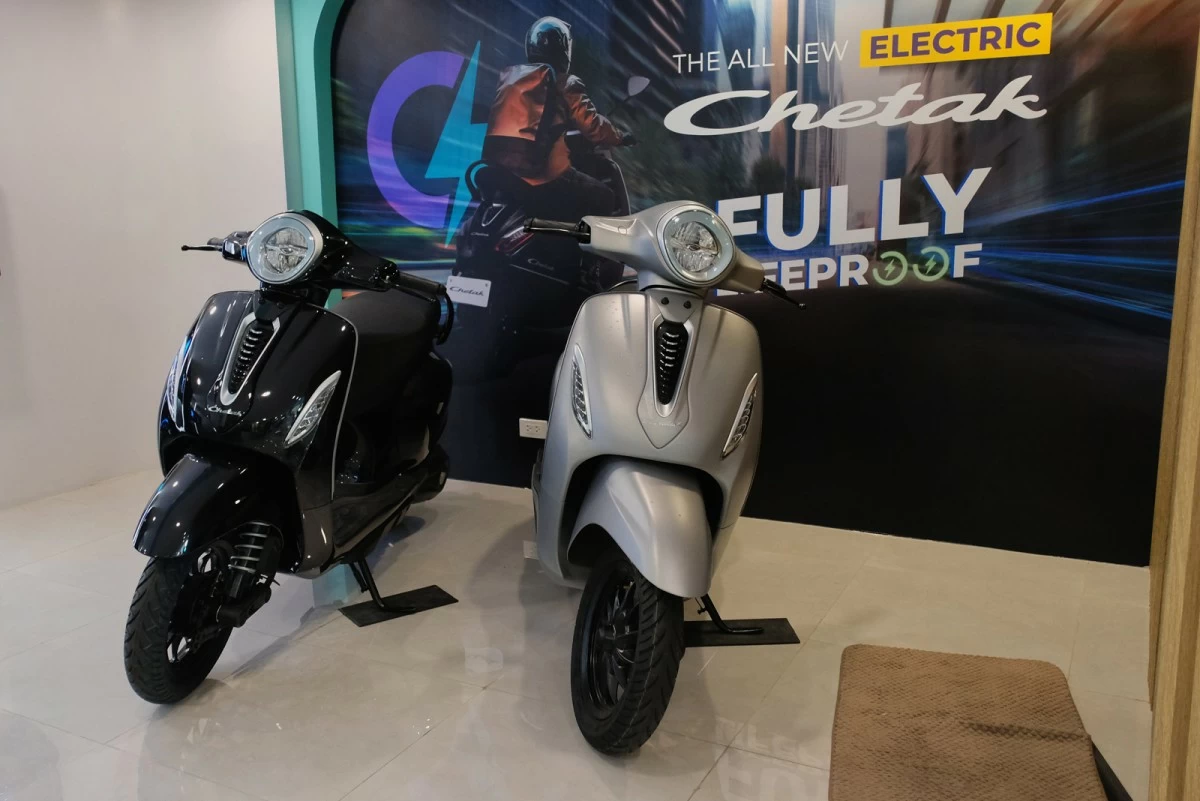
Electric scooters are becoming an increasingly familiar sight on Philippine roads, but more often than not, a lot of buyers still question their durability, range and what after-sales support is like for owners. Trimotors Technology Corporation is addressing all three concerns with the opening of the country’s first Chetak flagship showroom and the local launch of the Chetak 3503.
A showroom built around ownership
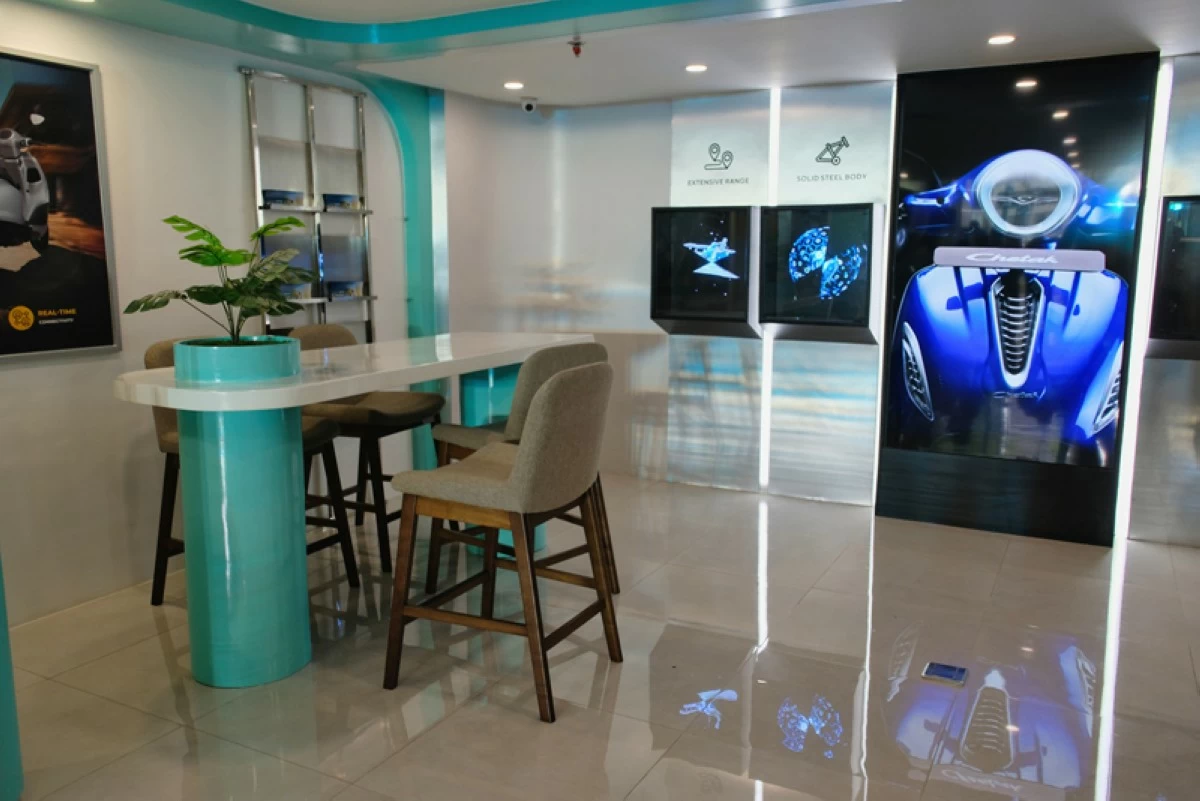
Located at One Griffinstone Building along Commerce Avenue in Filinvest Corporate City, Alabang, the new facility gives the Indian electric scooter brand a home in the Philippines which includes customer lounges and a service facility.
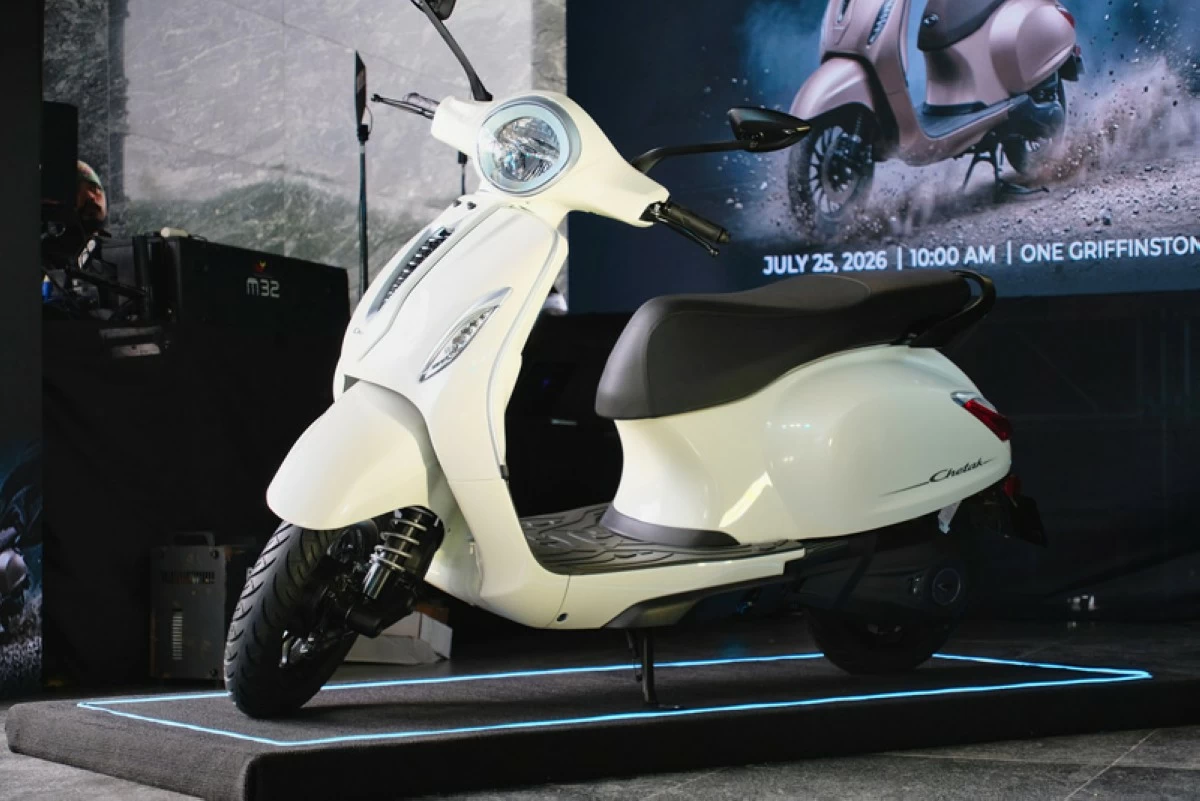
The Chetak name itself carries a lot of history. Bajaj Auto introduced the original model in India in 1972, naming it after the legendary horse of former king Maharana Pratap. It eventually became one of the country’s most recognizable scooters, with cumulative sales reaching 10 million units by 1995. Bajaj later revived the name for its modern electric range, connecting a familiar badge with a new form of urban mobility.
Sensible specifications for the city
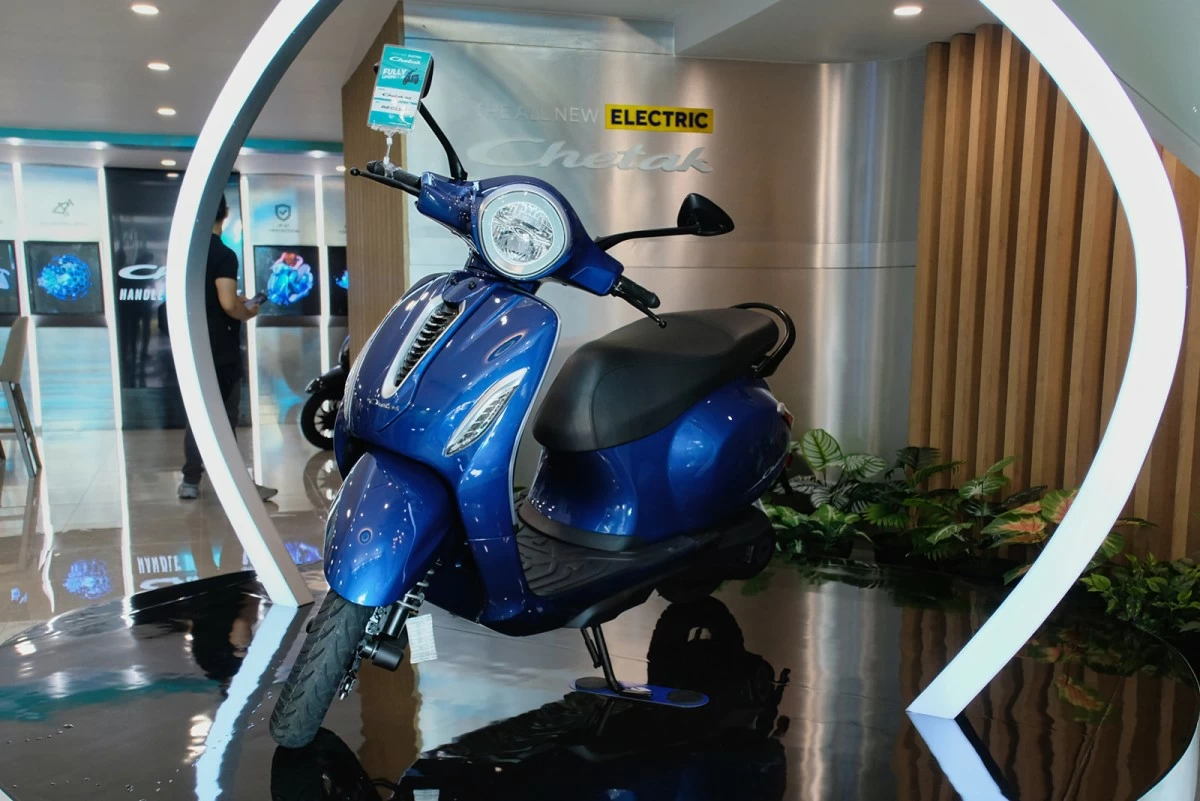
For the Philippines, Trimotors is leading with the Chetak 3503. Its shape blends classic scooter proportions with restrained contemporary detailing, but the construction is more substantial than the styling suggests. The scooter uses a tubular steel underbone frame and a full metal body, which is welcome in a class where plastic exterior panels are more common. It carries an IP67 rating for resistance to dust and water.
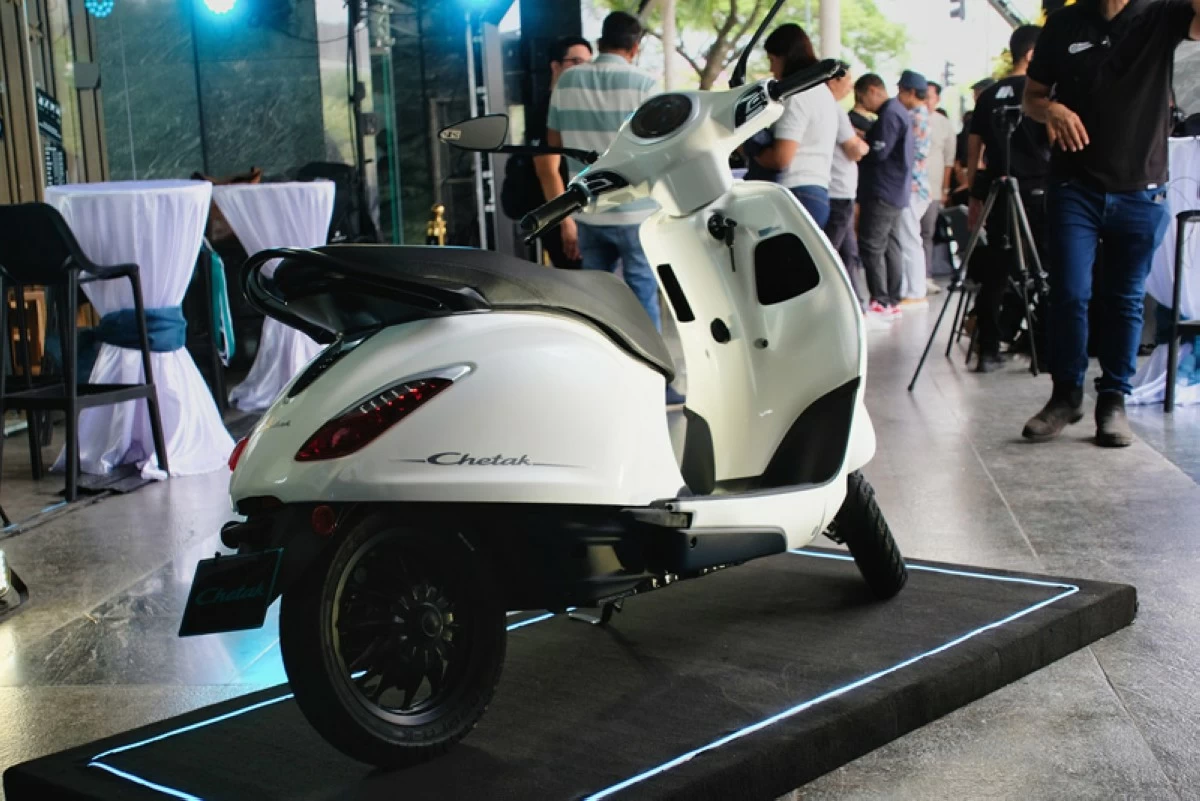
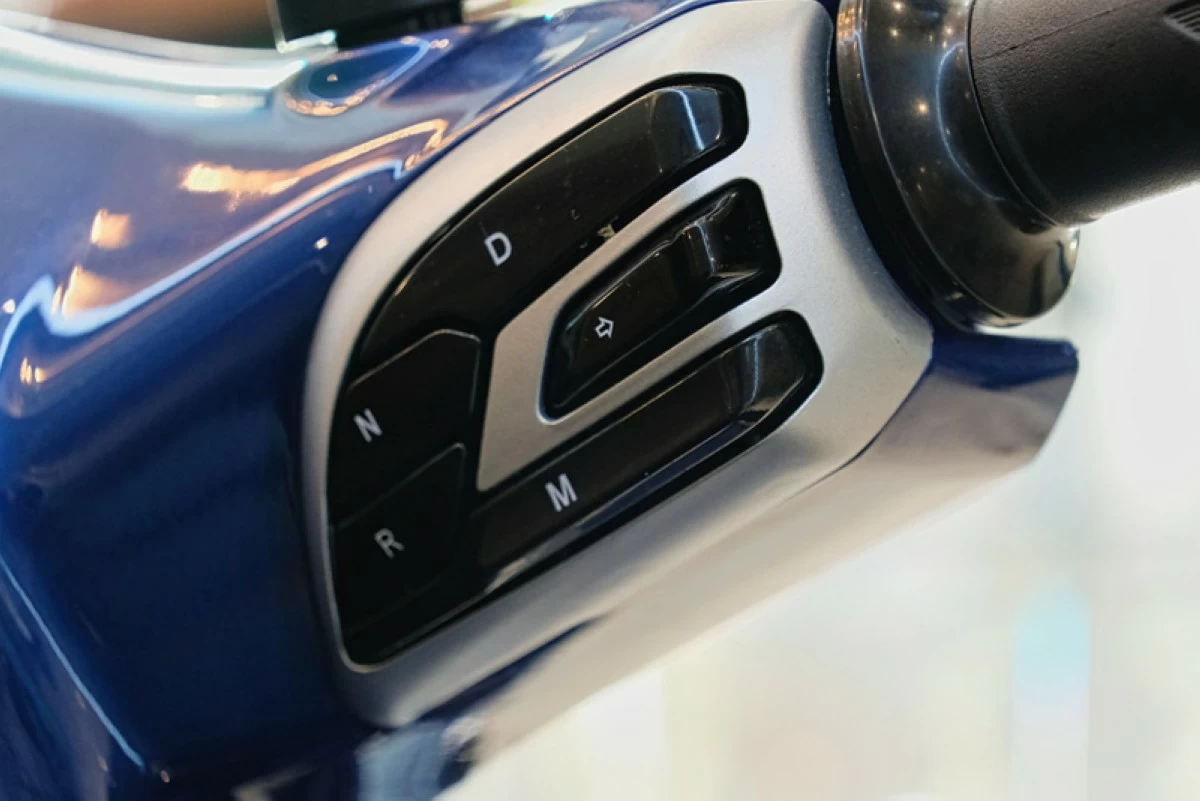
Power comes from a 3.5-kWh lithium-ion battery feeding an electric motor with a peak output of 3.0-kW (4-hp) and a continuous output of 2.5-kW (3.4-hp). It’s rated with an IDC range of up to 108-kilometers on a full charge and a top speed of 63-km/h. Those are sensible figures for urban commuting rather than outright performance, with Eco and Sport riding modes allowing riders to prioritize efficiency or response.
Using the supplied 750-watt off-board charger, the battery can be replenished from zero to 80-percent in approximately three hours and 25-minutes. A full charge takes around five hours, making overnight charging at home the most likely routine.
The chassis follows a practical city-scooter formula. It rides on 12-inch tubeless tires, with a single-sided leading-link front suspension and an offset rear monoshock. Drum brakes are fitted at both ends. A 775-mm seat height should make it approachable for a broad range of riders, while its 124-kg curb weight is substantial enough to reflect its metal construction without becoming unreasonable for daily use.
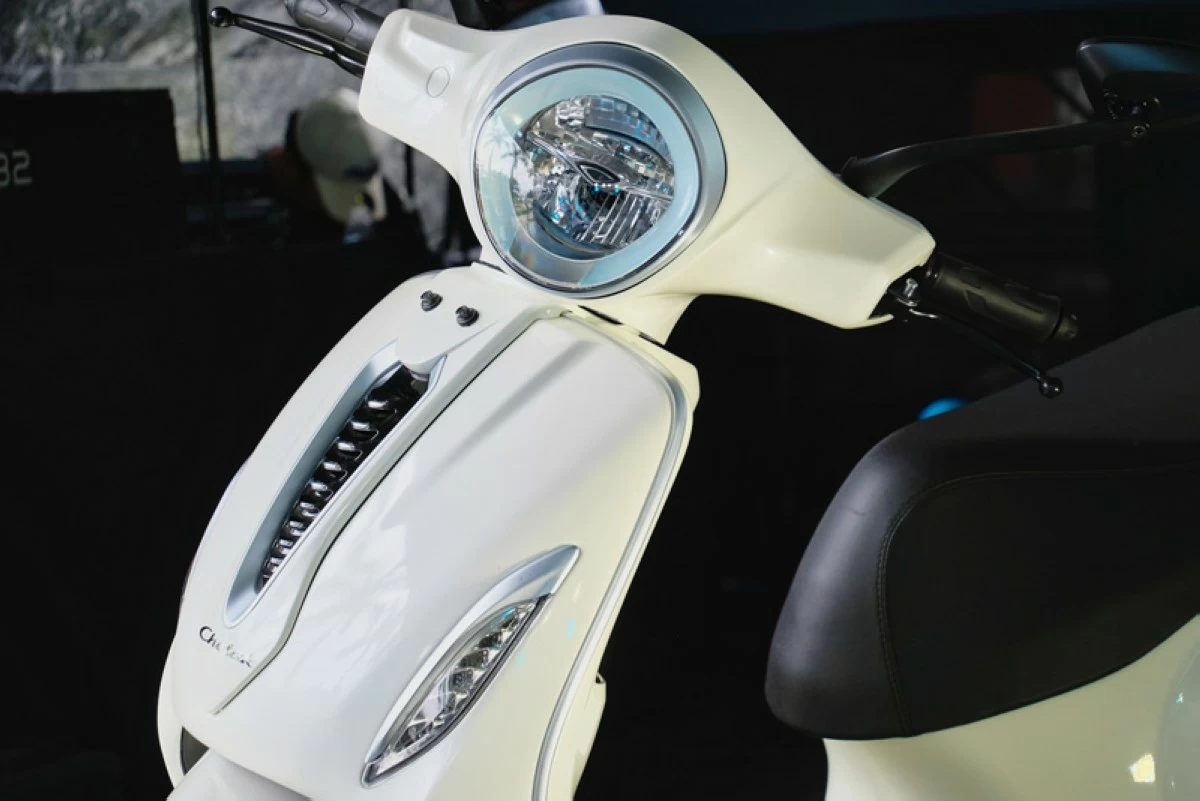
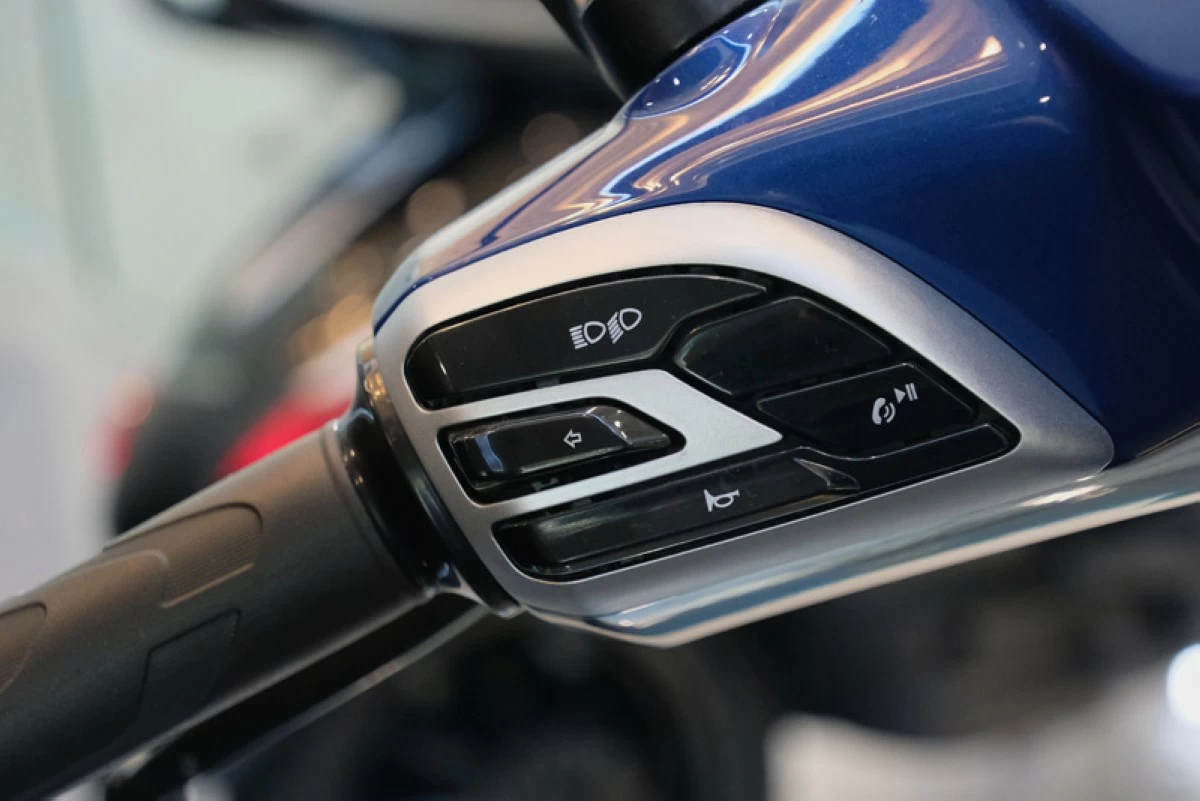
Convenience features include a color LCD instrument panel, Angel Eye LED lighting, under-seat storage and an open glove box. Real-time connectivity also adds a handy digital touch, but it doesn’t over complicate things or take away from the scooter’s simple, easygoing feel.
Price and availability
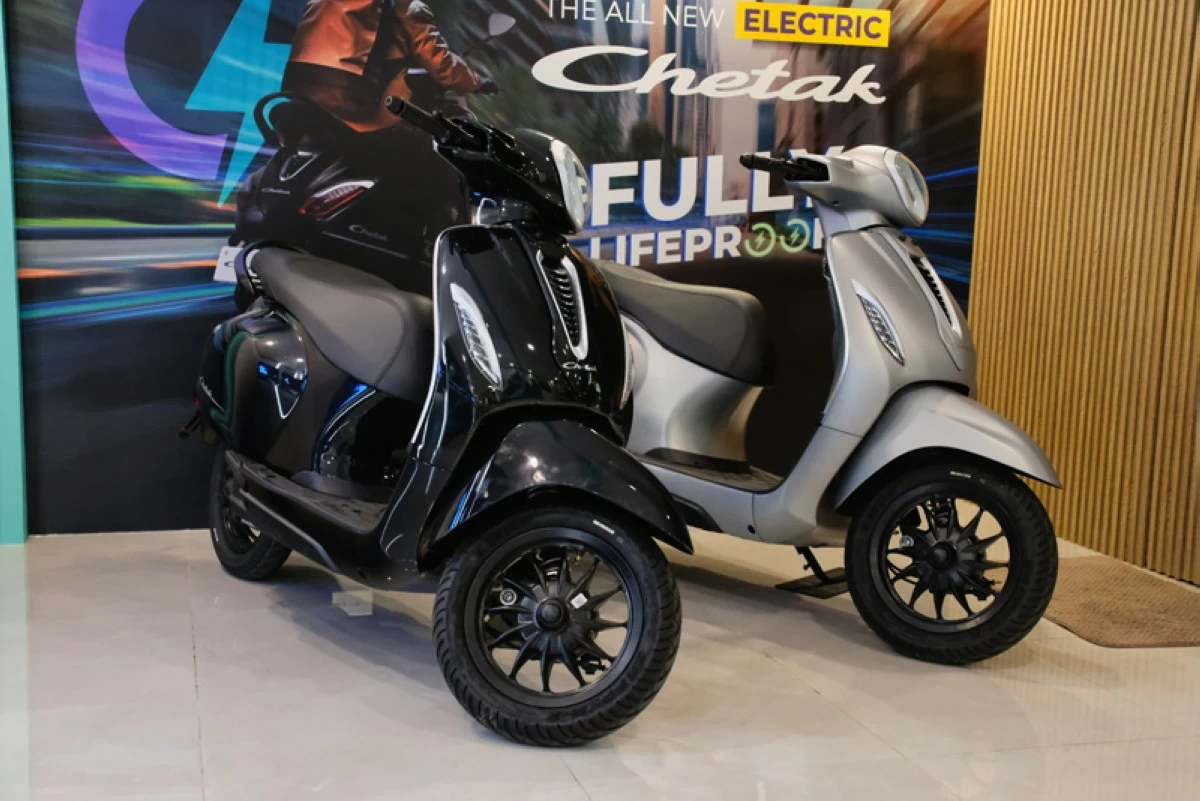
The Chetak 3503 is offered in Matte Grey, Indigo Metallic Blue, Brooklyn Black and Cyber White. Its suggested retail price is P130,888, although Trimotors is offering a limited introductory price of P115,888 exclusively through the Alabang flagship store. Each purchase also includes a Bell helmet worth more than P3,000, while the battery is covered by a three-year warranty.
The showroom operates from Monday to Saturday, 8 AM to 6 PM. For Chetak, the launch marks a small but solid first step: just one scooter, one flagship store, and a focus on the everyday needs that will decide if more Filipino riders are ready to switch to electric.

Related Tags

battery electric vehicle (BEV) Chetak
ADVERTISEMENT
.most-popular .layout-ratio{ padding-bottom: 79.13%; } @media (min-width: 768px) and (max-width: 1024px) { .widget-title { font-size: 15px !important; } }

{{ articles_filter_1561_widget.title }}

.most-popular .layout-ratio{ padding-bottom: 79.13%; } @media (min-width: 768px) and (max-width: 1024px) { .widget-title { font-size: 15px !important; } }

{{ static_articles_1562_widget.title }}

.most-popular .layout-ratio{ padding-bottom: 79.13%; } @media (min-width: 768px) and (max-width: 1024px) { .widget-title { font-size: 15px !important; } }

{{ articles_filter_1563_widget.title }}

{{ articles_filter_1564_widget.title }}

.mb-article-details { position: relative; } .mb-article-details .article-body-preview, .mb-article-details .article-body-summary{ font-size: 17px; line-height: 30px; font-family: "Libre Caslon Text", serif; color: #000; } .mb-article-details .article-body-preview iframe , .mb-article-details .article-body-summary iframe{ width: 100%; margin: auto; } .read-more-background { background: linear-gradient(180deg, color(display-p3 1.000 1.000 1.000 / 0) 13.75%, color(display-p3 1.000 1.000 1.000 / 0.8) 30.79%, color(display-p3 1.000 1.000 1.000) 72.5%); position: absolute; height: 200px; width: 100%; bottom: 0; display: flex; justify-content: center; align-items: center; padding: 0; } .read-more-background a{ color: #000; } .read-more-btn { padding: 17px 45px; font-family: Inter; font-weight: 700; font-size: 18px; line-height: 16px; text-align: center; vertical-align: middle; border: 1px solid black; background-color: white; } .hidden { display: none; }
function initializeAllSwipers() { // Get all hidden inputs with cms_article_id document.querySelectorAll('[id^="cms_article_id_"]').forEach(function (input) { const cmsArticleId = input.value; const articleSelector = '#article-' + cmsArticleId + ' .body_images'; const swiperElement = document.querySelector(articleSelector); if (swiperElement && !swiperElement.classList.contains('swiper-initialized')) { new Swiper(articleSelector, { loop: true, pagination: false, navigation: { nextEl: '#article-' + cmsArticleId + ' .swiper-button-next', prevEl: '#article-' + cmsArticleId + ' .swiper-button-prev', }, }); } }); } setTimeout(initializeAllSwipers, 3000); const intersectionObserver = new IntersectionObserver( (entries) => { entries.forEach((entry) => { if (entry.isIntersecting) { const newUrl = entry.target.getAttribute("data-url"); if (newUrl) { history.pushState(null, null, newUrl); let article = entry.target; // Extract metadata const author = article.querySelector('.author-section').textContent.replace('By', '').trim(); const section = article.querySelector('.section-info ').textContent.replace(' ', ' '); const title = article.querySelector('.article-title h1').textContent; // Parse URL for Chartbeat path format const parsedUrl = new URL(newUrl, window.location.origin); const cleanUrl = parsedUrl.host + parsedUrl.pathname; // Update Chartbeat configuration if (typeof window._sf_async_config !== 'undefined') { window._sf_async_config.path = cleanUrl; window._sf_async_config.sections = section; window._sf_async_config.authors = author; } // Track virtual page view with Chartbeat if (typeof pSUPERFLY !== 'undefined' && typeof pSUPERFLY.virtualPage === 'function') { try { pSUPERFLY.virtualPage({ path: cleanUrl, title: title, sections: section, authors: author }); } catch (error) { console.error('ping error', error); } } // Optional: Update document title if (title && title !== document.title) { document.title = title; } } } }); }, { threshold: 0.1 } ); function showArticleBody(button) { const article = button.closest("article"); const summary = article.querySelector(".article-body-summary"); const body = article.querySelector(".article-body-preview"); const readMoreSection = article.querySelector(".read-more-background"); // Hide summary and read-more section summary.style.display = "none"; readMoreSection.style.display = "none"; // Show the full article body body.classList.remove("hidden"); } document.addEventListener("DOMContentLoaded", () => { let loadCount = 0; // Track how many times articles are loaded const offset = [1, 2, 3, 4, 5, 6, 7, 8, 9, 10]; // Offset values const currentUrl = window.location.pathname.substring(1); let isLoading = false; // Prevent multiple calls if (!currentUrl) { console.log("Current URL is invalid."); return; } const sentinel = document.getElementById("load-more-sentinel"); if (!sentinel) { console.log("Sentinel element not found."); return; } function isSentinelVisible() { const rect = sentinel.getBoundingClientRect(); return ( rect.top < window.innerHeight && rect.bottom >= 0 ); } function onScroll() { if (isLoading) return; if (isSentinelVisible()) { if (loadCount >= offset.length) { console.log("Maximum load attempts reached."); window.removeEventListener("scroll", onScroll); return; } isLoading = true; const currentOffset = offset[loadCount]; window.loadMoreItems().then(() => { let article = document.querySelector('#widget_1690 > div:nth-last-of-type(2) article'); intersectionObserver.observe(article) loadCount++; }).catch(error => { console.error("Error loading more items:", error); }).finally(() => { isLoading = false; }); } } window.addEventListener("scroll", onScroll); });

Sign up by email to receive news.