







Business leaders urge Marcos to fast-track AI rollout


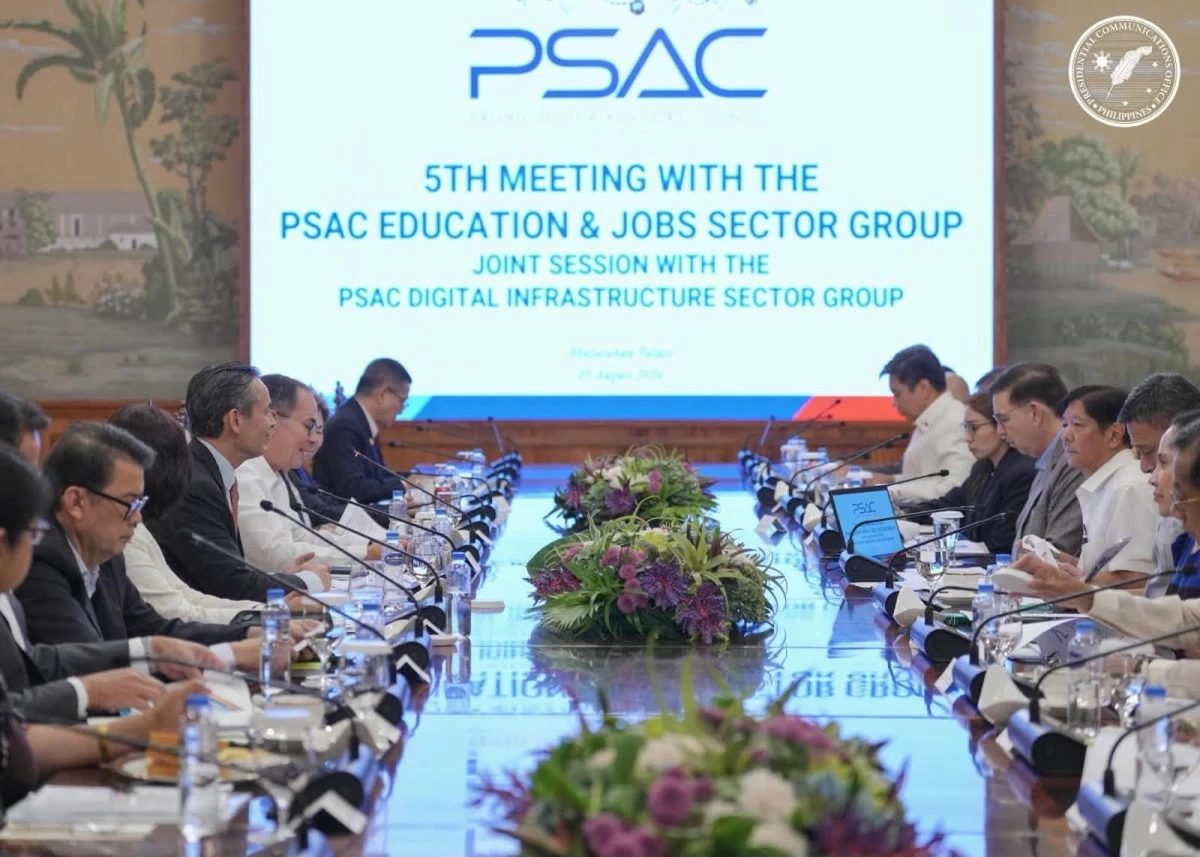
The Private Sector Advisory Council (PSAC) has proposed the creation of a National Artificial Intelligence (AI) Implementation Taskforce to accelerate the country’s adoption of AI, saying stronger coordination is needed to prepare workers, businesses, and government for the technology’s growing impact on the economy.
The recommendation was presented during the fifth meeting of PSAC’s Education and Jobs Sector Group, held jointly with PSAC’s Digital Infrastructure Sector Group at Malacañang, where business leaders urged the government to move beyond planning and focus on implementing the National AI Strategy (NAIS PH).
PSAC Strategic Convenor and Aboitiz Group President and Chief Executive Officer (CEO) Sabin M. Aboitiz said the Philippines already has a national AI blueprint, but execution remains the next major challenge.
“AI is no longer a technology of the future—it is already changing the way people work, learn, and do business today. Our priority is to make sure every Filipino has the opportunity to benefit from AI by creating better jobs, developing new skills, and strengthening industries that will drive long-term economic growth,” Aboitiz said.
According to PSAC, implementation of existing AI strategies has remained fragmented because responsibilities are spread across multiple government agencies without a single coordinating body.
The proposed task force would bring together government agencies, industry groups, academe, and other stakeholders under a unified implementation framework to oversee the country’s AI agenda.
Among its priorities are expanding AI and digital skills training, supporting technology infrastructure and research and development (R&D), and strengthening policies that encourage responsible AI adoption while generating new economic opportunities and high-quality jobs.
PSAC said the whole-of-nation approach would help ensure that AI benefits not only large companies but also students, workers, entrepreneurs, and micro, small, and medium enterprises (MSMEs).
The council also recommended the release of ₱650 million from the Higher Education Development Fund (HEDF) to the Commission on Higher Education (CHED) to fund AI upskilling programs in 2026 across colleges and universities. The funding is intended to help build the country’s AI talent pipeline and equip students with the skills needed by emerging industries.
Beyond AI, PSAC reaffirmed its support for implementing the country’s semiconductor and electronics roadmap, recognizing the industry’s potential to create high-value jobs, attract investments, and strengthen the Philippines’ position in the global technology supply chain.
The council also welcomed the strengthened partnership between the Education and Workforce Development Group (EWDG), the Cabinet cluster for education and workforce development, and the Industry, Academe and Civil Society Council for Education (IACCE) in implementing the 10-year National Education and Workforce Development Plan (NatPlan).
The partnership aims to help address the country’s job-skills mismatch by accelerating curriculum development, particularly for fast-growing sectors such as AI and semiconductors, so graduates acquire skills that match evolving industry needs.
PSAC also reviewed the progress of ongoing employment and workforce development initiatives.
It said nearly 500 job fairs have been conducted across 15 regions since November 2023, serving more than 322,000 job seekers through partnerships among the government, local government units (LGUs), and the private sector.
Digital training programs have likewise expanded beyond basic digital literacy to include AI, cybersecurity, robotics, and information security, while financial literacy initiatives have reached more than 25 million Filipinos.
Meanwhile, the Trabaho at Negosyo initiative has served more than 4,000 participants across several regions since March 2026 by combining entrepreneurship mentoring with job matching and connecting participants with government agencies, private companies, and industry mentors.
The recommendations include creating the National AI Implementation Taskforce through an administrative order (AO), funding AI upskilling in higher education, accelerating the semiconductor roadmap, and institutionalizing long-term public-private collaboration in education and workforce development.