






Manila Bulletin
 Business
Trade & Industry
AI expansion threatens to overload Philippines' power grid
Business
Trade & Industry
AI expansion threatens to overload Philippines' power grid
Business
Trade & Industry
AI expansion threatens to overload Philippines' power grid
AI expansion threatens to overload Philippines' power grid
Published Aug 6, 2026 04:01 pm


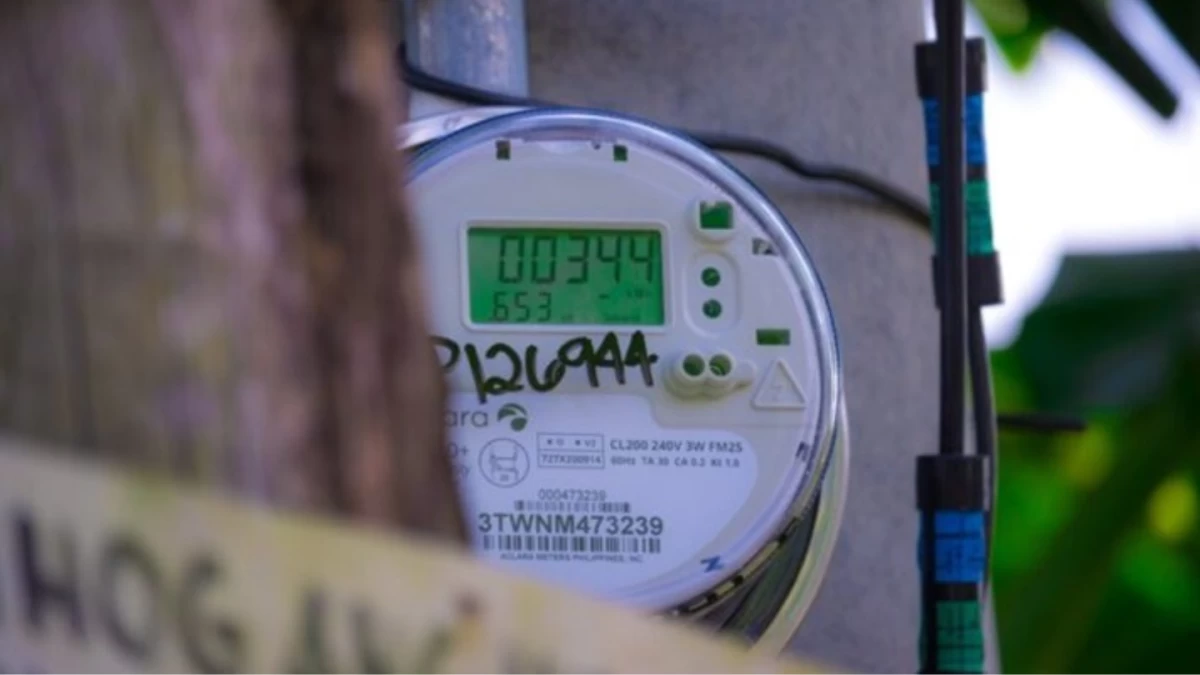
The Philippines risks overtaxing its fragile power grid unless regulators move swiftly to manage energy demand from the rapidly expanding data center sector, according to an industry group representing energy efficiency market stakeholders.
The Philippine Energy Efficiency Alliance (PE2) urged the government to establish a mandatory policy framework before surging electricity requirements from artificial intelligence (AI) and cloud computing facilities trigger widespread shortages.
Data center power consumption in the country is expanding at a 70 percent annual pace, compounding existing vulnerabilities across the national power network, including thin reserve margins and exposure to international fuel supply shocks.
Much of the incoming capacity is concentrating in specialized hubs, such as the Pax Silica development in New Clark City in Tarlac.
A single enterprise-grade facility can consume as much electricity as roughly two million households, while power demand from the New Clark City cluster alone is projected to reach 300 to 400 megawatts to maintain round-the-clock operations, according to Department of Information and Communications Technology estimates.
To prevent local power disruptions, the alliance is pushing for regulations that would compel operators in geographic clusters to construct off-grid, stand-alone power generation and energy storage infrastructure.
“Government policy—if done early enough—can mitigate the impacts of our data center market growth on the grid,” PE2 President Alexander Ablaza said in a statement. “Our Department of Energy can require clustered DCs to set up its own stand-alone generation and storage infrastructure.”
The warning comes as global power systems struggle to accommodate the digital infrastructure boom. An International Energy Agency study found that global data center capacity doubled over the past 12 months and is on track to consume as much electricity as the entire country of Japan by 2030.
While technology operators often pursue captive or onsite generation to bypass transmission bottlenecks, the group noted that private power setups present distinct technical drawbacks.
Operators must intentionally over-dimension onsite generation equipment to ensure network reliability and absorb dramatic energy spikes during compute-heavy AI model training, ultimately reducing the overall energy efficiency of the facility cluster.
Furthermore, concentrating facilities within shared industrial parks threatens to drive up retail electricity prices in local peso terms for neighboring commercial and residential consumers.
PE2 estimated that high-density clusters could absorb as much as 30 percent of local grid capacity, forcing costly utility-scale transmission upgrades that are typically passed along to ratepayers.
Without preemptive regulatory intervention, the rapid expansion risks destabilizing regional power markets and accelerating energy inflation in the country.