ADVERTISEMENT

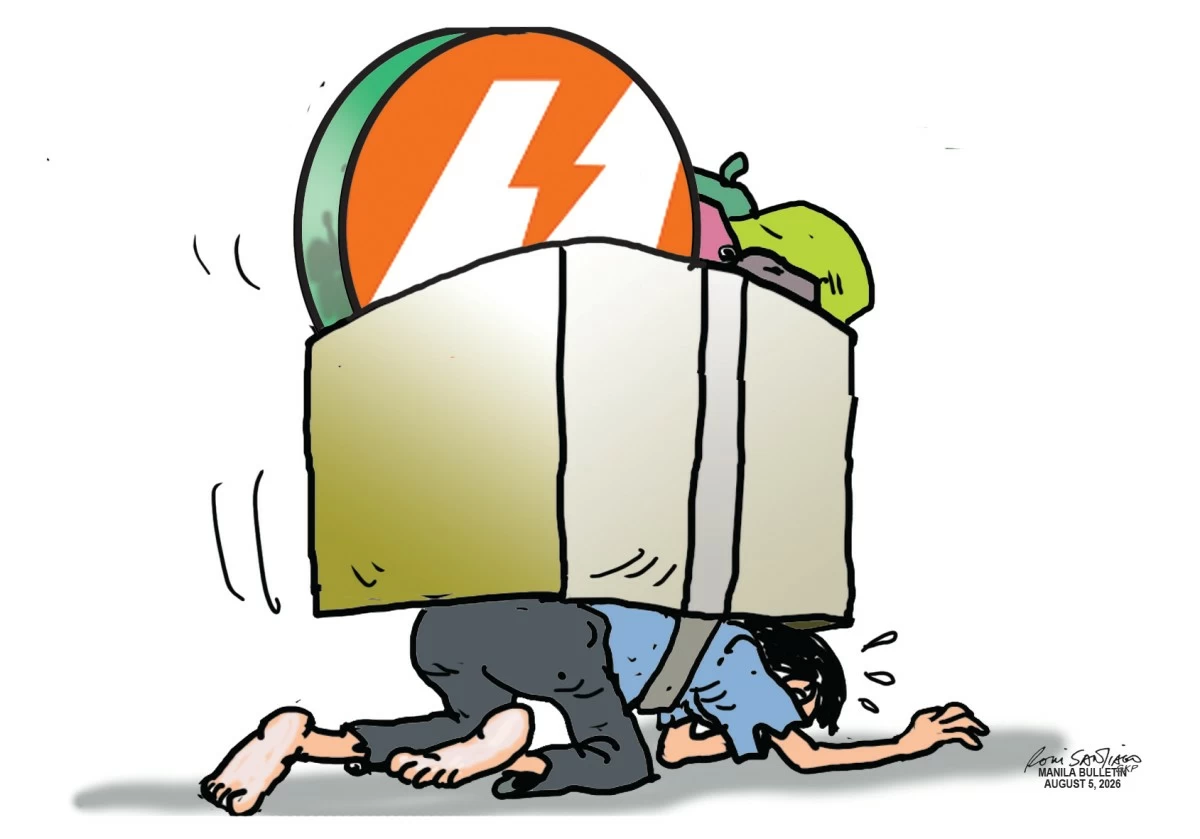
System loss: Why it's unfair to let consumers pay for it

Published Aug 5, 2026 12:05 am  |  Updated Aug 4, 2026 05:07 pm
Electricity is an essential service, not a privilege. Every household, business, school, and hospital depends on it to function. Yet for decades, Filipino consumers have quietly paid a charge that many neither understood nor questioned—system loss. Now that President Ferdinand Marcos Jr. has publicly declared that consumers should no longer shoulder this cost because they are not responsible for it, the issue has finally moved to the forefront of the national conversation.
The reaction from some leaders in the power industry was predictable. They argue that removing system loss charges from consumers would impose an enormous financial burden on generation companies, transmission operators, and distribution utilities. They warn that the cost is simply too large for the industry to absorb.
They are correct. But their argument raises an even more compelling question. If the burden is too heavy for billion-peso companies, how much heavier is it for ordinary Filipinos already struggling to pay for food, housing, education, and healthcare?
That is where the debate should begin—not with concerns over corporate balance sheets, but with justice.
System loss refers to electricity lost during transmission and distribution because of technical limitations, aging infrastructure, inefficiencies, or even theft. While reducing these losses should remain a priority, they are fundamentally part of operating an electricity business. Every industry experiences losses. Manufacturers account for defective products. Retailers expect inventory shrinkage. Banks prepare for loan defaults. Airlines factor in operational disruptions. These costs are recognized as part of doing business, not routinely transferred to customers simply because companies can.
Why should the power sector be different?
Generation companies, transmission providers, and distribution utilities exist to earn profits by supplying electricity. Consumers, on the other hand, do not profit from the electricity they purchase. They simply pay to light their homes, refrigerate their food, run their businesses, or power their children's education. Asking them to finance losses they neither caused nor controlled is economically questionable and morally indefensible.
The industry’s concern about financial sustainability deserves consideration. A stable power sector benefits the entire economy. However, sustainability should not come at the expense of fairness. Companies that enjoy the rewards of operating in a regulated industry must also accept the operational risks that accompany those rewards. Profit and responsibility are inseparable.
If absorbing the entire cost immediately would genuinely threaten investments or service reliability, there is room for balanced public policy. The government may act to provide stability. It may explore targeted subsidies, transitional assistance, or performance-based incentives to help utilities modernize their systems and reduce technical losses. Such measures recognize that affordable and reliable electricity is a national concern.
But one principle should remain non-negotiable: consumers should never be compelled to pay for losses they neither created nor benefited from.
Removing system loss charges from electricity bills would also create stronger incentives for utilities to invest in better infrastructure, smarter technologies, stricter anti-theft enforcement, and more efficient operations. When companies bear the financial consequences of inefficiency, innovation accelerates. When consumers bear those consequences instead, accountability weakens.
Ultimately, this debate on who shoulders system loss is about defining where responsibility belongs in a just society. The burden of doing business should rest primarily on those who conduct the business and profit from it, not on the captive consumers who have no choice but to buy the service.
Justice demands no less. System loss should never become the people’s loss. If assistance is necessary, the government may step in to help the industry transition. But the Filipino consumer, already carrying enough burdens, should not be asked to shoulder one that was never theirs to bear in the first place.
ADVERTISEMENT
.most-popular .layout-ratio{ padding-bottom: 79.13%; } @media (min-width: 768px) and (max-width: 1024px) { .widget-title { font-size: 15px !important; } }

{{ articles_filter_1561_widget.title }}

.most-popular .layout-ratio{ padding-bottom: 79.13%; } @media (min-width: 768px) and (max-width: 1024px) { .widget-title { font-size: 15px !important; } }

{{ static_articles_1562_widget.title }}

.most-popular .layout-ratio{ padding-bottom: 79.13%; } @media (min-width: 768px) and (max-width: 1024px) { .widget-title { font-size: 15px !important; } }

{{ articles_filter_1563_widget.title }}

{{ articles_filter_1564_widget.title }}

.mb-article-details { position: relative; } .mb-article-details .article-body-preview, .mb-article-details .article-body-summary{ font-size: 17px; line-height: 30px; font-family: "Libre Caslon Text", serif; color: #000; } .mb-article-details .article-body-preview iframe , .mb-article-details .article-body-summary iframe{ width: 100%; margin: auto; } .read-more-background { background: linear-gradient(180deg, color(display-p3 1.000 1.000 1.000 / 0) 13.75%, color(display-p3 1.000 1.000 1.000 / 0.8) 30.79%, color(display-p3 1.000 1.000 1.000) 72.5%); position: absolute; height: 200px; width: 100%; bottom: 0; display: flex; justify-content: center; align-items: center; padding: 0; } .read-more-background a{ color: #000; } .read-more-btn { padding: 17px 45px; font-family: Inter; font-weight: 700; font-size: 18px; line-height: 16px; text-align: center; vertical-align: middle; border: 1px solid black; background-color: white; } .hidden { display: none; }
function initializeAllSwipers() { // Get all hidden inputs with cms_article_id document.querySelectorAll('[id^="cms_article_id_"]').forEach(function (input) { const cmsArticleId = input.value; const articleSelector = '#article-' + cmsArticleId + ' .body_images'; const swiperElement = document.querySelector(articleSelector); if (swiperElement && !swiperElement.classList.contains('swiper-initialized')) { new Swiper(articleSelector, { loop: true, pagination: false, navigation: { nextEl: '#article-' + cmsArticleId + ' .swiper-button-next', prevEl: '#article-' + cmsArticleId + ' .swiper-button-prev', }, }); } }); } setTimeout(initializeAllSwipers, 3000); const intersectionObserver = new IntersectionObserver( (entries) => { entries.forEach((entry) => { if (entry.isIntersecting) { const newUrl = entry.target.getAttribute("data-url"); if (newUrl) { history.pushState(null, null, newUrl); let article = entry.target; // Extract metadata const author = article.querySelector('.author-section').textContent.replace('By', '').trim(); const section = article.querySelector('.section-info ').textContent.replace(' ', ' '); const title = article.querySelector('.article-title h1').textContent; // Parse URL for Chartbeat path format const parsedUrl = new URL(newUrl, window.location.origin); const cleanUrl = parsedUrl.host + parsedUrl.pathname; // Update Chartbeat configuration if (typeof window._sf_async_config !== 'undefined') { window._sf_async_config.path = cleanUrl; window._sf_async_config.sections = section; window._sf_async_config.authors = author; } // Track virtual page view with Chartbeat if (typeof pSUPERFLY !== 'undefined' && typeof pSUPERFLY.virtualPage === 'function') { try { pSUPERFLY.virtualPage({ path: cleanUrl, title: title, sections: section, authors: author }); } catch (error) { console.error('ping error', error); } } // Optional: Update document title if (title && title !== document.title) { document.title = title; } } } }); }, { threshold: 0.1 } ); function showArticleBody(button) { const article = button.closest("article"); const summary = article.querySelector(".article-body-summary"); const body = article.querySelector(".article-body-preview"); const readMoreSection = article.querySelector(".read-more-background"); // Hide summary and read-more section summary.style.display = "none"; readMoreSection.style.display = "none"; // Show the full article body body.classList.remove("hidden"); } document.addEventListener("DOMContentLoaded", () => { let loadCount = 0; // Track how many times articles are loaded const offset = [1, 2, 3, 4, 5, 6, 7, 8, 9, 10]; // Offset values const currentUrl = window.location.pathname.substring(1); let isLoading = false; // Prevent multiple calls if (!currentUrl) { console.log("Current URL is invalid."); return; } const sentinel = document.getElementById("load-more-sentinel"); if (!sentinel) { console.log("Sentinel element not found."); return; } function isSentinelVisible() { const rect = sentinel.getBoundingClientRect(); return ( rect.top < window.innerHeight && rect.bottom >= 0 ); } function onScroll() { if (isLoading) return; if (isSentinelVisible()) { if (loadCount >= offset.length) { console.log("Maximum load attempts reached."); window.removeEventListener("scroll", onScroll); return; } isLoading = true; const currentOffset = offset[loadCount]; window.loadMoreItems().then(() => { let article = document.querySelector('#widget_1690 > div:nth-last-of-type(2) article'); intersectionObserver.observe(article) loadCount++; }).catch(error => { console.error("Error loading more items:", error); }).finally(() => { isLoading = false; }); } } window.addEventListener("scroll", onScroll); });

Sign up by email to receive news.