






Manila Bulletin
 Property and Living
Digital Cities and IT-BMP sector are reshaping commercial real estate
Property and Living
Digital Cities and IT-BMP sector are reshaping commercial real estate
Property and Living
Digital Cities and IT-BMP sector are reshaping commercial real estate
Digital Cities and IT-BMP sector are reshaping commercial real estate
The growth of IT-BMP companies in Digital Cities provides a roadmap to regional growth
Published Aug 6, 2026 12:40 pm
|
Updated Aug 6, 2026 12:19 pm


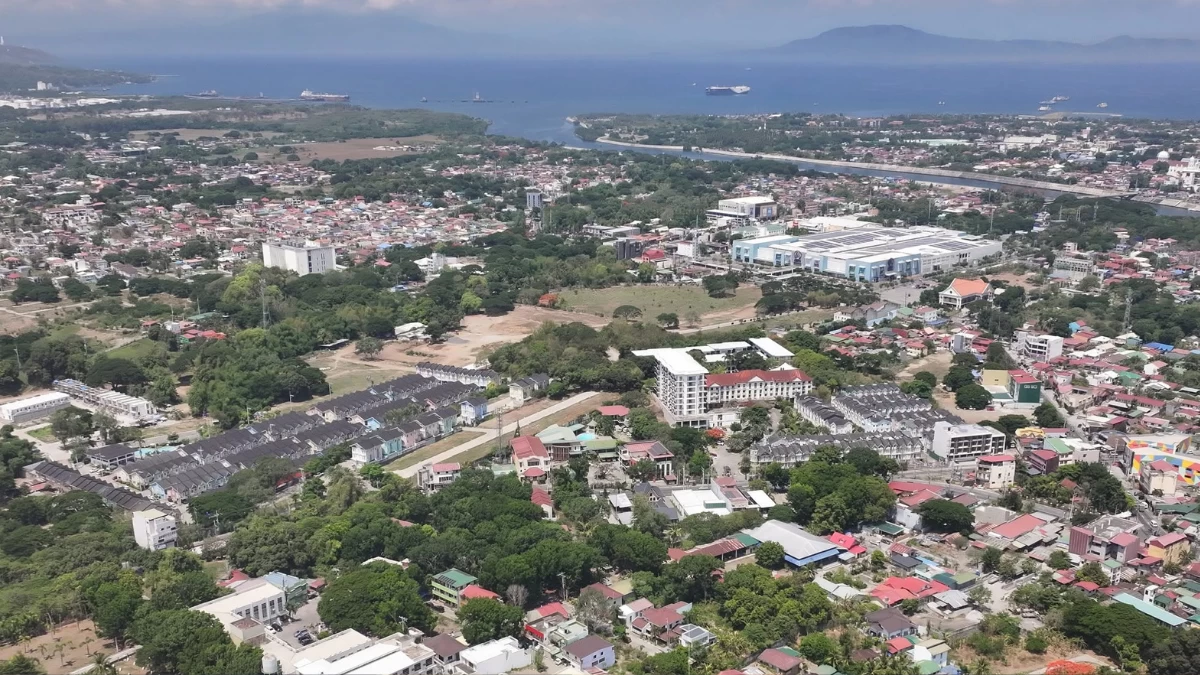
Batangas City, one of the Digital Cities designated by the Dept. of Information Technology and Communications (Photo: Pontefino Estates)
For 2028, the Information Technology and Business Process Management (IT-BPM) sector is expected to continue expanding steadily, with projections suggesting revenue targets between $43.3 billion and $50.5 billion annually, and the workforce could reach around 2.14 million employees, according to the IT and Business Process Association of the Philippines.
The IT-BPM sector continues to play a significant role in the Philippine economy, contributing an estimated 8 percent of the national GDP. Even as global outsourcing evolves, the country continues to benefit from its reputation for service quality, strong communication skills, and cultural compatibility with Western markets.
As one of the country’s leading economic contributors, the BPO and IT-BPM sectors generate significant employment opportunities and stimulate the real estate sector by driving demand for office space requirements.
The sector’s expansion is aligned to the Digital Cities program, a strategic initiative by the Department of Information and Communications Technology (DICT) to decentralize economic growth by transforming countryside locations into thriving hubs for the Information Technology and Business Process Management (IT-BPM) industry.
In its 2025 list, the DICT identified 25 high-growth locations nationwide that ranked highly on a four-point evaluation system that included factors such as talent availability, infrastructure, cost-effectiveness, and business environment. The program adds cities through periodic recognition cycles beyond the original list established in 2020, backed by a longer-term government roadmap through 2028.
Sheila Lobien, CEO of Lobien Realty Group (Photo: Carla Mortel)
In its mid-year property market outlook, Lobien Realty Group reported that “active BPO and IT-BMP demand is moving toward DICT-designated Digital Cities. These emerging municipalities offer competitive setups, tax incentives, and highly capable provincial talent pools.”
For Shiela Lobien, CEO of Lobien Realty Group, the movement towards Digital Cities signals a structural change. “Metro Manila and leading digital cities are moving in opposite directions. The capital region’s vacancy rate remains elevated, having risen sharply during the POGO fallout, though prime districts like Makati and BGC have remained comparatively resilient, while secondary submarkets lag. In contrast, several digital cities are seeing vacancy tighten, shifting leverage towards landlords in those markets.”
Several events proved to be catalysts for the shift to Digital Cities among IT-BPM companies, as cited by Lobien. “The pandemic proved service delivery doesn't require a single centralized office, weakening the case for Metro Manila concentration. The 2024 POGO shutdown then removed a significant volume of office demand almost overnight, pushing Metro Manila vacancy to one of its highest levels in decades. Add ongoing macroeconomic uncertainty and caution from global clients following the Iran conflict, and companies are now prioritizing cost stability and lower risk exposure.”
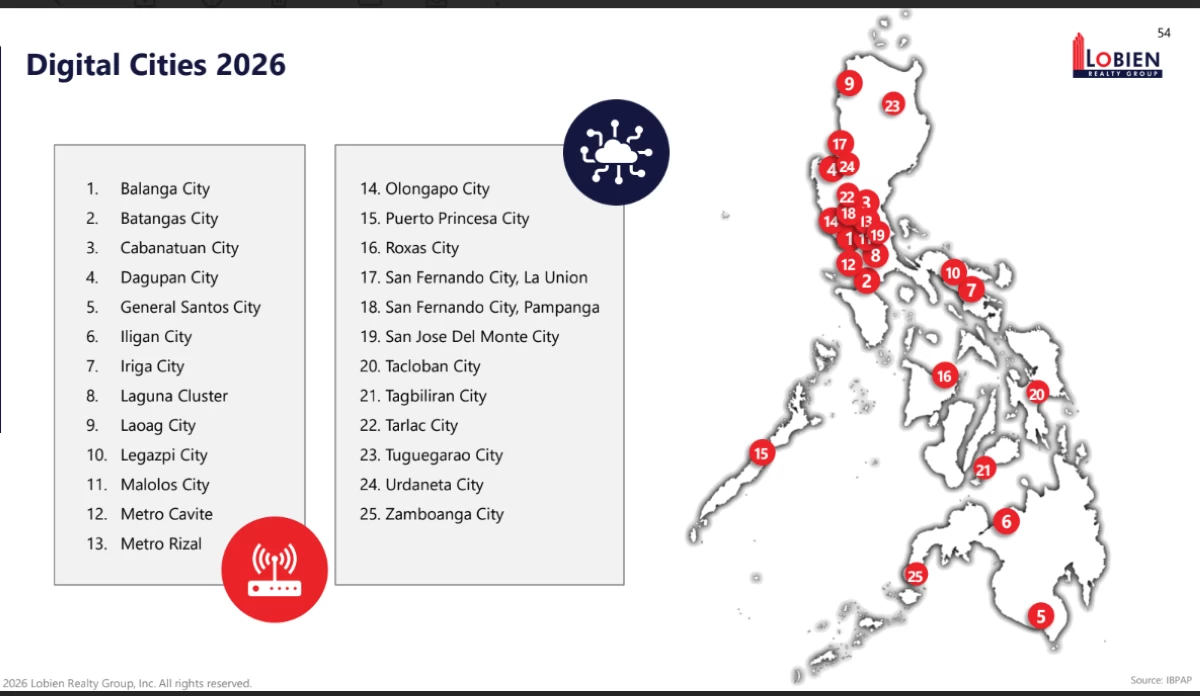
Digital Cities list (Image: Lobien Realty Group)
In Digital Cities, IT-BPM companies can benefit from lower operating costs, local talent pools, and business support. Lobien added that there is no POGO-related oversupply and that legal support under CREATE MORE formally permits hybrid and work-from-home arrangements while preserving tax incentives.
To capitalize on the shift, Lobien encourages developers to prioritize incentive-registered office space, alongside hybrid-ready, flexible floor plates and residential components that capture housing demand as jobs grow in the region.
“Investors can benefit from lower entry costs and tightening vacancy versus a Metro Manila market still absorbing the POGO shock, with government backing reducing (not eliminating) risk. Shared services and global capability centers are a high-growth segment worth early positioning. At the same time, buyers can leverage affordability arbitrage, prices and rents well below Metro Manila, with values historically appreciating once local employment scales,” Lobien said.
Since the sector has lowered its own 2028 growth targets and corporate decisions have slowed considerably due to AI disruption, rising global competition, and geopolitical uncertainty, Lobien also cautioned buyers to take discipline in city selection and timelines seriously.
Given these circumstances, Lobien remains optimistic about Digital Cities' upward trajectory. “Continued pressure on Metro Manila, from pandemic-driven shifts, the POGO exit, and cautious global clients amid macro- and geopolitical uncertainty, reinforces the case for expanding recognized alternatives. However, growth will not be evenly distributed. With the industry's own long-term targets revised downward due to AI adoption and rising competition, capital and hiring will likely concentrate in proven performers rather than spread quickly across new entrants. Expect the Digital Cities list to broaden in name faster than in actual investment, at least in the near term.”