

ADVERTISEMENT

SciCommPH urges review before Pax Silica deal, saying 'No terms, no commitment'

Published Aug 4, 2026 10:06 am  |  Updated Aug 4, 2026 08:49 am
“If the 20th century ran on oil and steel, the 21st century runs on computers and the minerals that feed it,” said Jacob Helberg, the American undersecretary of State for Economic Affairs.
The statement reflects the rationale behind the United States’ Pax Silica Initiative, an international coalition launched in December 2025 to secure supply chains for artificial intelligence (AI), semiconductors, and critical minerals.
Its primary objective is to reduce technological dependence on China, which reportedly controls about 90 percent of essential rare earth materials.
The initiative derives its name from the Latin word pax, meaning peace or stability, and silica, the material used in silicon chips. Modeled after historic concepts such as Pax Americana, it envisions stability through technological leadership.
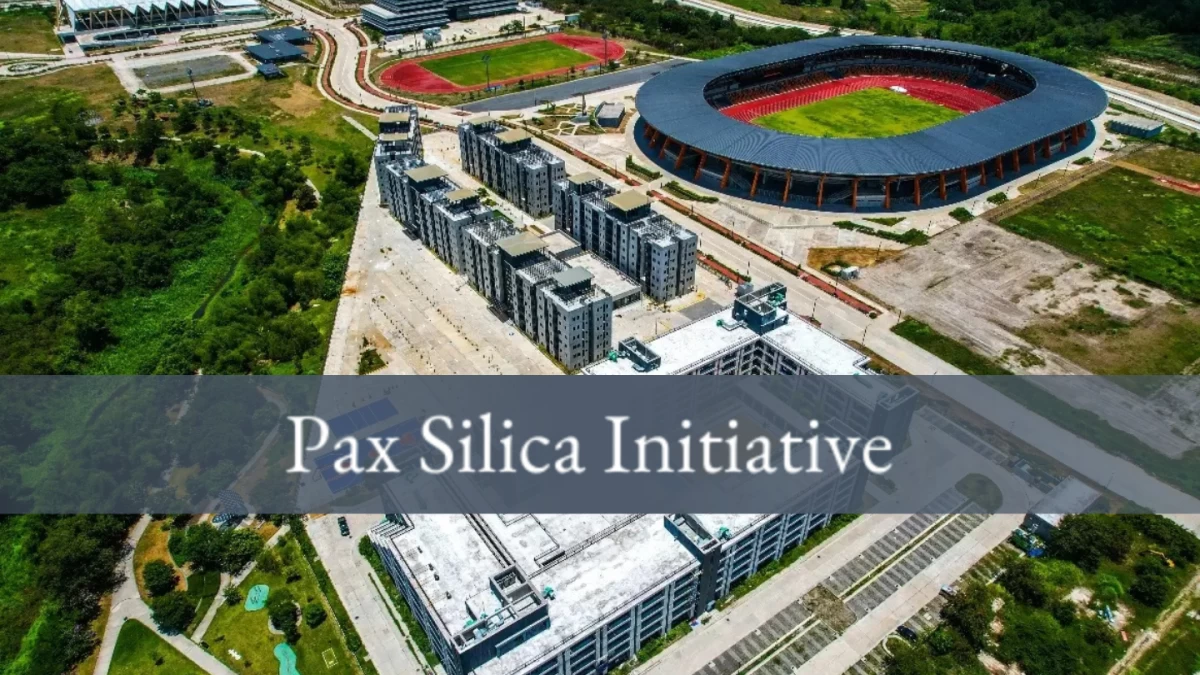
On April 16, the United States and the Philippines announced plans to establish a 4,000-acre Economic Security Zone within the Luzon Economic Corridor. The zone is expected to become the first AI-native industrial acceleration hub under the Pax Silica Initiative, aimed at strengthening supply chains for semiconductors, critical minerals, and advanced manufacturing.
Original members include the United States, Japan, South Korea, Singapore, the United Kingdom, Israel, the United Arab Emirates, and Australia. Finland, Sweden, Qatar, and India joined later.
The Philippines’ participation has been welcomed as an opportunity to advance semiconductor manufacturing, AI development, and scientific collaboration.
Science Communicators Philippines (SciCommPH), however, stressed that the project’s success will depend on transparency and sound governance.
“If properly planned and governed, the proposed Pax Silica industrial hub in New Clark City stands to generate quality jobs, strengthen Philippine research and industry, retain Filipino scientific and engineering talent, and help the country move beyond exporting raw materials and performing lower-value work,” the group said.
While supporting technology, industrialization, and international collaboration, SciCommPH said it could not endorse the initiative while its essential terms remain undisclosed.
“Our position and recommendation for the country is unequivocal: No terms, no commitment.”
The group acknowledged projections that the initiative could attract as much as US$70 billion in investments and create up to 190,000 direct jobs in semiconductor manufacturing, critical-mineral processing, AI infrastructure, energy, logistics, research, and related industries.
However, it said publicly available data have not supported these projections.
“A project of this scale cannot be judged on promises alone,” the group said, noting that the final agreement, confirmed investors, site plans, environmental studies, infrastructure requirements, and key legal and financial terms have yet to be disclosed.
Before any agreement is signed, SciCommPH urged the government to conduct an independent, science-based assessment covering manufacturing, mineral processing, data centers, power generation, water systems, transportation, housing, land conversion, and waste management.
The evaluation, it added, should examine the full life cycle of materials and technologies, from mineral extraction to disposal, and be subjected to independent review by experts from academia, industry, civil society, and government.
“Scientific assessment must shape the agreement; it cannot be treated as post-agreement paperwork. General assurances are not enough.”
Government projections indicate that the hub could require about three gigawatts of power and 65 million to 90 million liters of water daily.
SciCommPH said the public deserves to know where these resources will come from and whether the project could affect electricity prices, water supply, agriculture, or surrounding ecosystems. It also called for the disclosure of plans for managing industrial wastewater, hazardous chemicals, emissions, and waste.
The group further maintained that any Pax Silica agreement must remain fully governed by Philippine law, including environmental, labor, taxation, public health, data protection laws, and national security regulations. It also sought public disclosure of lease arrangements, incentives, ownership structures, dispute-resolution mechanisms, cybersecurity rules, and other major contractual provisions.

Related Tags

Pax Silica Artificial Intelligence SciCommPH
ADVERTISEMENT
.most-popular .layout-ratio{ padding-bottom: 79.13%; } @media (min-width: 768px) and (max-width: 1024px) { .widget-title { font-size: 15px !important; } }

{{ articles_filter_1561_widget.title }}

.most-popular .layout-ratio{ padding-bottom: 79.13%; } @media (min-width: 768px) and (max-width: 1024px) { .widget-title { font-size: 15px !important; } }

{{ static_articles_1562_widget.title }}

.most-popular .layout-ratio{ padding-bottom: 79.13%; } @media (min-width: 768px) and (max-width: 1024px) { .widget-title { font-size: 15px !important; } }

{{ articles_filter_1563_widget.title }}

{{ articles_filter_1564_widget.title }}

.mb-article-details { position: relative; } .mb-article-details .article-body-preview, .mb-article-details .article-body-summary{ font-size: 17px; line-height: 30px; font-family: "Libre Caslon Text", serif; color: #000; } .mb-article-details .article-body-preview iframe , .mb-article-details .article-body-summary iframe{ width: 100%; margin: auto; } .read-more-background { background: linear-gradient(180deg, color(display-p3 1.000 1.000 1.000 / 0) 13.75%, color(display-p3 1.000 1.000 1.000 / 0.8) 30.79%, color(display-p3 1.000 1.000 1.000) 72.5%); position: absolute; height: 200px; width: 100%; bottom: 0; display: flex; justify-content: center; align-items: center; padding: 0; } .read-more-background a{ color: #000; } .read-more-btn { padding: 17px 45px; font-family: Inter; font-weight: 700; font-size: 18px; line-height: 16px; text-align: center; vertical-align: middle; border: 1px solid black; background-color: white; } .hidden { display: none; }
function initializeAllSwipers() { // Get all hidden inputs with cms_article_id document.querySelectorAll('[id^="cms_article_id_"]').forEach(function (input) { const cmsArticleId = input.value; const articleSelector = '#article-' + cmsArticleId + ' .body_images'; const swiperElement = document.querySelector(articleSelector); if (swiperElement && !swiperElement.classList.contains('swiper-initialized')) { new Swiper(articleSelector, { loop: true, pagination: false, navigation: { nextEl: '#article-' + cmsArticleId + ' .swiper-button-next', prevEl: '#article-' + cmsArticleId + ' .swiper-button-prev', }, }); } }); } setTimeout(initializeAllSwipers, 3000); const intersectionObserver = new IntersectionObserver( (entries) => { entries.forEach((entry) => { if (entry.isIntersecting) { const newUrl = entry.target.getAttribute("data-url"); if (newUrl) { history.pushState(null, null, newUrl); let article = entry.target; // Extract metadata const author = article.querySelector('.author-section').textContent.replace('By', '').trim(); const section = article.querySelector('.section-info ').textContent.replace(' ', ' '); const title = article.querySelector('.article-title h1').textContent; // Parse URL for Chartbeat path format const parsedUrl = new URL(newUrl, window.location.origin); const cleanUrl = parsedUrl.host + parsedUrl.pathname; // Update Chartbeat configuration if (typeof window._sf_async_config !== 'undefined') { window._sf_async_config.path = cleanUrl; window._sf_async_config.sections = section; window._sf_async_config.authors = author; } // Track virtual page view with Chartbeat if (typeof pSUPERFLY !== 'undefined' && typeof pSUPERFLY.virtualPage === 'function') { try { pSUPERFLY.virtualPage({ path: cleanUrl, title: title, sections: section, authors: author }); } catch (error) { console.error('ping error', error); } } // Optional: Update document title if (title && title !== document.title) { document.title = title; } } } }); }, { threshold: 0.1 } ); function showArticleBody(button) { const article = button.closest("article"); const summary = article.querySelector(".article-body-summary"); const body = article.querySelector(".article-body-preview"); const readMoreSection = article.querySelector(".read-more-background"); // Hide summary and read-more section summary.style.display = "none"; readMoreSection.style.display = "none"; // Show the full article body body.classList.remove("hidden"); } document.addEventListener("DOMContentLoaded", () => { let loadCount = 0; // Track how many times articles are loaded const offset = [1, 2, 3, 4, 5, 6, 7, 8, 9, 10]; // Offset values const currentUrl = window.location.pathname.substring(1); let isLoading = false; // Prevent multiple calls if (!currentUrl) { console.log("Current URL is invalid."); return; } const sentinel = document.getElementById("load-more-sentinel"); if (!sentinel) { console.log("Sentinel element not found."); return; } function isSentinelVisible() { const rect = sentinel.getBoundingClientRect(); return ( rect.top < window.innerHeight && rect.bottom >= 0 ); } function onScroll() { if (isLoading) return; if (isSentinelVisible()) { if (loadCount >= offset.length) { console.log("Maximum load attempts reached."); window.removeEventListener("scroll", onScroll); return; } isLoading = true; const currentOffset = offset[loadCount]; window.loadMoreItems().then(() => { let article = document.querySelector('#widget_1690 > div:nth-last-of-type(2) article'); intersectionObserver.observe(article) loadCount++; }).catch(error => { console.error("Error loading more items:", error); }).finally(() => { isLoading = false; }); } } window.addEventListener("scroll", onScroll); });

Sign up by email to receive news.