








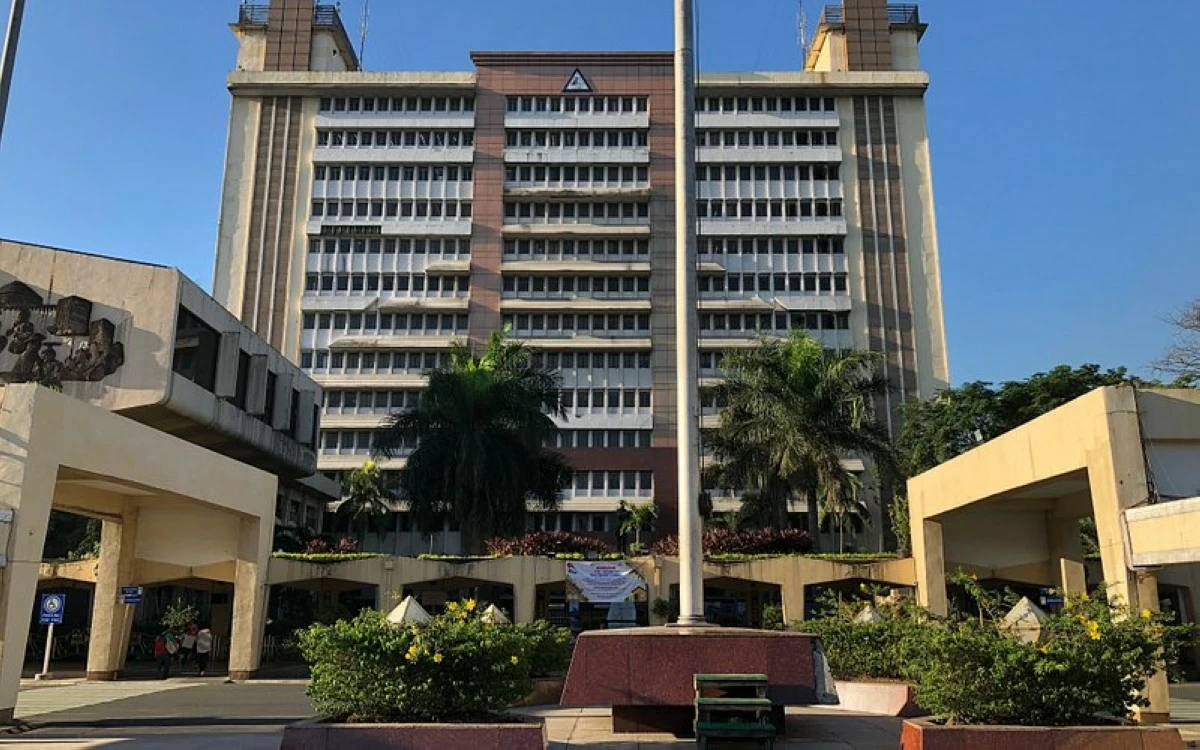
Quezon City Hall (Photo courtesy of the Quezon City government)
Quezon City has ordered billboard owners and advertisers to secure billboards and tarpaulins during storm alerts to avoid accidents.
The directive is contained in the Quezon City Billboard Weather Safety Ordinance (Ordinance No. SP-3515, S-2026), which seeks to protect lives, private property, and critical infrastructure from billboards and signage that may collapse, detach, or be blown away during strong winds, heavy rains, and other hazardous weather conditions.
The ordinance covers billboard and signage owners, operators, lessors, lessees, advertisers, and other persons or entities responsible for billboard installations, including those located on government-owned properties within the city.
Under the measure, covered billboards and signage must be secured, rolled down, removed, dismantled, or otherwise rendered safe once PAGASA or the Quezon City government issues weather advisories for tropical depressions, storms, typhoons, heavy rainfall, strong winds, or other hazardous conditions.
Billboard owners and operators are also urged to monitor official advisories from PAGASA, the Quezon City Disaster Risk Reduction and Management Office (QC DRRMO), and the Public Affairs and Information Services Department (PAISD) to ensure compliance.
Violators face escalating penalties, with a first offense punishable by a written warning and a ₱3,000 daily fine. A second offense carries a ₱4,000 daily fine and a 15-day suspension of the billboard or signage permit, while a third and succeeding offense carries a ₱5,000 daily fine and permit revocation.
The measure also authorizes the city government to remove or dismantle billboards and signage that pose an imminent danger during emergencies or calamities, with all costs charged to the owner, operator, or lessor.
Councilor Charm Ferrer, chairperson of the Committee on Micro, Small and Medium Business Entrepreneurship Development and Cooperatives, introduced the measure as part of Quezon City's push to boost disaster preparedness and cut risks in public spaces.