ADVERTISEMENT

PH History Month: Raising awareness on nation's future

Published Aug 4, 2026 12:05 am  |  Updated Aug 3, 2026 04:38 pm
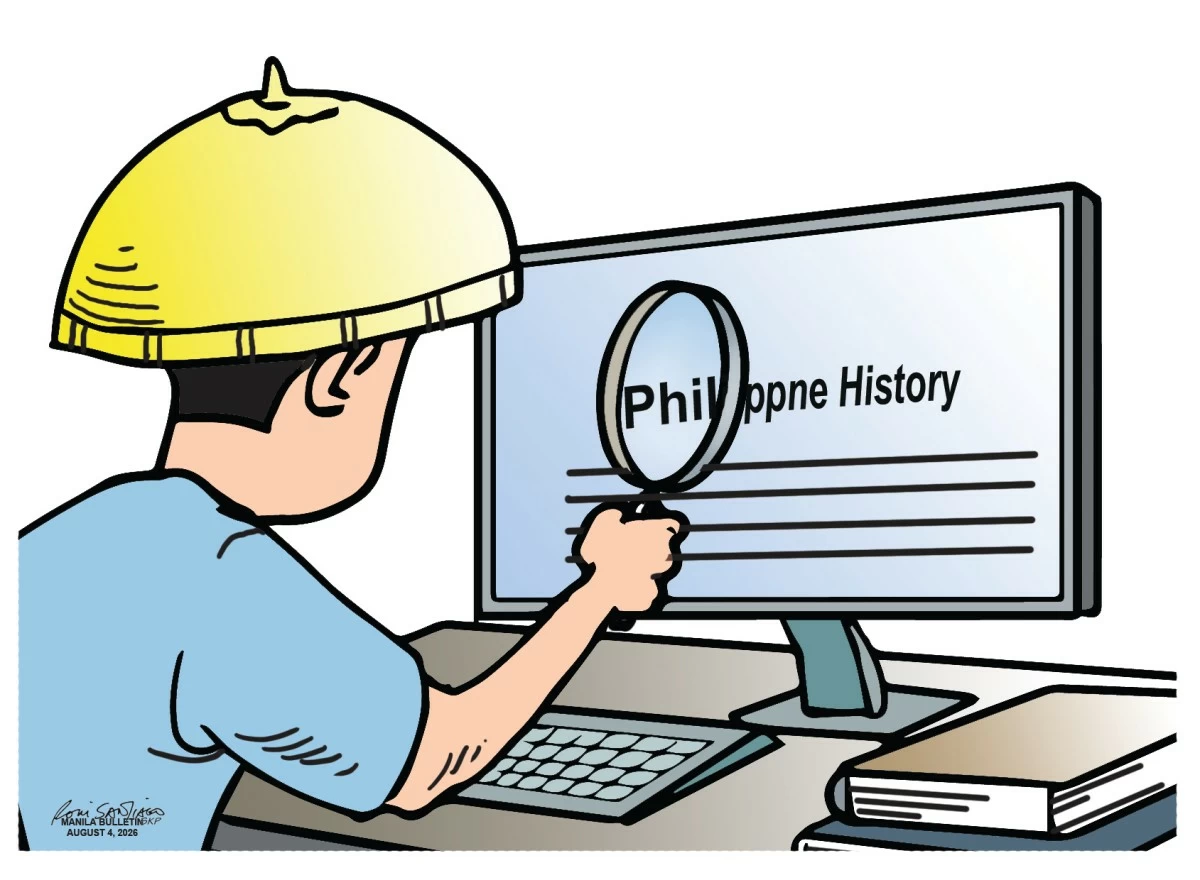
National History Month, observed every August, is more than a ceremonial remembrance of the nation’s past. It is an invitation for every Filipino to reflect on the enduring lessons of history and their relevance to the defining issues of our time. At a moment when disinformation proliferates, tensions persist in the West Philippine Sea, and the country begins looking toward the 2028 national elections, historical literacy has become an indispensable pillar of responsible citizenship.
History is the nation’s collective memory. It records not only the triumphs of heroes and the milestones of nationhood but also the difficult lessons learned through conflict, colonization, dictatorship, democratic restoration, and economic transformation. A people who understand their history are better equipped to distinguish truth from falsehood and to make informed decisions about their future.
The challenge today is that history itself has become a contested space. The digital revolution has democratized information, but it has also enabled the rapid spread of fabricated accounts, manipulated images, and misleading narratives that often blur the line between fact and opinion. Social media algorithms reward sensationalism over accuracy, while artificial intelligence has made it easier than ever to produce convincing but deceptive content. Historical revisionism, whether driven by politics or ideology, thrives when citizens lose the habit of verifying facts and consulting credible sources.
This makes National History Month especially relevant. Historical literacy is no longer simply an academic pursuit; it has become a civic necessity. Filipinos must be able to evaluate competing narratives with discernment, recognizing that democracy flourishes only when public debate rests on truth rather than distortion.
This imperative extends to the country’s continuing assertion of its sovereign rights in the West Philippine Sea. The Philippines’ position is anchored not merely on contemporary diplomacy but on decades of international law, documented historical records, and the landmark 2016 Arbitral Award, whose legal significance remains a cornerstone of Philippine foreign policy. Appreciating the historical context behind these developments helps citizens understand that defending national sovereignty is neither a partisan cause nor a fleeting political issue. It is a continuing national responsibility that transcends administrations and generations.
Historical awareness likewise assumes greater importance as political attention gradually shifts toward the 2028 elections. Campaigns are increasingly fought not only through traditional platforms but also in the digital arena, where narratives can be manufactured, amplified, and manipulated within hours. Voters who possess a firm grasp of history are less vulnerable to propaganda, personality cults, and simplistic promises. They are better able to judge leaders by their record, competence, integrity, and commitment to democratic institutions rather than by carefully crafted online personas.
The challenge before the nation is therefore not simply to commemorate history but to make it accessible and meaningful. Schools must emphasize critical thinking alongside historical knowledge. Government agencies, museums, libraries, and archives should continue modernizing access to historical resources. The media must remain steadfast in fact-checking and contextual reporting. Families and communities, too, play a vital role by passing on stories of sacrifice, resilience, and civic responsibility that shape national identity.
National History Month reminds us that the past is never truly behind us. It continues to inform the choices we make, the values we uphold, and the future we seek to build. In an age of disinformation, geopolitical uncertainty, and heightened political rivalry, history serves as our moral compass. By safeguarding historical truth and nurturing an informed citizenry, Filipinos strengthen not only their appreciation of the past but also the foundations of democracy, national sovereignty, and shared prosperity.
ADVERTISEMENT
.most-popular .layout-ratio{ padding-bottom: 79.13%; } @media (min-width: 768px) and (max-width: 1024px) { .widget-title { font-size: 15px !important; } }

{{ articles_filter_1561_widget.title }}

.most-popular .layout-ratio{ padding-bottom: 79.13%; } @media (min-width: 768px) and (max-width: 1024px) { .widget-title { font-size: 15px !important; } }

{{ static_articles_1562_widget.title }}

.most-popular .layout-ratio{ padding-bottom: 79.13%; } @media (min-width: 768px) and (max-width: 1024px) { .widget-title { font-size: 15px !important; } }

{{ articles_filter_1563_widget.title }}

{{ articles_filter_1564_widget.title }}

.mb-article-details { position: relative; } .mb-article-details .article-body-preview, .mb-article-details .article-body-summary{ font-size: 17px; line-height: 30px; font-family: "Libre Caslon Text", serif; color: #000; } .mb-article-details .article-body-preview iframe , .mb-article-details .article-body-summary iframe{ width: 100%; margin: auto; } .read-more-background { background: linear-gradient(180deg, color(display-p3 1.000 1.000 1.000 / 0) 13.75%, color(display-p3 1.000 1.000 1.000 / 0.8) 30.79%, color(display-p3 1.000 1.000 1.000) 72.5%); position: absolute; height: 200px; width: 100%; bottom: 0; display: flex; justify-content: center; align-items: center; padding: 0; } .read-more-background a{ color: #000; } .read-more-btn { padding: 17px 45px; font-family: Inter; font-weight: 700; font-size: 18px; line-height: 16px; text-align: center; vertical-align: middle; border: 1px solid black; background-color: white; } .hidden { display: none; }
function initializeAllSwipers() { // Get all hidden inputs with cms_article_id document.querySelectorAll('[id^="cms_article_id_"]').forEach(function (input) { const cmsArticleId = input.value; const articleSelector = '#article-' + cmsArticleId + ' .body_images'; const swiperElement = document.querySelector(articleSelector); if (swiperElement && !swiperElement.classList.contains('swiper-initialized')) { new Swiper(articleSelector, { loop: true, pagination: false, navigation: { nextEl: '#article-' + cmsArticleId + ' .swiper-button-next', prevEl: '#article-' + cmsArticleId + ' .swiper-button-prev', }, }); } }); } setTimeout(initializeAllSwipers, 3000); const intersectionObserver = new IntersectionObserver( (entries) => { entries.forEach((entry) => { if (entry.isIntersecting) { const newUrl = entry.target.getAttribute("data-url"); if (newUrl) { history.pushState(null, null, newUrl); let article = entry.target; // Extract metadata const author = article.querySelector('.author-section').textContent.replace('By', '').trim(); const section = article.querySelector('.section-info ').textContent.replace(' ', ' '); const title = article.querySelector('.article-title h1').textContent; // Parse URL for Chartbeat path format const parsedUrl = new URL(newUrl, window.location.origin); const cleanUrl = parsedUrl.host + parsedUrl.pathname; // Update Chartbeat configuration if (typeof window._sf_async_config !== 'undefined') { window._sf_async_config.path = cleanUrl; window._sf_async_config.sections = section; window._sf_async_config.authors = author; } // Track virtual page view with Chartbeat if (typeof pSUPERFLY !== 'undefined' && typeof pSUPERFLY.virtualPage === 'function') { try { pSUPERFLY.virtualPage({ path: cleanUrl, title: title, sections: section, authors: author }); } catch (error) { console.error('ping error', error); } } // Optional: Update document title if (title && title !== document.title) { document.title = title; } } } }); }, { threshold: 0.1 } ); function showArticleBody(button) { const article = button.closest("article"); const summary = article.querySelector(".article-body-summary"); const body = article.querySelector(".article-body-preview"); const readMoreSection = article.querySelector(".read-more-background"); // Hide summary and read-more section summary.style.display = "none"; readMoreSection.style.display = "none"; // Show the full article body body.classList.remove("hidden"); } document.addEventListener("DOMContentLoaded", () => { let loadCount = 0; // Track how many times articles are loaded const offset = [1, 2, 3, 4, 5, 6, 7, 8, 9, 10]; // Offset values const currentUrl = window.location.pathname.substring(1); let isLoading = false; // Prevent multiple calls if (!currentUrl) { console.log("Current URL is invalid."); return; } const sentinel = document.getElementById("load-more-sentinel"); if (!sentinel) { console.log("Sentinel element not found."); return; } function isSentinelVisible() { const rect = sentinel.getBoundingClientRect(); return ( rect.top < window.innerHeight && rect.bottom >= 0 ); } function onScroll() { if (isLoading) return; if (isSentinelVisible()) { if (loadCount >= offset.length) { console.log("Maximum load attempts reached."); window.removeEventListener("scroll", onScroll); return; } isLoading = true; const currentOffset = offset[loadCount]; window.loadMoreItems().then(() => { let article = document.querySelector('#widget_1690 > div:nth-last-of-type(2) article'); intersectionObserver.observe(article) loadCount++; }).catch(error => { console.error("Error loading more items:", error); }).finally(() => { isLoading = false; }); } } window.addEventListener("scroll", onScroll); });

Sign up by email to receive news.