






Manila Bulletin
 Philippines
National
'Parang Napoles': Prosecutors in VP Duterte trial slam 'confidential funds scam'
Philippines
National
'Parang Napoles': Prosecutors in VP Duterte trial slam 'confidential funds scam'
Philippines
National
'Parang Napoles': Prosecutors in VP Duterte trial slam 'confidential funds scam'
'Parang Napoles': Prosecutors in VP Duterte trial slam 'confidential funds scam'
Published Aug 4, 2026 06:17 pm


At A Glance
- Prosecutors Lorna Kapunan and Rep. Terry Ridon argue that the OVP and DepEd's alleged misuse of P612.5 million in confidential funds under Vice President Sara Duterte constitutes a scam comparable to past corruption scandals like the Napoles PDAF case.
- Audit findings reveal discrepancies including ghost beneficiaries, dubious names, missing receipts, and unsupported expenses, with prosecutors stressing that repeated misallocation of funds amounts to deception and misuse.
- COA auditor Roderick Wamil testifies that the OVP and DepEd failed to provide documentary evidence for several payments, while Ridon notes that rewards, medicines, and supplies charged to confidential funds were disallowed by COA.
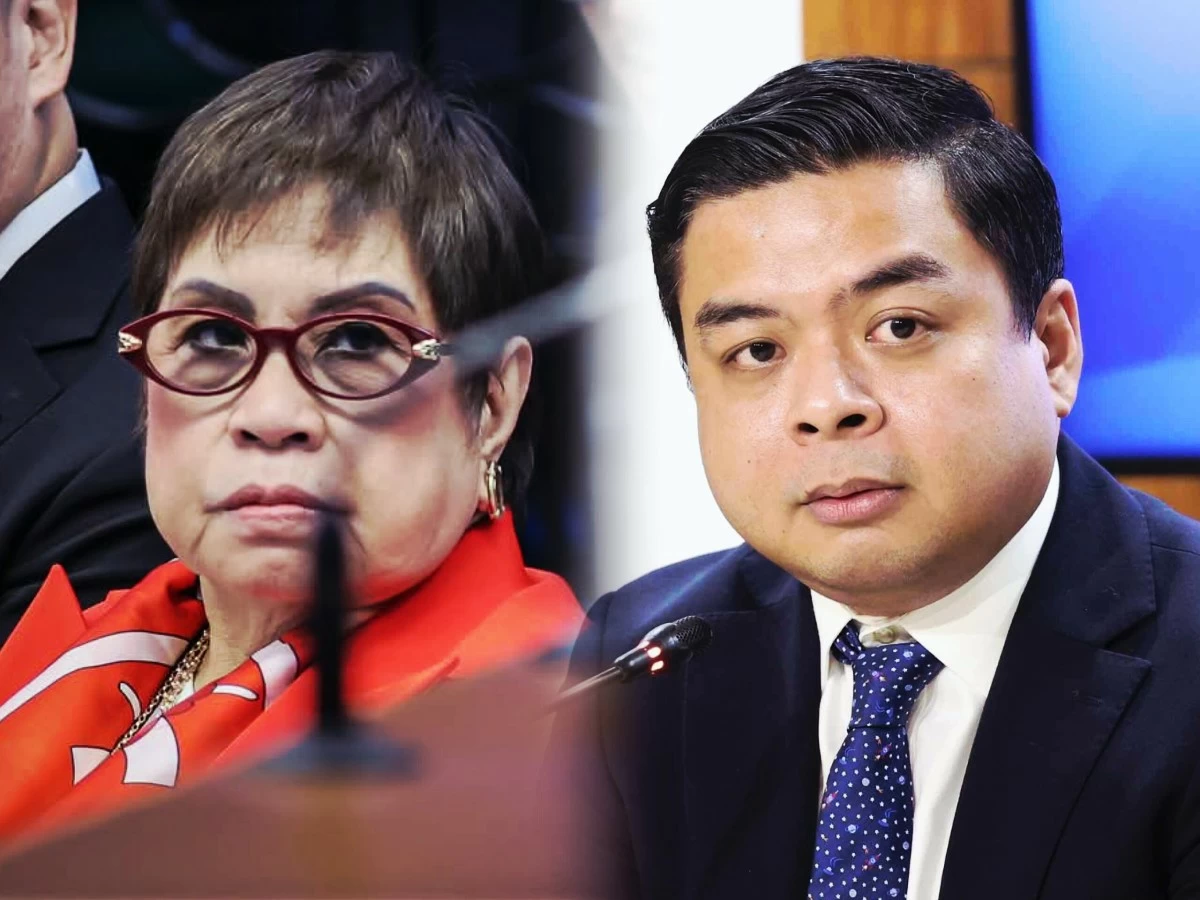
Lawyer Lorna Kapunan (left), Bicol Saro Party-list Rep. Terry Ridon (Senate PRIB, House PPAB)
The Office of the Vice President (OVP) and Department of Education's (DepEd) questionable use of its P612.5-million confidential funds under Vice President Sara Duterte is a scam similar to the multi-million peso corruption scandals in the country's history.
Private prosecutor Lorna Kapunan and solon-prosecutor Bicol Saro Party-list Rep. Terry Ridon gave this assessment Tuesday, Aug. 4 on the sidelines of day 12 of respondent Duterte's Senate impeachment trial.
The prosecution team is currently tackling article I of the articles of impeachment, which alleges that offices under Duterte's control misused P612.5 million worth of confidential funds--P500 million from the OVP and P112.5 million from DepEd. Duterte served as education secretary from 2022 to 2024.
“Ang ini-scam, eh taong-bayan. Ang worth ng scam na ’yan ay P612 million (The public is being scammed. That scam is worth P612 million),” Kapunan told reporters at the Senate.
“Pag humingi ka sa nanay mo, ‘Mommy, pengeng P5,000, bibili ako ng libro.’ Hindi mo ginamit para sa libro. Ginamit mo, bibili ka ng makeup o nag-date ka. Anong tawag doon? In-scam mo nanay mo,” she said.
(If you ask your mom, ‘Mommy, can I have P5,000 to buy a book,’ but you don’t use it for the book. You use it to buy makeup or go on a date. What do you call that? You scammed your mom.)
Ridon agreed with this take. "Tama po si Atty. Kapunan kanina (Atty. Kapunan os correct). This is a scam. This is a scam similar to the agricultural fund scam, it is similar to the Napoles [pork barrel] scam."
"At alam po natin yung naging ending doon. May mga nakulong po doon, may mga napanagot po doon," he said.
(And we know how that ended. Some people were arrested and held accountable there.)
Akin to Napoles scam
"We can state today na ito po ay katulad ng Napoles-PDAF (Priority Development Assistance Fund) scam...ghost NGOs (non-governmental organizations), ghost beneficiaries, malalaking pera na hindi ho natin nalaman kung saan po napunta. Ganun din po yung nangyari po dito. Malalaking encashments ng pera, P125 million," Ridon said.
(We can state today that this is similar to the Napoles-PDAF scam…ghost NGOs, ghost beneficiaries, large amounts of money that we did not know where it went. The same thing happened here. Large encashments of money, P125 million.)
The lawyer-legislator also pointed out that confidential funds supposedly given to dubious-sounding names like Mary Grace Piattos have yet to be properly liquidated.
"At ano yung sinabi kanina sa pagdinig? Pagka hindi po tama yung liquidation, there is a prima facie view na ito po ay pinera noon pong mga involved po na matataas na opisyal, head of agency katulad po ni Pangalawang Pangulong Sara Duterte at yung kanya pong mga kasama sa OVP," said Ridon.
(What was said earlier in the hearing? If the liquidation is not correct, there is a prima facie view that the money was pocketed by those involved, the high-ranking officials, the head of the agency such as Vice President Sara Duterte and her colleagues in the OVP.)
Kapunan said repeatedly spending money for purposes different from those declared amounted to deception.
“Pag paulit-ulit-ulit ’yan, at hindi mo ginamit ang pera na sinabi mong gagamitin, eh ang tawag doon scam,” she said.
(If that keeps happening, and you don’t use the money for what you said you would, that’s called a scam.)
COA witness
Prosecution witness, Commission on Audit (COA) auditor Roderick Wamil continued his testimony on Tuesday regarding the OVP and DepEd's usage of the secret funds. Numerous discrepancies were found during audit.
Kapunan said the central issue was not the aliases or names appearing in acknowledgment receipts (AR) but whether the money was properly accounted for and supported by evidence.
“Hindi naman tayo nag-e-emphasize ng pangalan. Ang pino-point out natin ’yung amount at kung saan ginamit. Walang resibo,” she said.
(We are not emphasizing names. What we are pointing out is the amount and where it was used. There are no receipts.)
“Kahit sinong pangalan ’yan, saan ginamit? Ano ang ebidensya na ginamit sa medicines? Ano ang ebidensya na ginamit sa supplies? Ano ang ebidensya na ginamit sa safe house?” Kapunan asked.
(Whatever the name is, where was it used? What is the evidence it was used for medicines? What is the evidence it was used for supplies? What is the evidence it was used for a safe house?)
Wamil testified that the OVP and DepEd failed to submit documentary evidence supporting several confidential fund payments for the first two quarters of 2023.
Refering to the auditor's remarks, Ridon said: "Nakita po natin yung maling pattern ng paggamit, yun pong mga pekeng mga pangalan. Nakita po natin na yung pong pera, hindi po ginamit para sa confidential expenses. Hindi po nila maipakita yung mga confidential activities po ng pondong ito."
(We saw the wrong pattern of usage, the fake names. We saw that the money was not used for confidential expenses. They could not show the confidential activities for which these funds were intended.)
"Nakita po natin na yun pong mga rewards/ cash rewards/ medicines rewards/ various supplies ay hindi po pinayagan ng [COA]," he noted.
(We saw that the rewards, cash rewards, medicines rewards, and various supplies were not allowed by the COA.)