

ADVERTISEMENT

What needs to be asked about VP Duterte confidential funds? Barbers, Ortega sound off

Published Aug 3, 2026 01:58 am

At A Glance

  • The impeachment case against Vice President Sara Duterte turns to the issue on alleged misuse of ₱612.5 million in confidential funds, with former LandBank managers testifying that the transactions were unprecedented and released entirely in cash.
  • House impeachment adviser Robert Ace Barbers and Deputy Speaker Paolo Ortega stress that evidence must show real recipients, operations, and results, warning that confidentiality cannot justify fabricated informants or ghost operations.
  • Ortega emphasizes that liquidation papers alone are insufficient, underscoring that the proceedings aim to determine whether actual intelligence activities corresponded to the funds spent.
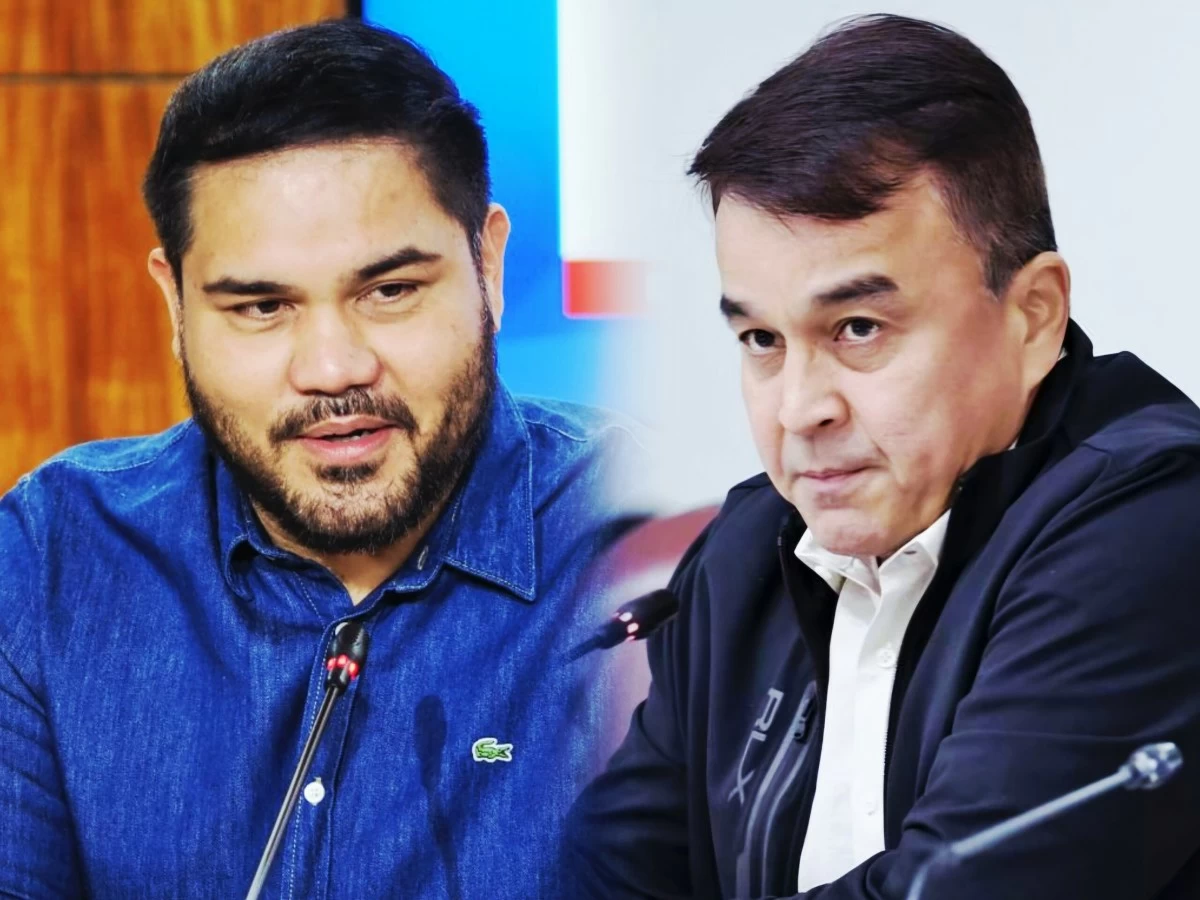
Deputy Speaker La Union 1st district Rep. Paolo Ortega V (left), House impeachment adviser Robert Ace Barbers (PPAB)


The litigation on article I covering confidential funds misuse on the part of impeachment trial respondent Vice President Sara Duterte could be a long and complicated one.
But for House impeachment adviser Robert Ace Barbers and impeachment case complainant Deputy Speaker La Union 1st district Rep. Paolo Ortega V, the viewing public need only to focus on these simple questions: "Where did the confidential funds go, and who benefited from it?"
Last week, two former Land Bank of the Philippines (LandBank) branch managers testified in the Senate impeachment trial regarding the encashment of treasury checks from the Office of the Vice President (OVP) and Department of Education (DepEd) totaling P612.5 million.
They described the transactions as unusual and unprecedented in their decades of banking experience.
“Kapag naging cash na ang pera, natatapos ang bank trail. Ang tanong ay kung sino ang huling tumanggap at kung saan napunta ang pera,” Barbers said, alluding to the standards of a legitimate intelligence operation.
(When money becomes cash, the bank trail ends. The question is who ultimately received it and where it went.)
“Hindi sapat ang resibo o liquidation. Kailangang mapatunayan kung may totoong recipient, totoong operasyon at totoong resulta,” noted the former House quad-committee (quad-comm) overall chairman.
(Receipts or liquidation are not enough. It must be proven that there is a real recipient, a real operation, and a real result.)
Barbers, also a spokesperson of the prosecution panel, said confidentiality cannot be invoked by the respondent's camp in order to avoid accountability for the usage of such funds. “Ang confidentiality ay proteksyon sa totoong informant, hindi lisensya para mag-imbento ng informant."
(Confidentiality is protection for the real informant, not a license to invent an informant.)
He added that while the identities of legitimate confidential informants may be protected, the government must still be able to verify that the recipients, operations, and intelligence activities actually existed.
The House has long contended that many of the confidential fund recipients listed by OVP and DepEd are fabricated, with one "Mary Grace Piattos" being the most infamous.
Nothing wrong with confidential funds, but...
For his part, Ortega said: "There is nothing inherently wrong with confidential funds used for legitimate intelligence and security operations."
“But a legitimate purpose does not automatically prove that public money was properly spent. Maganda ang pangalan ng programa. Pero ang tanong: may totoong nakinabang ba?” he asked.
(The program has a good name. But the question is: did anyone truly benefit?)
According to the deputy speaker, the central issue is whether the expenditures correspond to actual confidential operations. “Were there actual informants? Were there actual operations? Were there actual intelligence outputs corresponding to the funds released?” he said, in the effort to guide the public.
Ortega emphasized that the impeachment proceedings exist precisely to answer those questions through evidence.
“Hindi natin sinasabing napatunayan na ang ghost operations. Ang sinasabi natin: iyan mismo ang dapat sagutin ng ebidensya,” he pointed out.
(We are not saying ghost operations have been proven. What we are saying is: that is exactly what evidence must answer.)
Ortega said liquidation documents alone do not automatically establish that public funds were lawfully and properly spent.
“The paper is easy to produce. Ang totoong benepisyaryo at totoong operasyon ang kailangang patunayan,” he added.
(The real beneficiaries and real operations must be proven.)

Related Tags

confidential funds IMPEACHMENT Sara Duterte Robert Ace Barbers Paolo Ortega
ADVERTISEMENT
.most-popular .layout-ratio{ padding-bottom: 79.13%; } @media (min-width: 768px) and (max-width: 1024px) { .widget-title { font-size: 15px !important; } }

{{ articles_filter_1561_widget.title }}

.most-popular .layout-ratio{ padding-bottom: 79.13%; } @media (min-width: 768px) and (max-width: 1024px) { .widget-title { font-size: 15px !important; } }

{{ static_articles_1562_widget.title }}

.most-popular .layout-ratio{ padding-bottom: 79.13%; } @media (min-width: 768px) and (max-width: 1024px) { .widget-title { font-size: 15px !important; } }

{{ articles_filter_1563_widget.title }}

{{ articles_filter_1564_widget.title }}

.mb-article-details { position: relative; } .mb-article-details .article-body-preview, .mb-article-details .article-body-summary{ font-size: 17px; line-height: 30px; font-family: "Libre Caslon Text", serif; color: #000; } .mb-article-details .article-body-preview iframe , .mb-article-details .article-body-summary iframe{ width: 100%; margin: auto; } .read-more-background { background: linear-gradient(180deg, color(display-p3 1.000 1.000 1.000 / 0) 13.75%, color(display-p3 1.000 1.000 1.000 / 0.8) 30.79%, color(display-p3 1.000 1.000 1.000) 72.5%); position: absolute; height: 200px; width: 100%; bottom: 0; display: flex; justify-content: center; align-items: center; padding: 0; } .read-more-background a{ color: #000; } .read-more-btn { padding: 17px 45px; font-family: Inter; font-weight: 700; font-size: 18px; line-height: 16px; text-align: center; vertical-align: middle; border: 1px solid black; background-color: white; } .hidden { display: none; }
function initializeAllSwipers() { // Get all hidden inputs with cms_article_id document.querySelectorAll('[id^="cms_article_id_"]').forEach(function (input) { const cmsArticleId = input.value; const articleSelector = '#article-' + cmsArticleId + ' .body_images'; const swiperElement = document.querySelector(articleSelector); if (swiperElement && !swiperElement.classList.contains('swiper-initialized')) { new Swiper(articleSelector, { loop: true, pagination: false, navigation: { nextEl: '#article-' + cmsArticleId + ' .swiper-button-next', prevEl: '#article-' + cmsArticleId + ' .swiper-button-prev', }, }); } }); } setTimeout(initializeAllSwipers, 3000); const intersectionObserver = new IntersectionObserver( (entries) => { entries.forEach((entry) => { if (entry.isIntersecting) { const newUrl = entry.target.getAttribute("data-url"); if (newUrl) { history.pushState(null, null, newUrl); let article = entry.target; // Extract metadata const author = article.querySelector('.author-section').textContent.replace('By', '').trim(); const section = article.querySelector('.section-info ').textContent.replace(' ', ' '); const title = article.querySelector('.article-title h1').textContent; // Parse URL for Chartbeat path format const parsedUrl = new URL(newUrl, window.location.origin); const cleanUrl = parsedUrl.host + parsedUrl.pathname; // Update Chartbeat configuration if (typeof window._sf_async_config !== 'undefined') { window._sf_async_config.path = cleanUrl; window._sf_async_config.sections = section; window._sf_async_config.authors = author; } // Track virtual page view with Chartbeat if (typeof pSUPERFLY !== 'undefined' && typeof pSUPERFLY.virtualPage === 'function') { try { pSUPERFLY.virtualPage({ path: cleanUrl, title: title, sections: section, authors: author }); } catch (error) { console.error('ping error', error); } } // Optional: Update document title if (title && title !== document.title) { document.title = title; } } } }); }, { threshold: 0.1 } ); function showArticleBody(button) { const article = button.closest("article"); const summary = article.querySelector(".article-body-summary"); const body = article.querySelector(".article-body-preview"); const readMoreSection = article.querySelector(".read-more-background"); // Hide summary and read-more section summary.style.display = "none"; readMoreSection.style.display = "none"; // Show the full article body body.classList.remove("hidden"); } document.addEventListener("DOMContentLoaded", () => { let loadCount = 0; // Track how many times articles are loaded const offset = [1, 2, 3, 4, 5, 6, 7, 8, 9, 10]; // Offset values const currentUrl = window.location.pathname.substring(1); let isLoading = false; // Prevent multiple calls if (!currentUrl) { console.log("Current URL is invalid."); return; } const sentinel = document.getElementById("load-more-sentinel"); if (!sentinel) { console.log("Sentinel element not found."); return; } function isSentinelVisible() { const rect = sentinel.getBoundingClientRect(); return ( rect.top < window.innerHeight && rect.bottom >= 0 ); } function onScroll() { if (isLoading) return; if (isSentinelVisible()) { if (loadCount >= offset.length) { console.log("Maximum load attempts reached."); window.removeEventListener("scroll", onScroll); return; } isLoading = true; const currentOffset = offset[loadCount]; window.loadMoreItems().then(() => { let article = document.querySelector('#widget_1690 > div:nth-last-of-type(2) article'); intersectionObserver.observe(article) loadCount++; }).catch(error => { console.error("Error loading more items:", error); }).finally(() => { isLoading = false; }); } } window.addEventListener("scroll", onScroll); });

Sign up by email to receive news.