






Manila Bulletin
 Lifestyle
Arts and Culture
'Turning Tides' reexamines the Battle of Mactan and the Battles of La Naval de Manila
Lifestyle
Arts and Culture
'Turning Tides' reexamines the Battle of Mactan and the Battles of La Naval de Manila
Lifestyle
Arts and Culture
'Turning Tides' reexamines the Battle of Mactan and the Battles of La Naval de Manila
'Turning Tides' reexamines the Battle of Mactan and the Battles of La Naval de Manila
Charting the tides of PH history through Ayala Museum's new exhibition
By John Legaspi
Published Aug 3, 2026 05:05 pm


When we think of the Philippines' history, one of the defining moments that comes to mind is the Battle of Mactan. Portuguese explorer Ferdinand Magellan sailed in search of the Spice Islands and sought to spread Christianity under the Spanish crown.
In 1521, Magellan reached the Philippines, where he forged an alliance with Rajah Humabon of Cebu and converted many locals to Christianity. When he made his way to Mactan, the expedition took a dramatic turn. Refusing to submit to Spanish authority, Lapu-Lapu led his warriors in the Battle of Mactan, defeating Magellan's forces and killing the explorer.
Apart from the Battle of Mactan, another significant naval conflict took place in the waters around the Philippines. Dubbed the Battles of La Naval de Manila, it was a series of five naval battles fought in the waters of Manila Bay, the Corregidor/Mariveles entrance, and the southern islands. In 1646, Spanish-Filipino forces and the Dutch clashed, which ended with the Dutch failing to capture Manila.
These two defining moments in Philippine history are spotlighted in Ayala Museum's latest exhibition. Titled “Turning Tides,” it explores how these battles were not isolated episodes in Philippine history but part of broader regional and global currents of trade, faith, diplomacy, and conflict.
For two years, “Turning Tides” was developed through extensive research in collaboration with national cultural institutions, religious organizations, and lenders across the country. Leading the exhibition's development is curator Jei Ente, who highlighted how these maritime encounters also demonstrate shifting dynamics of power.
"These stories involve a fluid, two-way transfer of control, influence, and resources, rather than a static or one-sided command," Jei said during the exhibition's unveiling on July 15. "When we refer to primary sources or historical accounts of these events, it is always through the vantage point of either an empire, the State, or the Church. It seems as if the Filipinos were merely following the waves of change and historical events unfolding around them. This is something that we want to challenge and emphasize: They were very much active participants in their own stories."
What Jei and her team did was examine primary sources and historical traditions, interpreting them in numerous ways that pique the interest of museum visitors. “Turning Tides” aims to transport visitors to the 16th and 17th centuries by demonstrating how these worlds were shaped by movement across the seas, encounters between cultures, evolving faith traditions, and communities whose stories continue to resonate today.
The exhibit invites visitors to look beyond familiar narratives and recognize the people behind these events: their motivations, beliefs, alliances, and choices.
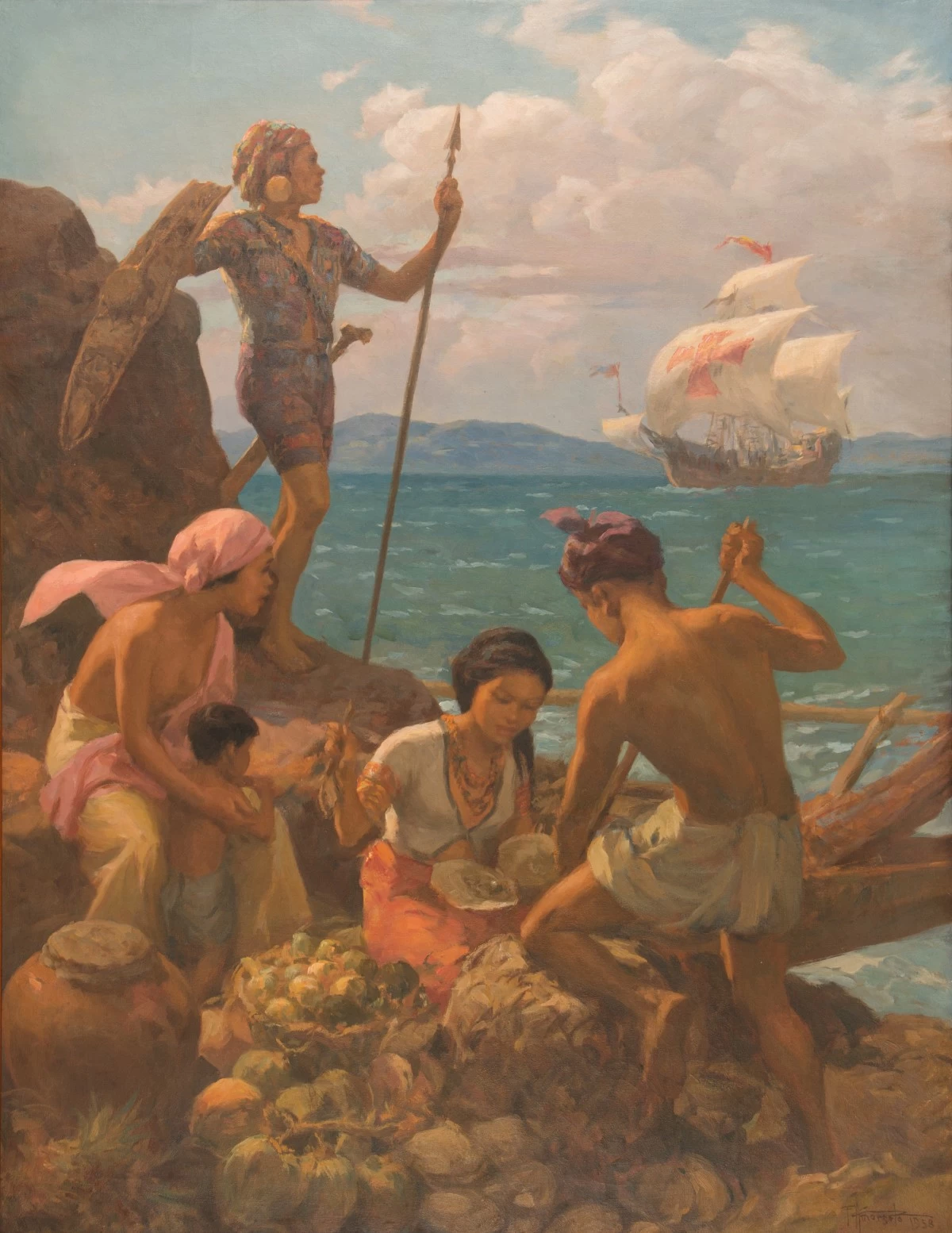
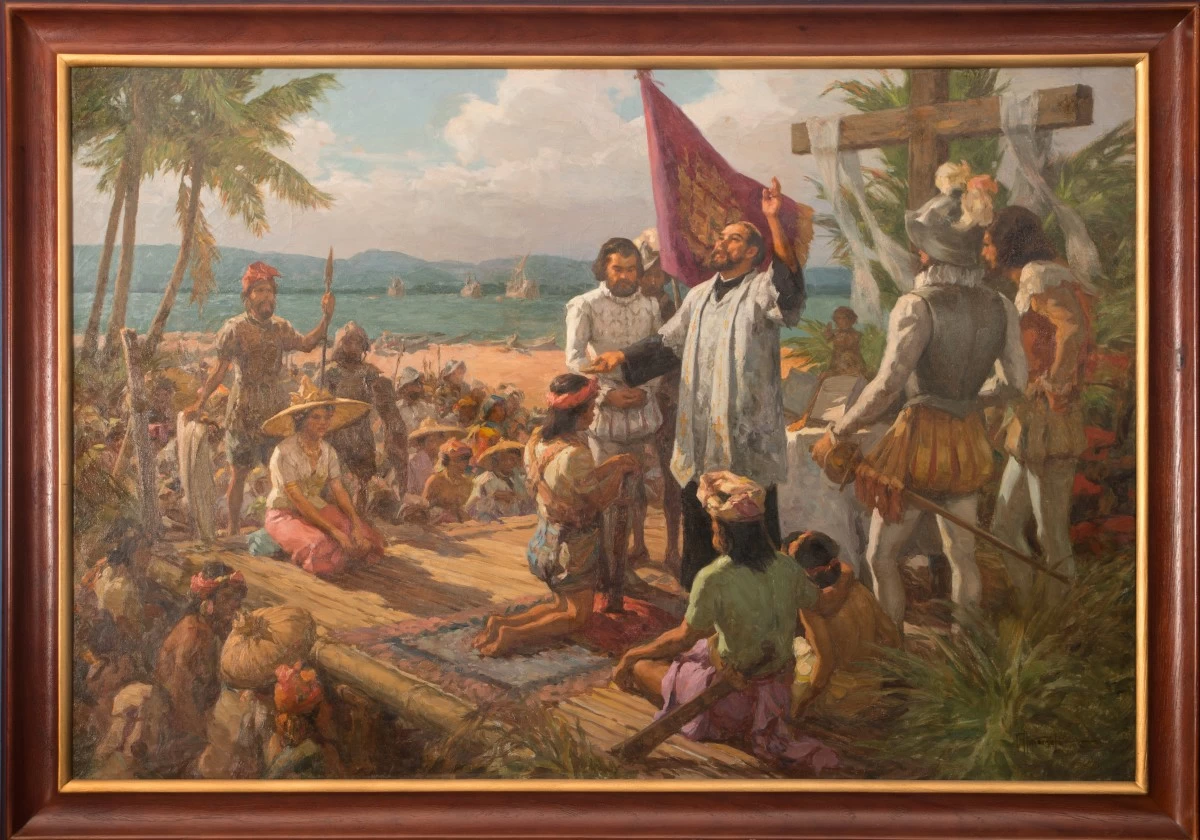
Among the highlights of the exhibition are two paintings by National Artist Fernando Amorsolo, “The First Baptism” and “The Traders.” These works of art present early Filipino encounters and exchanges that shaped the colonial period.
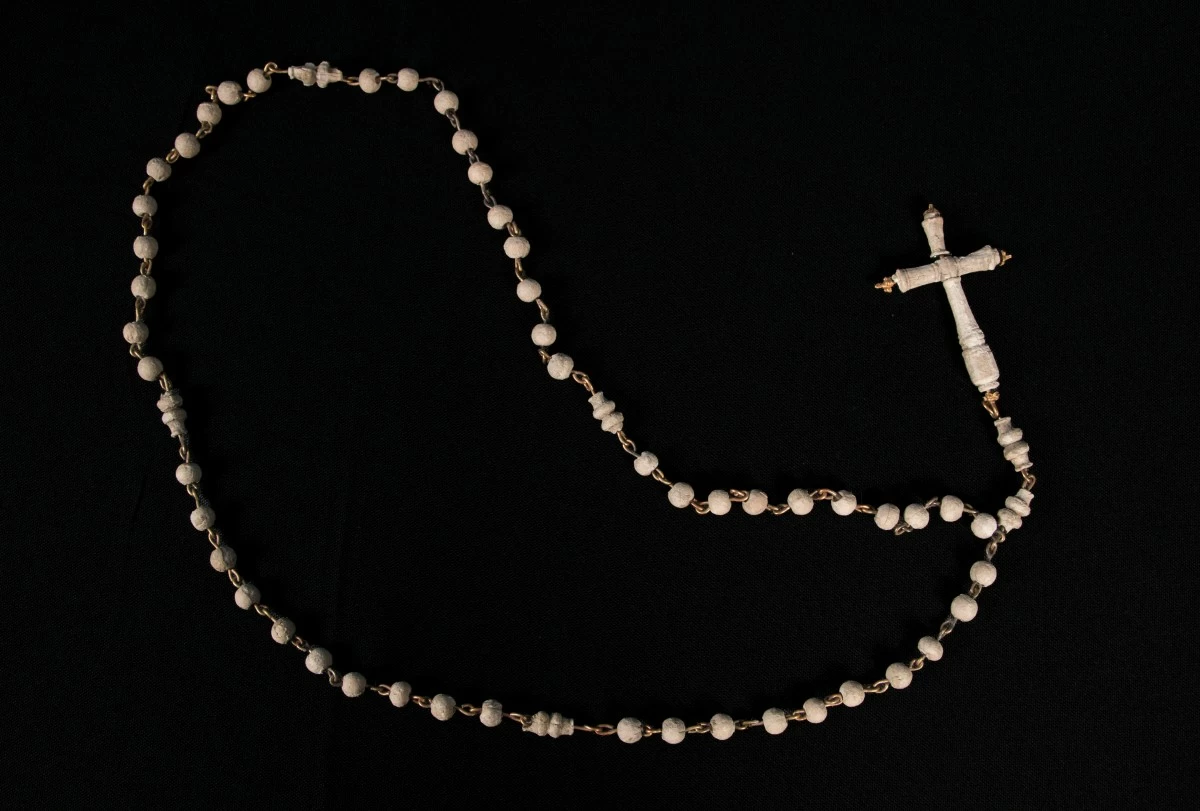
Stories of faith are reflected through sacred images. Among them are “The Japona,” a 17th-century image of the Virgin of the Holy Rosary from Santo Domingo Church that mirrors the Dominican Order's mission in Asia, and an ivory-and-gold rosary recovered from the San Diego shipwreck, offering a rare glimpse into devotional life at sea.
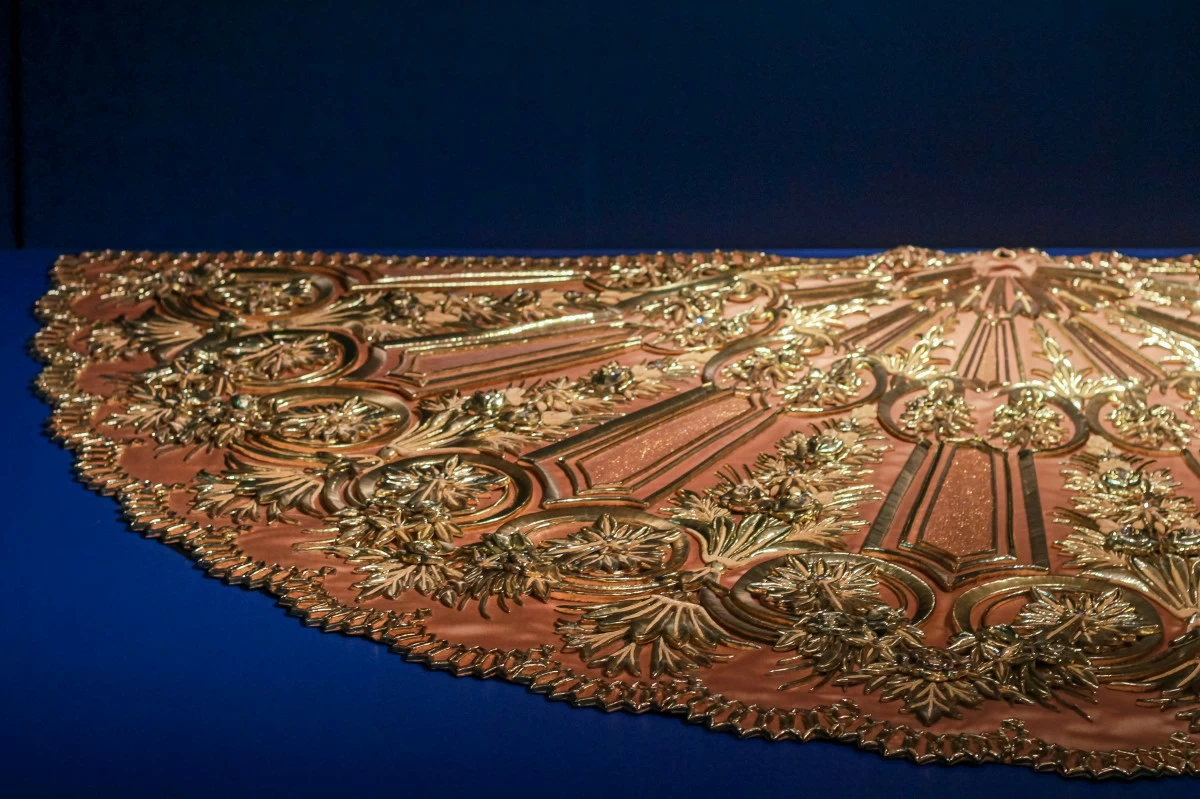
One of our favorite pieces in the exhibition is the “Manto Patrimonial,” the ceremonial vestment worn by Our Lady of La Naval and the Child Jesus during the Quincentennial Celebration of the Arrival of Christianity in the Philippines. Featuring embroidery and Spanish gold thread-wrapped reliefs on textile, the piece was designed by artist Rafael del Casal with the help of artisans from Bordados de Manila.
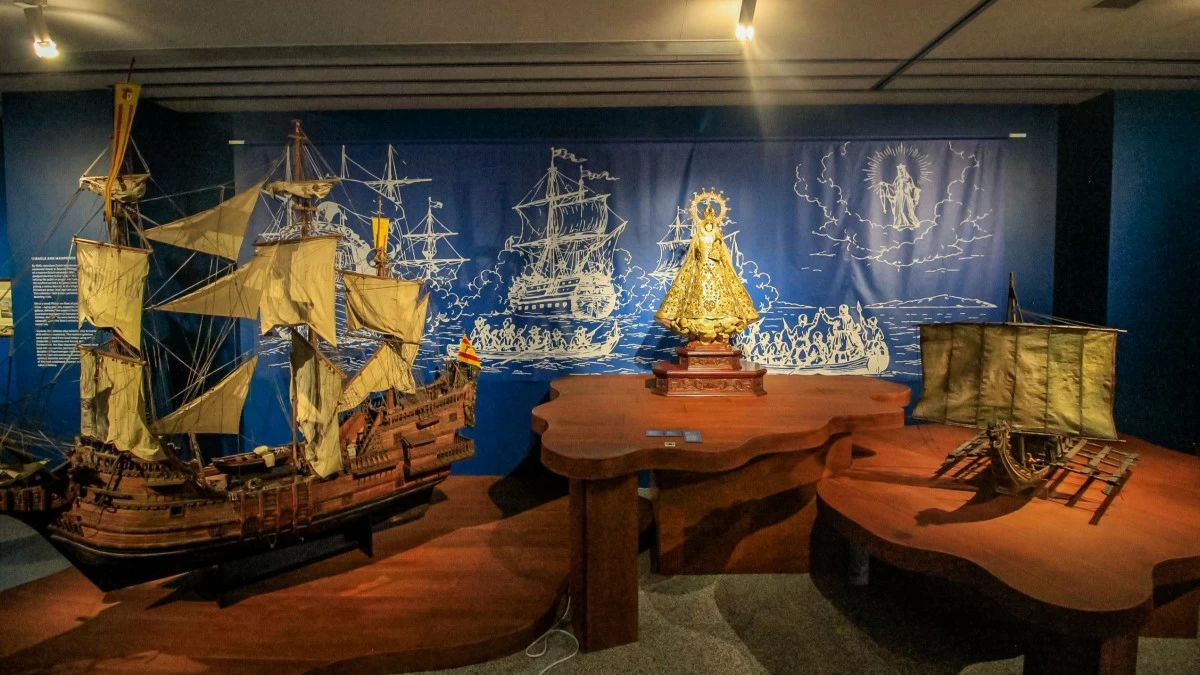
Also on display are Ayala Museum's scale models of a Spanish galleon, a caravel, and precolonial Philippine vessels, illustrating the maritime technologies that connected the archipelago to wider networks of commerce, exploration, and cultural exchange.
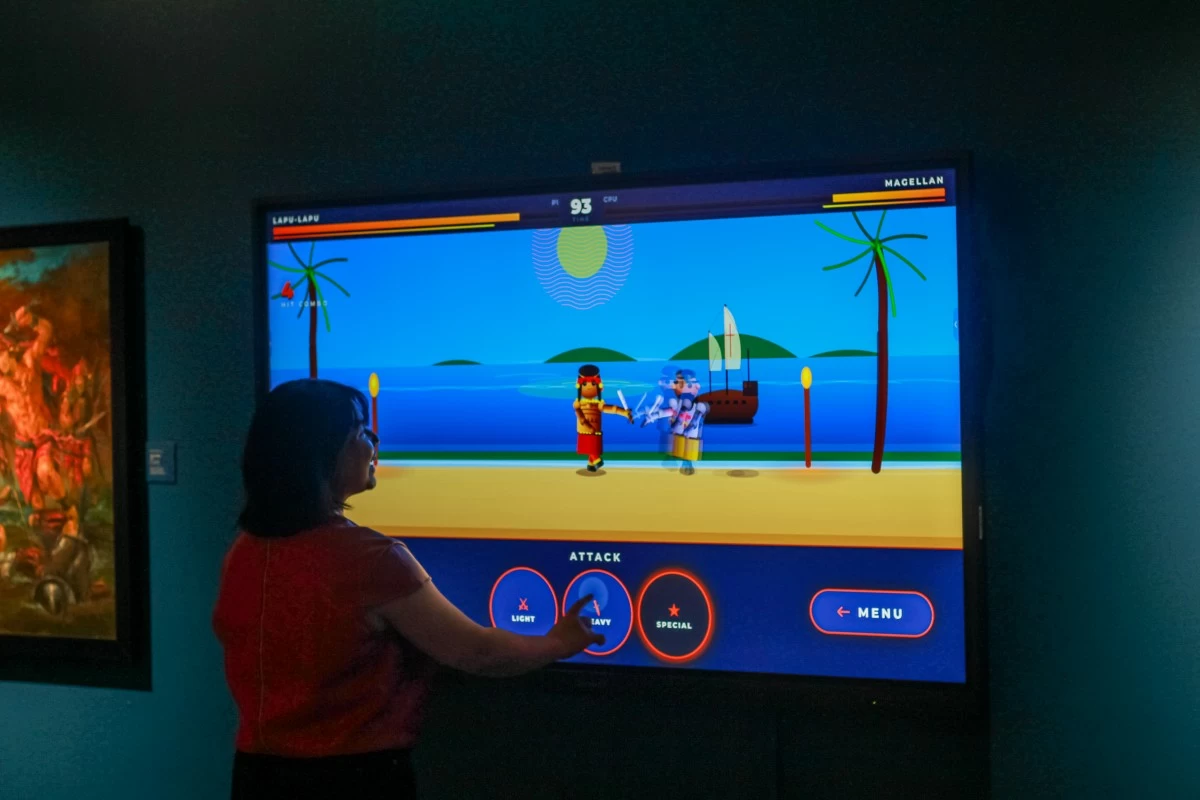
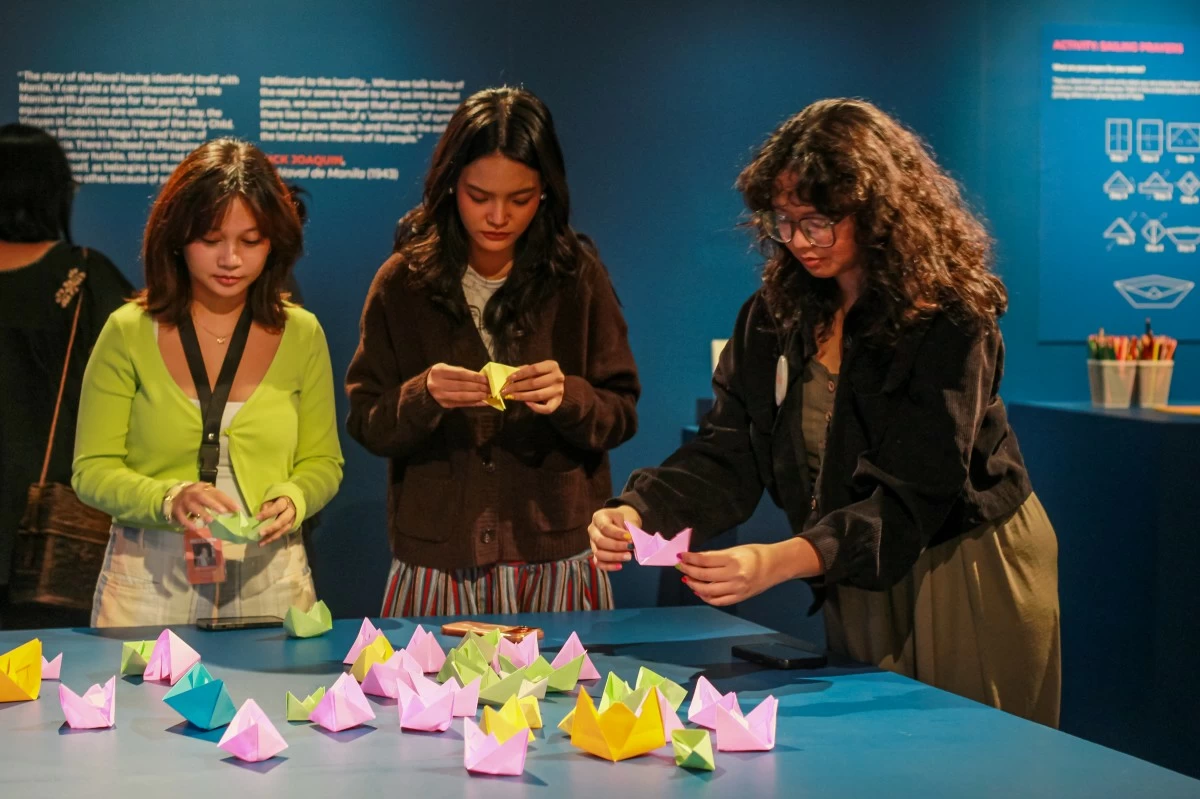
Throughout the exhibition, visitors are invited to explore five interactive digital modules, including the Battle of Mactan video game and an origami station where they can write prayers for the nation before turning them into paper boats.
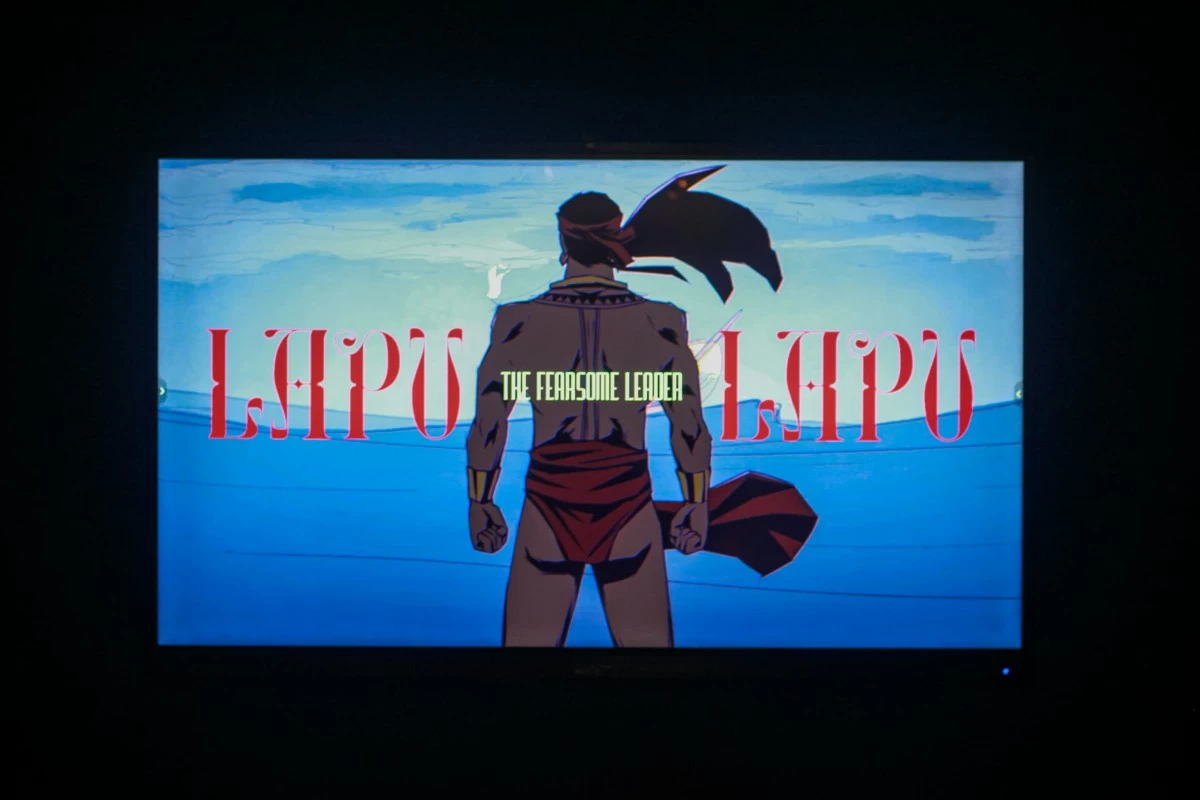
The exhibition also features a short animated film inspired by the chronicles of Antonio Pigafetta. It is part of the museum's collaboration with students from the University of Makati Institute of Design and the Arts, reimagining the events that unfolded across the Visayas during Magellan's expedition.
"Regardless of which touchpoints of this very dense exhibition, we are hoping that people are able to connect, become more curious, and see how the things they experience daily have this longer thread of heritage and tradition," Jei muses. "Through these stories and fascinating character dynamics, we hope visitors reflect on how choices made hundreds of years ago still impact us today."
“Turning Tides” runs until Feb. 14, 2027, coinciding with the 65th anniversary of Ayala Foundation. Watch the video below to get a glimpse of the exhibition: