







Skyway to triple cargo fleet as exports drive expansion


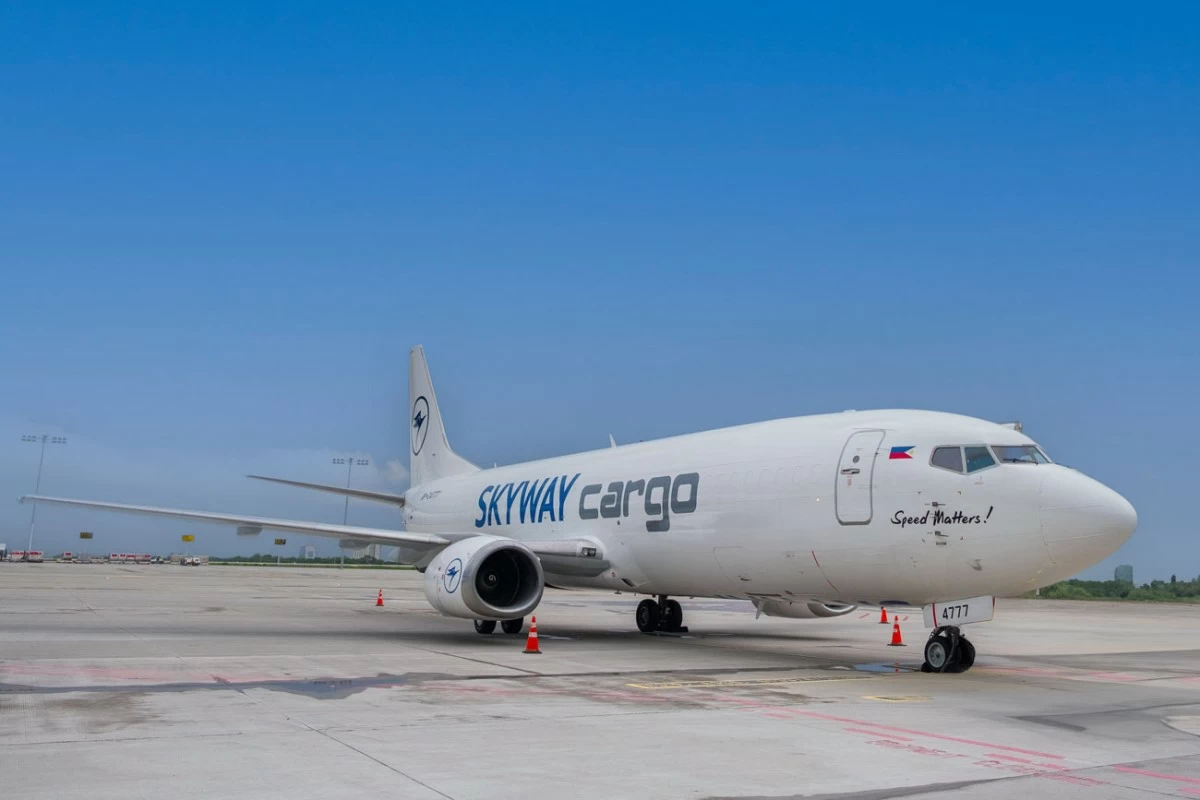
Skyway Airlines, the country’s first all-cargo carrier, plans to add seven more freighter aircraft over the next four years as it gears up for wider regional coverage amid growing demand for Philippine exports.
Skyway business development and external affairs director Vedant Bhardwaj said the airline aims to expand its fleet to 10 cargo aircraft by 2030 to boost freight capacity and extend its reach to short- and medium-haul routes.
The carrier currently operates three Boeing 737-400Fs, each capable of carrying around 18 tons of cargo per flight. From its bases in Manila and Clark, Skyway flies to Davao and Cagayan de Oro, as well as Hong Kong and Shenzhen.
Bhardwaj said the company will soon add a Boeing 767-300 freighter, which can carry more than 50 tons of cargo, to further strengthen its international operations.
Backed by an investment commitment of at least $10 million over the next four years, he said two aircraft are scheduled to arrive this year. This will be followed by two additional jets next year, with the remaining three arriving in the succeeding years.
Skyway plans to launch direct flights to Bangkok as its next international destination before eventually connecting to India, which is poised to become a major export partner of the Philippines through a free trade agreement (FTA).
“Our dream is to connect the agri-aqua products of the Philippines to the world, which has not been done yet [outside] frozen goods,” Bhardwaj told reporters last week.
He said the company specializes in transporting fresh products such as pineapples, bananas, and other fruits, as well as live animals such as day-old chicks and pigs, on a charter basis.
Skyway is also active in transporting electronic products, the country’s top export commodity, to its international destinations. On the other hand, the airline primarily brings in goods ordered by consumers through e-commerce platforms from abroad.
Bhardwaj said expanding the fleet and cargo capacity will also be crucial in positioning the company as a major player as the Philippines’ role as an aviation hub continues to grow.
As airports in neighboring countries become more congested, he said the Philippines has “the highest potential to become a secondary hub,” particularly through Clark International Airport.
Last month, operator Luzon International Premiere Airport Development (LIPAD) Corp. announced that it is developing the airport into the country’s first “airport city,” an integrated hub for aviation, logistics, and other developments.
The plan includes Cargo City, a 130-hectare (ha) integrated cargo and logistics ecosystem envisioned to streamline freight operations and facilitate more seamless trade.
Bhardwaj said Skyway recently met with LIPAD officials to convey the company’s plans to become a future locator in the Cargo City development, further improving its capacity to meet strong cargo demand.
LIPAD President and Chief Executive Officer (CEO) Noel Manankil said the master plan for the project will be completed before the end of the year, with operations set to begin within five years.