






Manila Bulletin
 Business
The Stock Market
PXP Energy wants foreign partners for Philippines' hydrogen rush
Business
The Stock Market
PXP Energy wants foreign partners for Philippines' hydrogen rush
Business
The Stock Market
PXP Energy wants foreign partners for Philippines' hydrogen rush
PXP Energy wants foreign partners for Philippines' hydrogen rush
Published Aug 3, 2026 12:00 am
|
Updated Aug 3, 2026 05:35 am


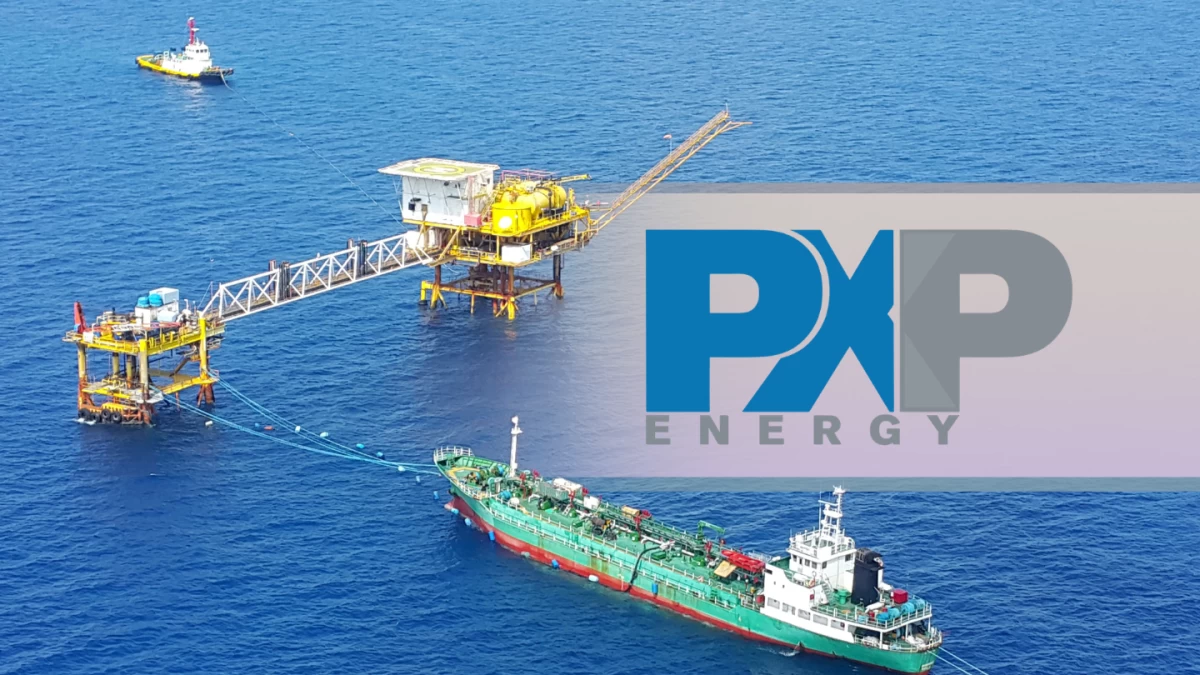
PXP Energy Corp., the upstream oil and gas explorer led by billionaire Manuel V. Pangilinan, is seeking foreign partners to help fund and execute energy exploration projects in the Philippines, including a search for naturally occurring hydrogen.
In an ambush interview last week, Pangilinan said the company is eyeing a government service contract to explore parts of the archipelago for native hydrogen—a underground geologic resource viewed as a promising source of zero-emission power.
PXP is open to farm-in agreements with foreign firms, including state-backed Chinese operators, to share execution risks and capital outlay.
"Yes, in fact, we have to raise money for PXP for the various service contracts," Pangilinan told reporters when asked about pursuing native hydrogen deals.
“We’ve invited the Chinese to join us and invest in service contracts in the Philippines into a farm-in. In which case, at least for service contracts, it's not disputed within Philippine territory,” he added.
The push comes amid growing interest in geologic—or white—hydrogen, which forms underground naturally and requires no energy-intensive industrial processing like manufactured hydrogen.
If discovered in commercially viable quantities, the resource could offer a significantly cheaper, zero-carbon alternative to traditional fossil fuels.
The government has accelerated its clean energy push. President Ferdinand Marcos Jr. recently signed a third exploration contract awarded to Koloma Inc., a US-based clean energy startup backed by Microsoft Corp. co-founder Bill Gates.
Koloma holds exploration rights across more than 4,100 square kilometers in Central Luzon and western Zambales, where it has initiated two-dimensional seismic testing to map underground deposits.
The Department of Energy studies have identified Central Luzon as one of the world’s most promising geologic settings for natural hydrogen.
For PXP, diversifying into land-based clean energy resources offers a strategic pivot as its offshore oil and gas prospects remain bogged down. The company’s exploration activities in the West Philippine Sea—specifically near Palawan—have faced prolonged delays due to territorial disputes with Beijing.
"Any prospect of getting oil and gas from these service contracts is many years of exploration to production,” Pangilinan said.
He noted the need to ramp up indigenous renewable capacity, such as solar and wind power, to enhance national energy security, noting that these technologies provide a faster, more dependable path toward self-reliance.