







Finding the right balance on system loss charges
Published Aug 3, 2026 12:05 am
|
Updated Aug 2, 2026 04:00 pm


President Ferdinand R. Marcos Jr.’s call during his State of the Nation Address to abolish the system loss charge imposed by Manila Electric Company (Meralco) has ignited a healthy national debate on a matter that directly affects millions of electricity consumers.
The President’s proposal resonates with households and businesses struggling to cope with the high cost of living. Every peso saved on electricity bills matters, especially for low-income families and small enterprises. It also underscores government’s commitment to making essential services more affordable and holding utilities accountable for operational efficiency.
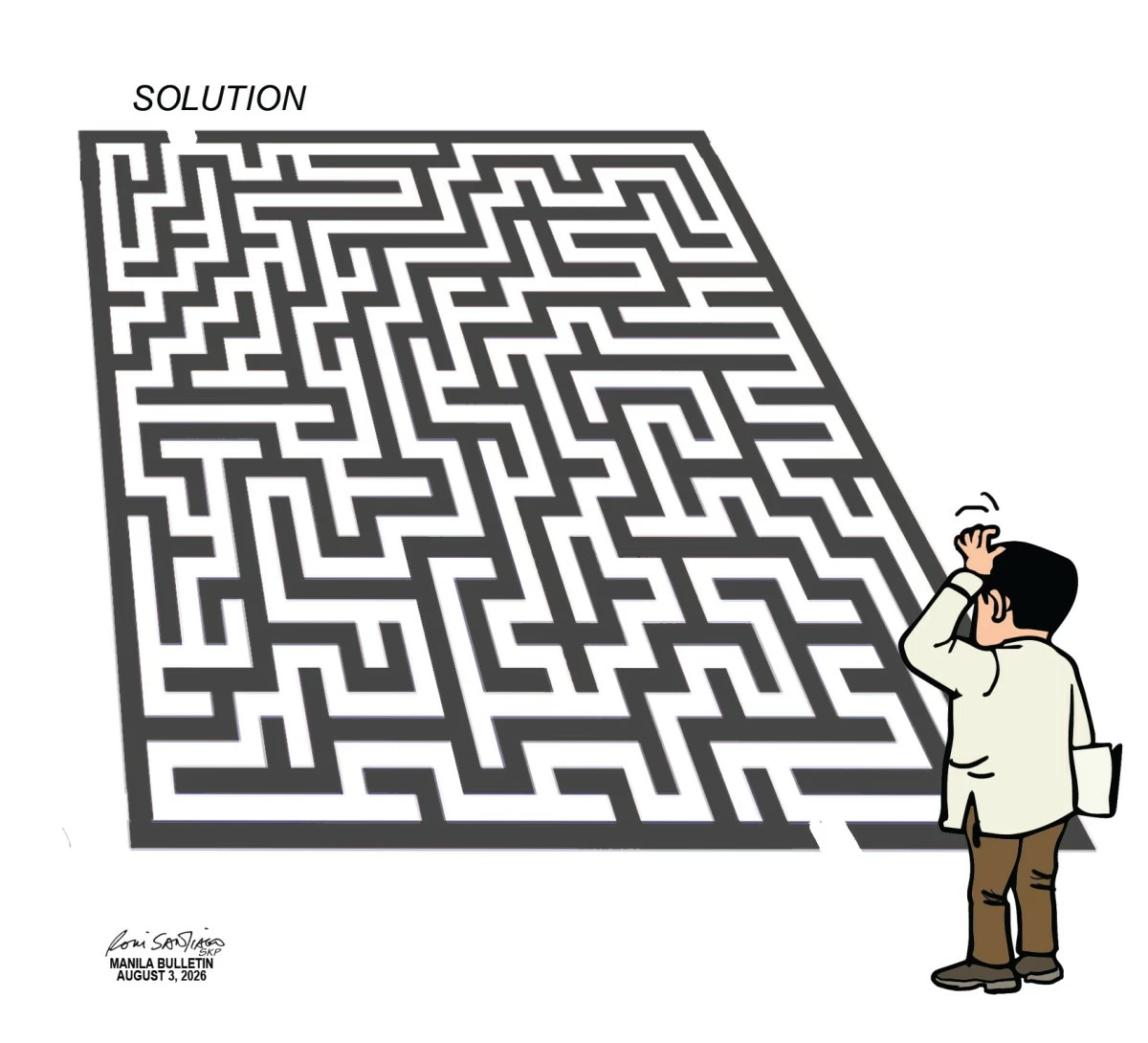
Yet, there is a more complex policy question that underpins its essential appeal to popular opinion. Should the system loss charge be eliminated altogether, or should it instead be reformed to better protect consumers while preserving the reliability of the country’s power distribution system?
System loss refers to electricity that is generated but does not reach paying customers because of technical losses in transmission and distribution facilities, as well as losses arising from pilferage, illegal connections, and metering inaccuracies. No power system in the world is entirely free from such losses. Utilities incur legitimate costs in delivering electricity across extensive networks, and a reasonable portion of these costs has traditionally been recoverable under Philippine law.
Those supporting the President’s proposal argue that consumers should not bear the burden of inefficiencies or electricity theft that are beyond their control. Distribution utilities, they contend, should invest more aggressively in modernizing infrastructure, improving monitoring systems, and strengthening anti-pilferage enforcement instead of passing losses on to paying customers. Removing the charge could also compel utilities to become more efficient and innovative.
On the other hand, critics caution that a blanket abolition may produce unintended consequences. If utilities are prevented from recovering legitimate technical losses, the financial viability of maintaining and upgrading distribution networks could be undermined. Reduced investments may eventually affect service reliability, increase outages, or discourage much-needed capital expenditures. The costs, in one form or another, may simply reappear elsewhere in electricity pricing.
The challenge, therefore, is to distinguish between unavoidable technical losses and preventable operational inefficiencies. Consumers should not subsidize waste or weak enforcement against power theft. At the same time, utilities should not be penalized for losses that are inherent in the physics of transmitting electricity over long distances.
A more balanced solution would be to review the existing regulatory framework rather than abolish the system loss mechanism outright. The Energy Regulatory Commission can tighten allowable recovery limits, require utilities to meet progressively lower system loss targets, and impose meaningful penalties when performance falls below established standards. Investments in smart grids, digital metering, and modern distribution technologies should likewise be accelerated to reduce technical losses over time.
Greater transparency is equally essential. Consumers deserve to understand precisely how system loss charges are computed, what portion represents legitimate technical losses, and what steps utilities are taking each year to reduce them. Public confidence grows when accountability accompanies every peso collected.
The President has succeeded in drawing national attention to an issue that deserves closer scrutiny. The resulting public discussion is both timely and constructive. Rather than framing the issue as a choice between consumers and utilities, policymakers should pursue reforms that protect both affordable electricity and a dependable power system.
In public policy, the best solutions are seldom found at the extremes. They are found in carefully crafted reforms that promote efficiency, fairness, accountability, and sustainability—delivering, indeed, the greatest good for the greatest number.