






 Business
Banking & Finance
DOF's 'Progress Bill' offers middle-class tax relief, raises 'sin' and luxury levies
Business
Banking & Finance
DOF's 'Progress Bill' offers middle-class tax relief, raises 'sin' and luxury levies
DOF's 'Progress Bill' offers middle-class tax relief, raises 'sin' and luxury levies
By Derco Rosal


At A Glance
- Net revenue could exceed ₱190 billion over four years if the Philippines implements a package bill that covers both the revenue-eroding income tax exemptions and the revenue-offsetting measures proposed this year.
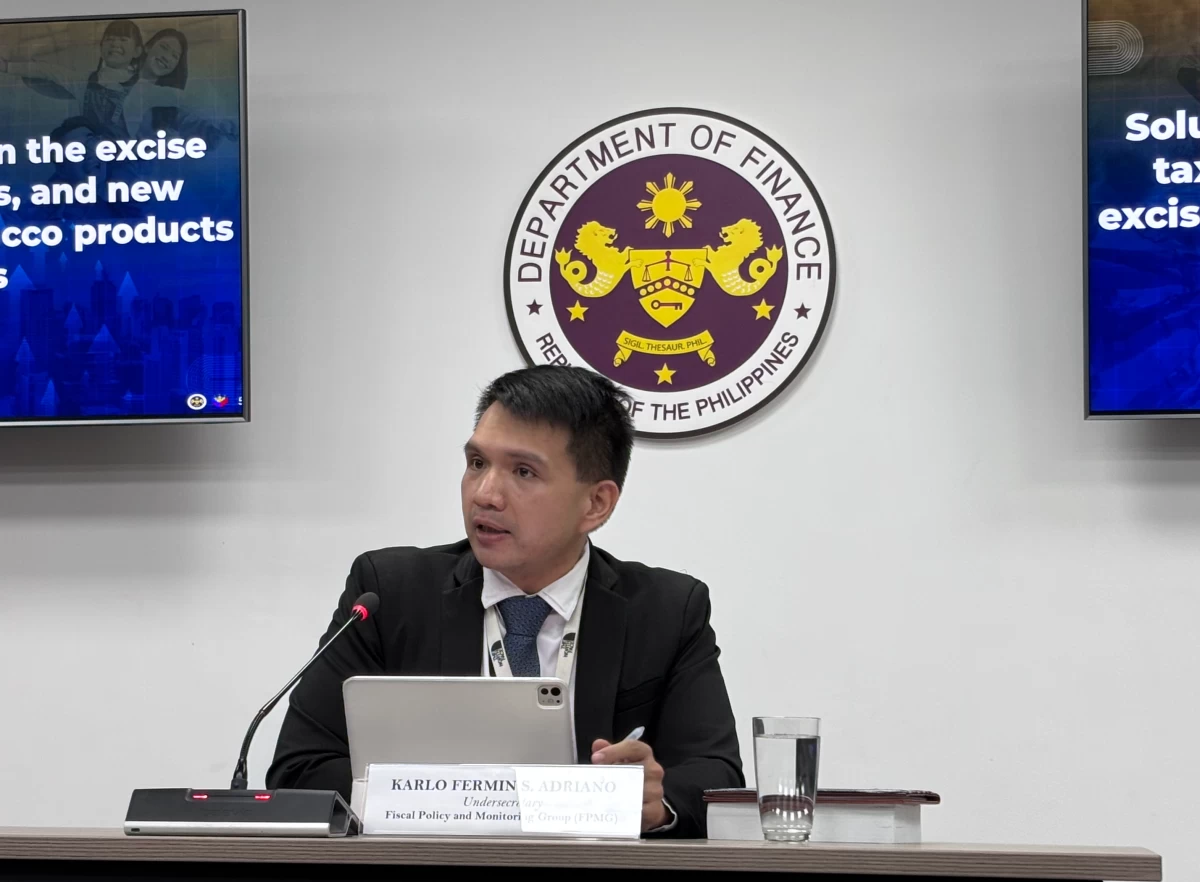
Net revenue could exceed ₱190 billion over four years if the Philippines implements a package bill that combines the revenue-eroding income tax exemptions with the revenue-offsetting measures proposed this year.
Department of Finance (DOF) Undersecretary Karlo Fermin S. Adriano said the agency will propose the package bill, to be called “Progress Bill,” which seeks to promote the welfare of Filipinos through a “fair and equitable tax system.”
Adriano, who heads the DOF’s fiscal policy and monitoring group (FPMG), said the main contributor to the bill’s revenue losses is a massive personal income tax (PIT) relief plan designed to benefit more than 3.13 million taxpayers.
He noted that the middle-income class “pay a lot of taxes, but they’re not poor enough to qualify for financial assistance, but not rich enough to have a very comfortable life.”
While real wages have remained stagnant since 2018, taxes based on rising nominal wages have eroded consumers’ purchasing power, the DOF pointed out.
To address this, the bill proposes increasing the tax-exempt threshold from ₱250,000 to ₱350,000, alongside adjustments to the second and third tax brackets. This relief is expected to cost the government ₱300.3 billion through 2030. On average, it will reduce government revenues by ₱75 billion annually.
In addition to the individual tax relief, Progress Bill also includes a ₱26.6-billion exemption from the minimum corporate income tax (MCIT) for micro and small enterprises (MSEs). Currently, these firms must pay a two-percent tax on gross income even when they are unprofitable.
“If you’re an MSE, and you’re already losing money, you will be exempted from the payment of MCIT,” Adriano explained, preventing further financial strain on struggling businesses.
To offset these multibillion-peso revenue losses, the DOF is pushing for ₱518.7 billion in revenue-generating measures rooted in public health and environmental protection.
Notably, the largest contributor is the proposal to update the sweetened beverage (SB) tax, which is projected to generate ₱297 billion from 2027 to 2030.
According to Adriano, the proposal increases the current rates to ₱20 per liter for sugar-sweetened drinks and ₱40 per liter for those using high-fructose corn syrup (HFCS), while expanding coverage to include 100-percent natural fruit juices.
Adriano justified these “sin” taxes—charges levied on harmful products—by explaining that “negative externality happens when your consumption imposes a cost to others and the society,” such as increased healthcare burdens from obesity and diabetes.
Other major revenue measures include a ₱150-per-kilogram (kg) excise tax on plastic, aimed at addressing the Philippines’ status as one of the world’s top plastic emitters, and an update to the motor vehicle user’s charge (MVUC).
Additionally, the bill introduces targeted wealth taxes, including a new excise tax tier for luxury automobiles. “If you can afford an ₱8-million car, then definitely you’re rich,” and should contribute more to the state purse.
Adriano noted that while the package bill includes new levies, the net impact remains positive for the average Filipino.
“If you don’t consume those same products, then your expenditures ultimately won’t increase. But the net impact of the Progress Bill, particularly for the middle-income class, is positive,” he said.