







Change of command, enduring mission
Published Aug 3, 2026 12:05 am
|
Updated Aug 2, 2026 04:07 pm


BARRACKS AND STRATEGY
In the military, few ceremonies are as symbolic and meaningful as the change of command. The passing of the unit’s colors from one commander to another is a transfer of trust, responsibility, and accountability. It is an age-old military tradition that reminds every soldier that while leaders may come and go, the mission endures.
Recent leadership transitions in the Armed Forces of the Philippines (AFP) and the Philippine Army (PA) offer an opportunity to reflect not only on the accomplishments of outgoing commanders, but also on the challenges awaiting those who now carry the burden of command amid rising external threats, unfinished modernization, and lingering internal security challenges.
General Romeo Brawner Jr. left the AFP after completing the first full three-year term as Chief of Staff of the AFP (CSAFP), a tenure that gave the institution a rare measure of continuity during a period of strategic transition.
During his stint, the AFP accelerated its modernization efforts, strengthened territorial defense capabilities, expanded defense cooperation with allies, and sustained a visible presence in the West Philippine Sea (WPS). At the same time, the military continued to weaken communist terrorist groups and local terrorist organizations while improving its disaster response and humanitarian assistance capabilities. Importantly, Brawner led the AFP's transition from an internal security to one focused on external defense.
His successor, General Antonio Nafarrete, inherits both the gains and the unfinished business of that transformation.
As former Commanding General of the Philippine Army, Nafarrete championed a people-centered leadership philosophy. His emphasis on personnel development, morale, health, education, and financial literacy reflected his belief that every soldier matters. He likewise supported Army modernization and preparations for a future battlefield increasingly shaped by technology and territorial defense requirements.
Yet the challenges before him are daunting.
As the CSAFP, he must continue the modernization program despite limited resources. He must maintain vigilance in the WPS while avoiding unnecessary escalation. He must preserve the gains against insurgency and terrorism while transitioning to external defense. He must also confront emerging challenges in cyberspace, information warfare, and multi-domain operations. He must ensure that the AFP stays united, professional, and mission-focused amid a rapidly changing security environment and a politically polarized nation.
Meanwhile, Lieutenant General Donald M. Gumiran is the newly designated Acting Commanding General of the Philippine Army after an impressive career in Mindanao. Under his leadership, the 6th Infantry Division and partner local governments aided the surrender of 986 undocumented firearms and crew-served weapons. He also encouraged the surrender of 598 BIFF and Dawlah Islamiya members. More importantly, he gained recognition for balancing military operations with peace-building initiatives, community engagement, and support for normalization efforts in the Bangsamoro region.
His challenge now is different in scale and scope. Gumiran must continue modernization efforts while preparing the Army for the evolving territorial defense mission. He must balance conventional capabilities with emerging requirements such as drones, cyber defense, and interoperability with allied forces. At the same time, the Army cannot afford to neglect remaining communist and local terrorist threats. It is a delicate balancing act that demands strategic vision and disciplined execution.
Last July 15, Major General Michael Samson concluded his military service that deserves recognition. As commander of the 3rd Infantry (Spearhead) Division in Western Visayas, Samson helped sustain the region's stable internal peace and security status. His leadership contributed significantly to dismantling key insurgent structures in Panay Island and neutralizing high-value rebel leaders. His tenure reflected the belief that military success is most meaningful when it creates conditions for peace, development, and normalcy.
The general officer who now takes over, Brigadier General Joey Escanillas, inherits a division that has achieved remarkable gains but creates its own challenges. He must prevent any resurgence while helping his troops transition from internal security operations toward broader national defense responsibilities. Keeping the peace is often harder than achieving it.
Such is the nature of command. The public often sees only the medals, ceremonies, and promotions. Less visible are the sleepless nights, complex decisions, and immense responsibilities carried by commanders. As leaders pass the colors to the next, the message stays constant: leadership changes, but the mission endures.
Ultimately, the strength of the AFP does not rest on any single commander but on institutions, values, and the dedication of soldiers who dutifully serve their commander.
As citizens, we should view national security as a shared responsibility. The security challenges today are too complex for the military alone. By supporting our men and women in uniform and by doing our own part as responsible citizens, we help ensure that the gains already won through sacrifice and service will not only endure but will continue to grow for future generations.
To the outgoing leaders, my snappiest salute and to the incoming commanders, our highest confidence!
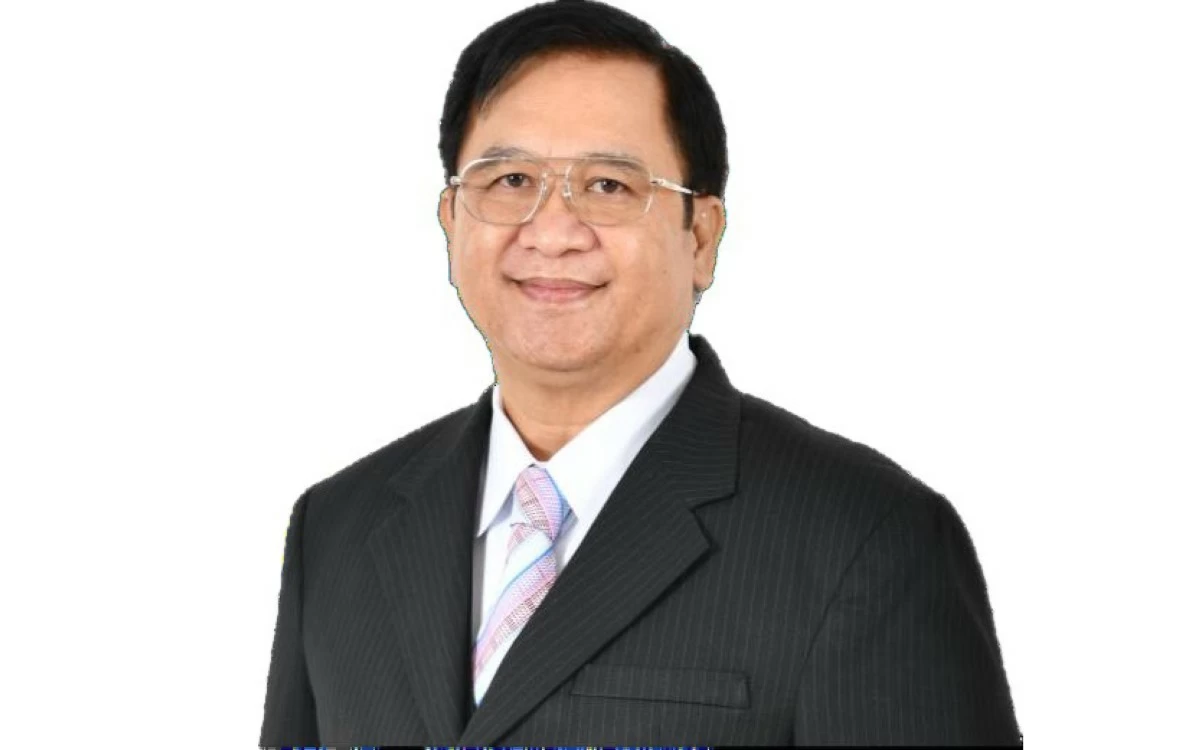
(Lt. Gen. Aurelio B. Baladad (Ret) served as the 8th commander of the Eastern Mindanao Command, the 32nd commander of the 3rd Infantry (Spearhead) Division, and the former deputy chief of staff for Operations, J3 of the AFP. He is now the VP for cooperative planning and marketing of PAFCPIC, a cooperative serving the active and retired AFP personnel.)