






Manila Bulletin
 Philippines
Acknowledgment receipts, subpoenaed documents still subject to legal scrutiny — VP Sara camp
Philippines
Acknowledgment receipts, subpoenaed documents still subject to legal scrutiny — VP Sara camp
Philippines
Acknowledgment receipts, subpoenaed documents still subject to legal scrutiny — VP Sara camp
Acknowledgment receipts, subpoenaed documents still subject to legal scrutiny — VP Sara camp
Defense refused to stipulate to thousands of acknowledgment receipts and may still challenge the admissibility of subpoenaed documents as the impeachment trial continues
Published Aug 3, 2026 09:35 pm


At A Glance
- The defense refused to stipulate to the authenticity of about 3,000 to 4,000 acknowledgment receipts, saying they require individual legal scrutiny.
- Vice President Sara Duterte's camp said subpoenaed documents are not automatically admissible as evidence and may still be challenged on grounds of competence and relevance.
- The defense said it remains willing to streamline the impeachment trial by stipulating to undisputed official COA documents after verifying their authenticity.
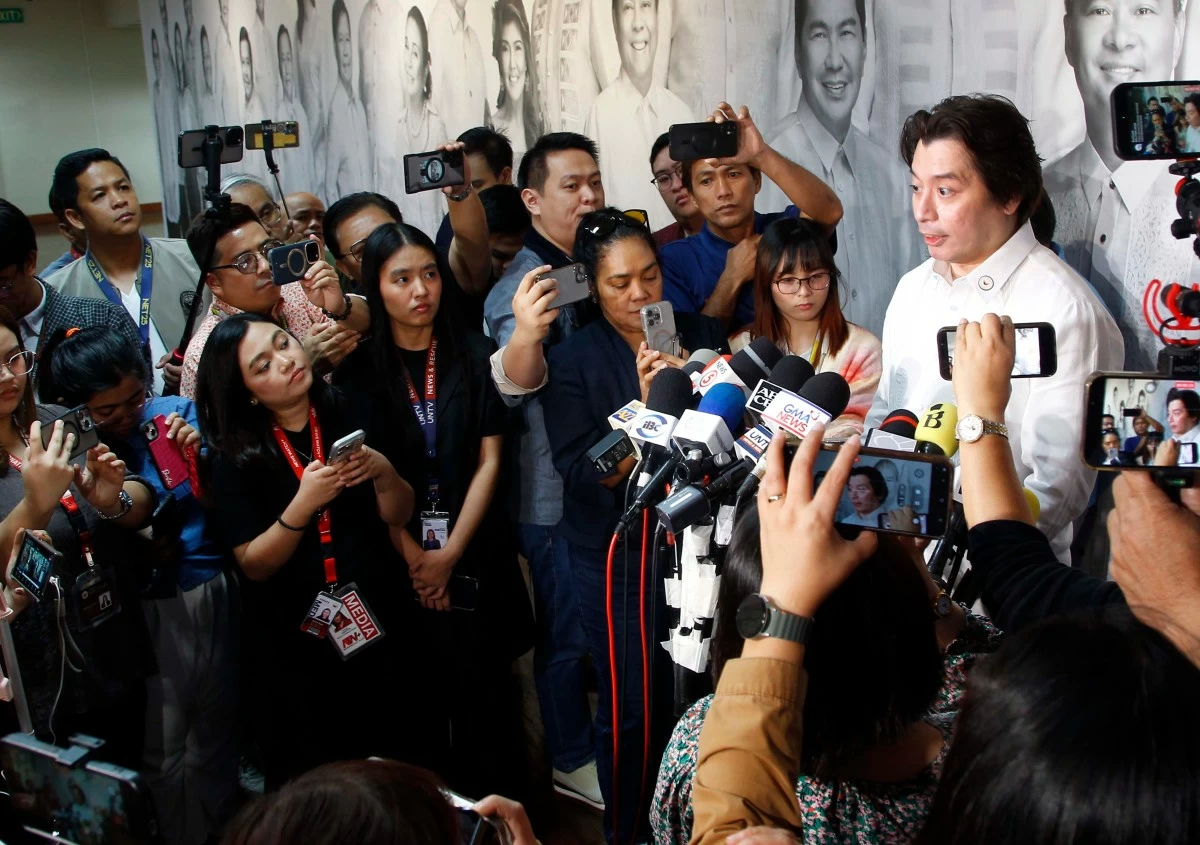
Defense spokesperson lawyer Michael Poa explained why Vice President Sara Duterte's legal team declined to stipulate to thousands of acknowledgment receipts, saying the documents remain subject to legal scrutiny despite being presented during the Senate impeachment trial. (Manila Bulletin/file)
Stressing that subpoenaed documents are not automatically admissible as evidence, the defense team of Vice President Sara Duterte on Monday, August 3, said thousands of acknowledgment receipts presented in the impeachment trial remain subject to legal scrutiny.
Defense spokesperson and lawyer Michael Poa, speaking during a press briefing after the day's proceedings before the Senate impeachment court, explained why the defense declined to stipulate to the authenticity of thousands of acknowledgment receipts presented by the prosecution.
"We cannot stipulate based on, I think, around 3,000 to 4,000 documents. We really have to protect the rights of our client. Although, as I mentioned earlier, if it were possible to stipulate, we would," Poa said in a mix of English and Filipino.
Although the defense agreed to stipulate to several official Commission on Audit (COA) documents, Poa said acknowledgment receipts require a different level of scrutiny because they are separate documents.
"But when it comes to this, we really have to take a hard line. Because, of course, we cannot be lax—we must also be diligent in our duties as her counsel, and we cannot take risks given the sheer volume of those documents, right?" he added.
Poa clarified that the defense was not alleging the receipts had been fabricated.
"We're not saying that maybe someone fabricated them or something. I just want to make that clear. What we're saying is that we simply don't know," he said.
Because of that uncertainty, Poa said the defense could not agree to stipulate to the acknowledgment receipts.
Documents still subject to admissibility challenge
The defense also stressed that subpoenaed documents sought by the prosecution must still satisfy legal requirements before they can be admitted as evidence.
Poa explained that compliance with a subpoena does not automatically make a document admissible during trial.
"A document, before it can become evidence, has to be admitted into evidence. To be able to do that, you have to fulfill two requisites—competence and relevance," he said.
He added that the defense would determine whether to object once the prosecution formally offers the documents as evidence.
"It will depend on how they will be used, and we will see whether we will oppose them or not," Poa said.
Defense willing to streamline proceedings
Poa said the defense had been willing to shorten the proceedings by stipulating to undisputed official COA documents after comparing them with its own copies.
He explained that the temporary suspension of the proceedings earlier in the day allowed both camps to compare their respective document lists before deciding which documents could be jointly stipulated.
"If we can shorten the proceedings, the defense is ready and willing to do so. Before we agreed to stipulate, we simply compared their documents with ours to make sure they were the same and that those were indeed the documents they wanted us to stipulate to," he said.
However, he maintained that acknowledgment receipts require stricter review because each side had separately marked its own sets of documents, and the defense could not simply concede their authenticity without further examination.
The Senate impeachment trial is expected to continue with additional prosecution witnesses in the coming days before the defense begins presenting its case.