






Manila Bulletin
 Philippines
National
TESDA pushes seamless education-to-work pathways under 'One Education' initiative
Philippines
National
TESDA pushes seamless education-to-work pathways under 'One Education' initiative
Philippines
National
TESDA pushes seamless education-to-work pathways under 'One Education' initiative
TESDA pushes seamless education-to-work pathways under 'One Education' initiative
Published Aug 2, 2026 02:21 pm


At A Glance
- The Technical Education and Skills Development Authority (TESDA) said it has been strengthening the "One Education" initiative with DepEd and CHED to create smoother pathways from basic education to technical vocational training, higher education, and employment.
- President Marcos Jr. highlighted TVET's strong employment outcomes in his SONA, saying 81 percent of technical vocational graduates find jobs and can use their National Certificates as a pathway to earning a college degree.
- TESDA continues to expand access to skills training through free SHS competency assessments, the TechPro track, the TESDA Skills Passport, and closer coordination with DOLE on training and scholarship information.
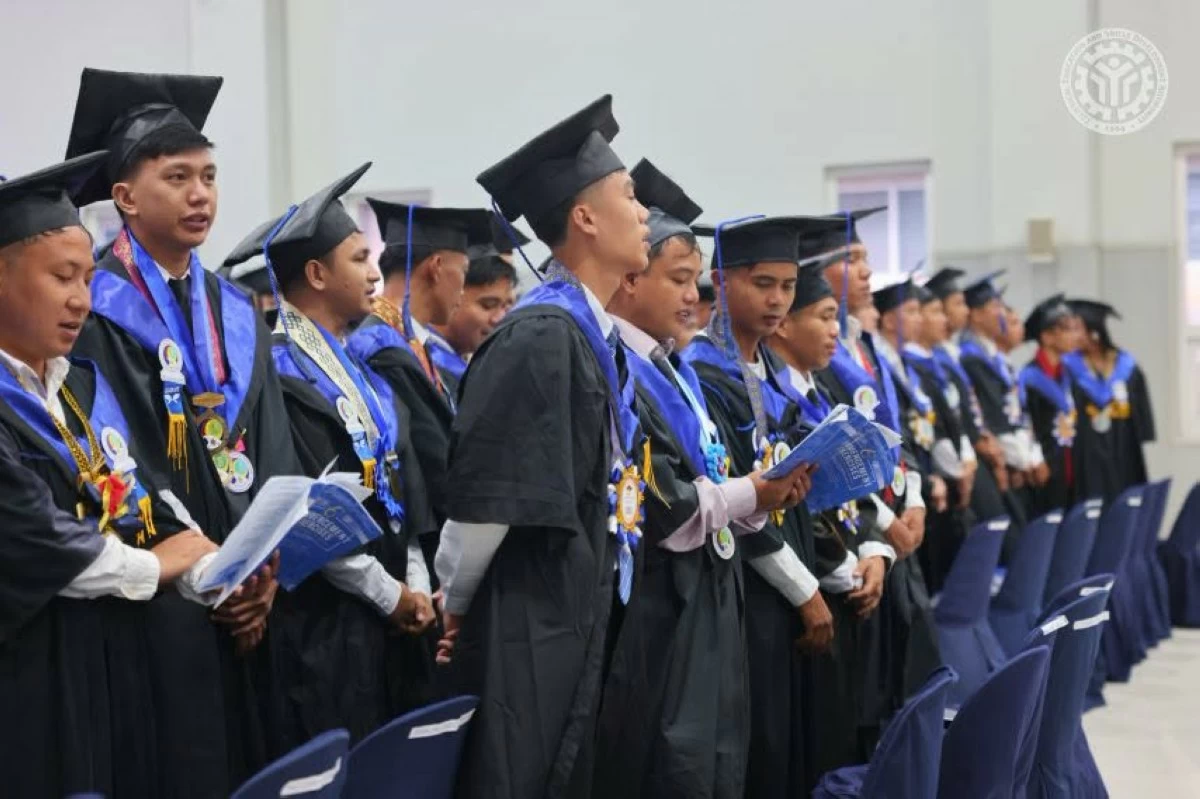
In this photo released on Aug. 1, 2026, the Technical Education and Skills Development Authority (TESDA), through its Regional Training Center – Korea Philippines Vocational Training Center (RTC-KPVTC)-Davao, celebrates the graduates of its three-year Diploma Programs during the center's sixth commencement exercises. (Photo: TESDA)
The Technical Education and Skills Development Authority (TESDA) said it has stepped up efforts to create seamless pathways from basic education to skills training, higher education, and employment following President Marcos Jr.'s renewed push to strengthen technical vocational education and training (TVET) during his fifth State of the Nation Address (SONA) last week.
TESDA Secretary Jose Francisco “Kiko” Benitez said the agency, together with the Department of Education (DepEd) and the Commission on Higher Education (CHED), is working toward a more connected education system through the administration's “One Education” initiative.
The initiative seeks to improve coordination among the country's three education agencies so learners can move more easily from basic education to technical vocational training, higher education, and eventually into the workforce.
“Technical vocational education opens different opportunities. Employment, business, continuing education. All these can begin with TESDA. Under the presidency of PBBM [President Marcos], together with DepEd and CHED, we are building seamless pathways from skills training to work and further education. We are advancing a vision where the Marcos administration may be remembered as a golden age of education reform,” Benitez said.
During his SONA last July 27, Marcos cited the role of TVET in improving employability and lifelong learning, citing government data showing that 81 percent of technical vocational graduates secure employment after completing their training.
“Our technical vocational education and training programs are also proving effective. At present, the placement rate of those who complete technical vocational courses has reached 81 percent. A TVET graduate can use his or her National Certificate as a foundation to continue studying until earning a college diploma,” Marcos had said.
He also highlighted the government's push for the integration of technical vocational programs into Senior High School (SHS) to allow students to acquire job-ready skills while keeping the option of pursuing higher education.
Supporting that effort, TESDA said it continues to provide free competency assessment and certification for qualified SHS learners. Since the program started in 2024, more than 369,000 SHS graduates have earned National Certificates through free assessment, it noted.
The agency said it also supports the implementation of the “TechPro” track, which prepares learners for employment, entrepreneurship, further skills training, or higher education through industry-based competencies.
Marcos also cited the “TESDA Skills Passport,” a digital platform that allows users to manage training credentials, access scholarship and training opportunities, connect with employment services, and map out their education and career plans.
“The TESDA Passport, which resulted from the digitalization of your services, is a great help,” he said.
TESDA said it was also working with the Department of Labor and Employment (DOLE) to improve public access to information on training programs, scholarships, accredited training institutions, application procedures, and other services related to skills development.
The agency said the efforts were part of the administration's broader goal of preparing Filipinos for changing labor market demands while making technical vocational education a stronger pathway to employment, lifelong learning, and inclusive national development.